

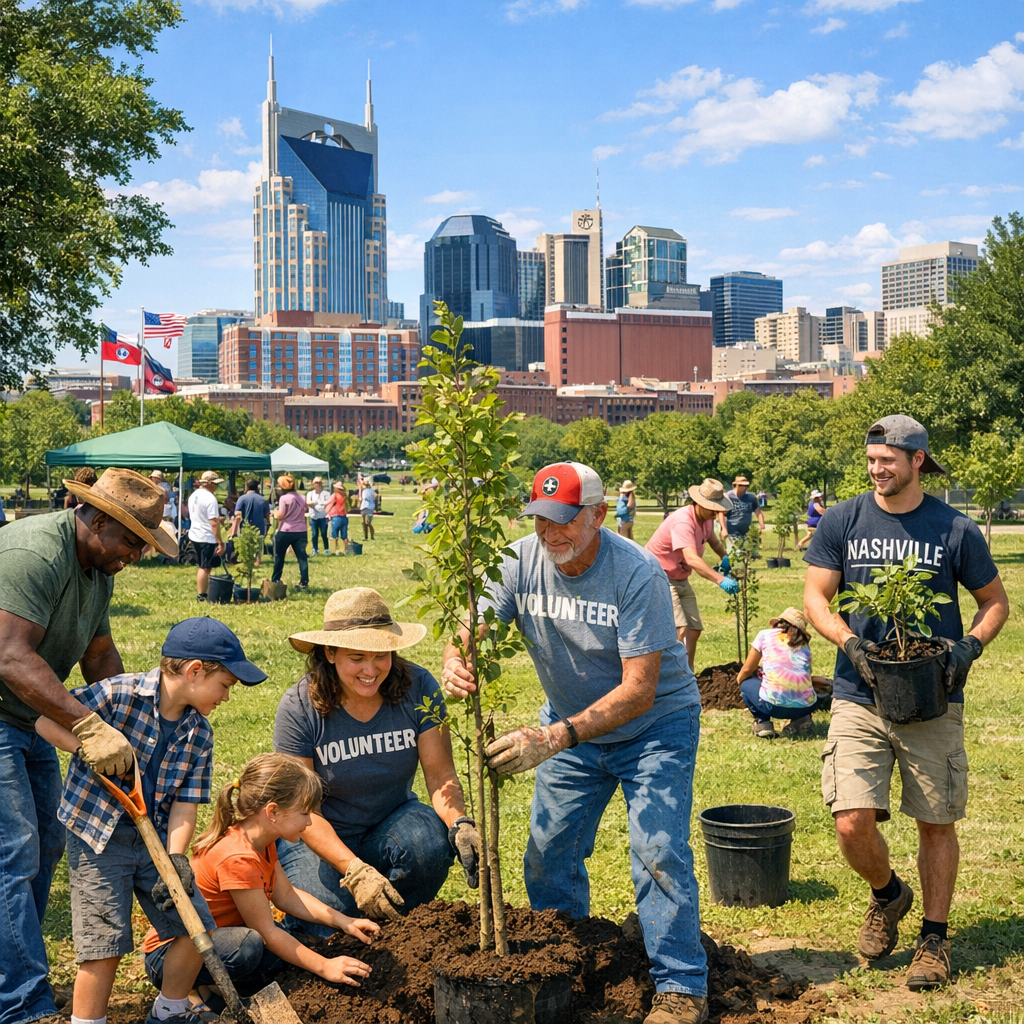
Nashville’s dedication to environmental stewardship is evident through various initiatives aimed at preserving natural resources and promoting sustainability. The city’s natural environment encompasses air, water bodies, plants, animals, forests, and green spaces, all of which provide essential services supporting daily life. Stewardship involves preserving these assets and ensuring responsible use of finite resources.
Major Initiatives
Investing in Our Tree Canopy
Legislation directs that trees on public property should be managed as assets, with regular progress reports. A review panel considers all large-scale removal of trees on Metro property and oversees robust replacement standards. Additionally, a dedicated revenue stream supports tree canopy restoration and maintenance on private properties, funding the Root Nashville campaign to plant 500,000 trees by 2050.
Parks and Greenways
A strategic master plan for Metro parks and greenways, adopted in 2017, provides a ten-year vision to sustainably meet Nashville’s needs for park land, greenways, community centers, and sports facilities. Goals and recommendations fall under categories such as Land, Facilities, Programs, Operations, and Funding the Future. Metro Parks recently received funding to update this plan.
Community Engagement
Centennial Park Conservancy underscores its commitment to local environmental programs by awarding $48,000 in event proceeds to fund 17 initiatives across the city. Since 2020, the Conservancy has donated a total of $208,000 to underwrite environmental initiatives across the city.
Urban Green Lab, a nonprofit organization, teaches communities how to live sustainably in Nashville and its surrounding counties. They envision a Nashville where everyone has access to opportunities for learning about sustainable living.
Climate Resilience
Climate change is affecting Nashville in various ways, including more mosquito days, greater health risks from humid heat, and more frequent and intense storms. The city is working toward resilience by preparing and adapting communities, built assets, systems, and the environment to withstand severe weather.
Metro Nashville’s sustainability goals are guided by the 2021 Climate Action Plan, produced by a 50-member Sustainability Advisory Committee. A central recommendation is to focus on three key areas: decarbonization of the electrical grid, reducing transportation emissions, and enhancing energy efficiency in buildings.
Through these initiatives and community engagement, Nashville continues to demonstrate its commitment to environmental stewardship and sustainability.