

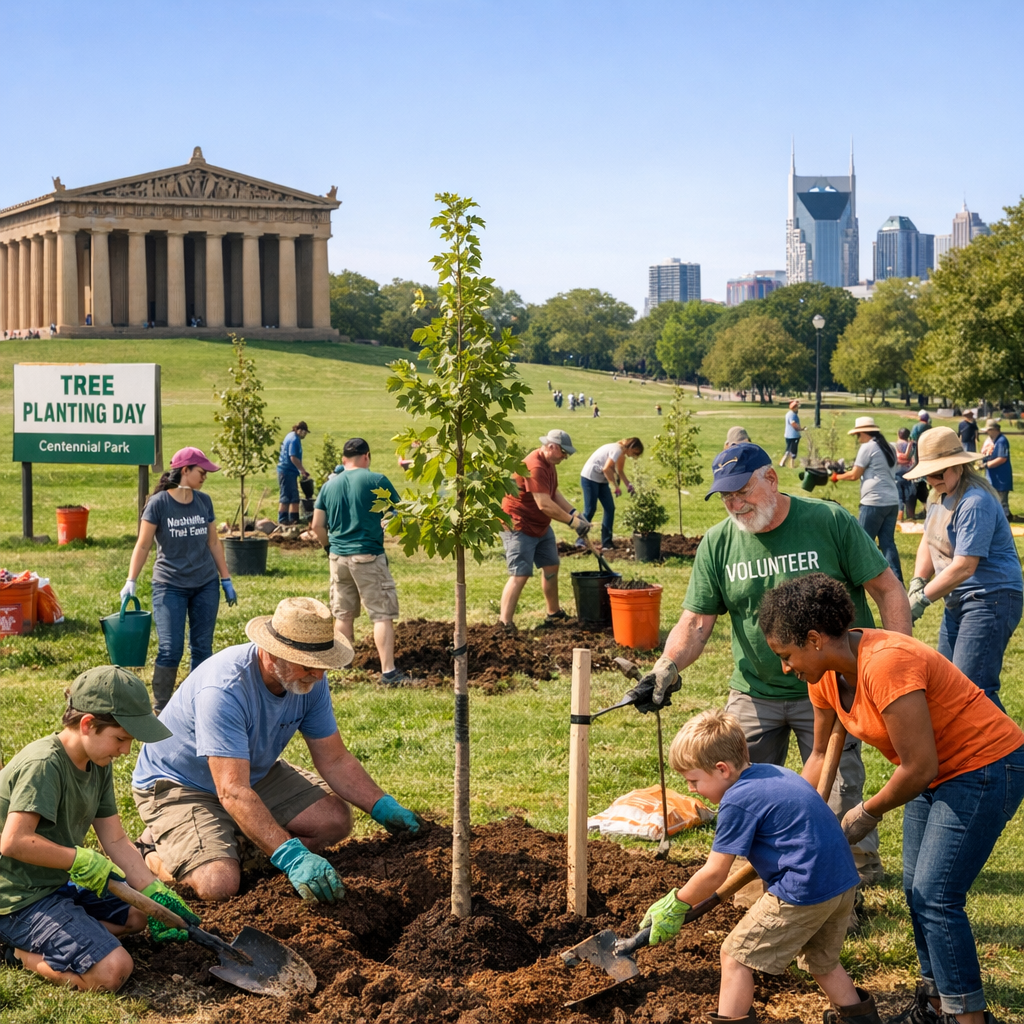
Nashville’s dedication to environmental stewardship is evident through a series of initiatives aimed at preserving and enhancing the city’s natural resources. These efforts encompass tree canopy restoration, green infrastructure projects, and active community engagement.
Investing in Our Tree Canopy
Recognizing the vital role trees play in urban ecosystems, Nashville has implemented legislation to manage public trees as valuable assets. This includes regular progress reports and a review panel overseeing large-scale tree removals on Metro property. Additionally, a dedicated revenue stream supports tree canopy restoration on private properties, contributing to the Root Nashville campaign’s goal of planting 500,000 trees by 2050.
Green Infrastructure and Sustainability in Schools
Metro Nashville Public Schools (MNPS) are at the forefront of integrating sustainability into education. The MNPS Energy Program has achieved a 20% annual reduction in energy consumption, equivalent to reducing 260,000 metric tons of carbon emissions. Schools have adopted energy-efficient designs, with new buildings and major renovations achieving LEED Silver or Gold certifications. Notably, James Lawson High School features a green roof, contributing to energy savings and providing a unique learning environment for students.
Community Engagement and Education
Organizations like Urban Green Lab play a pivotal role in teaching communities how to live sustainably. By training educators and reaching various zip codes across Davidson County, they ensure that sustainability education is accessible to all. Their efforts have led to the training of 383 Metro Nashville Public Schools educators and have served 499 organizations as of 2025.
Climate Resilience and Zero Waste Goals
In response to the challenges posed by climate change, Nashville has developed a Climate Action Plan focusing on decarbonization and resilience. The city aims to divert 90% of its waste away from landfills by promoting recycling, composting, and waste reduction strategies. This commitment is part of a broader effort to minimize the environmental footprint of the city’s day-to-day functions.
Nashville’s comprehensive approach to environmental stewardship reflects a community-wide commitment to sustainability, resilience, and the preservation of natural resources for future generations.