

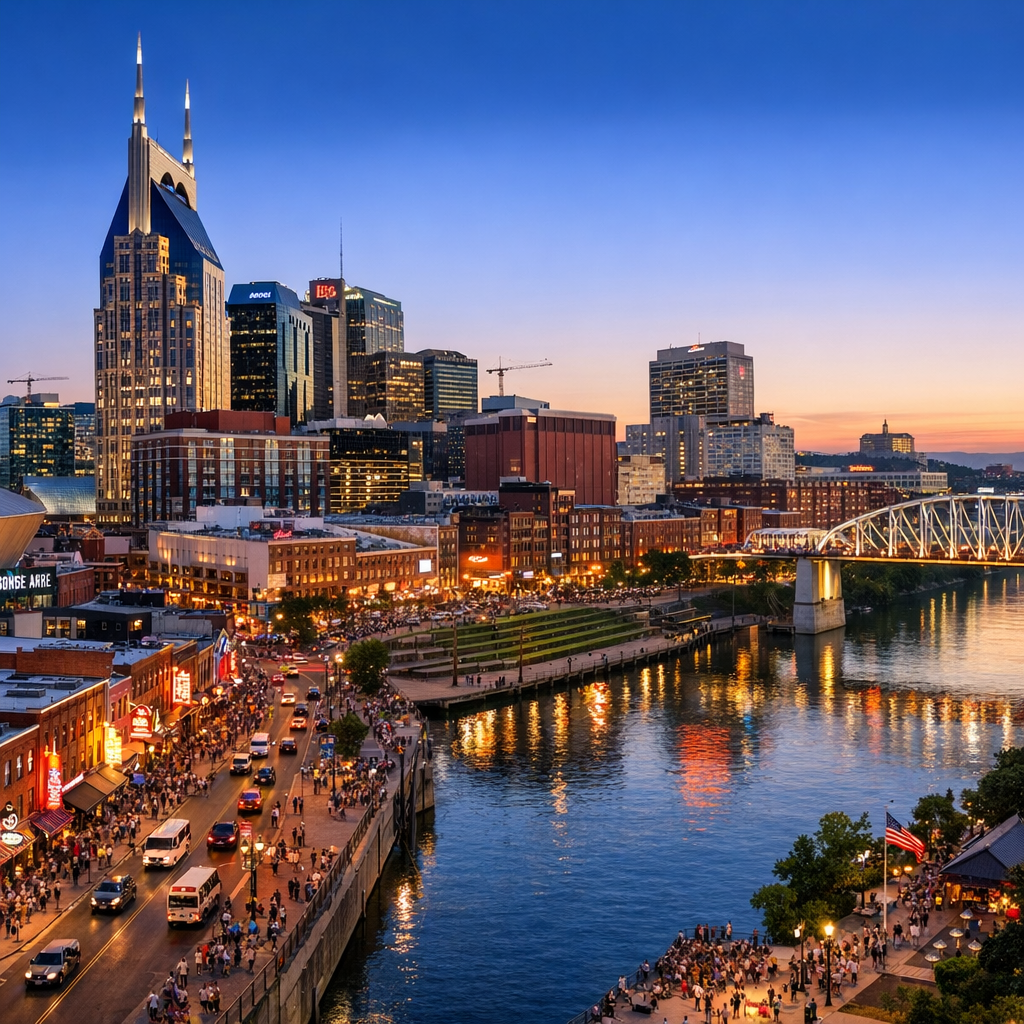
As Nashville continues to evolve, it’s essential to understand how national economic trends are shaping our city’s growth and development. From tourism and education to housing and infrastructure, the interplay between national policies and local dynamics offers a comprehensive view of our economic landscape.
Tourism: A Vital Economic Driver
Tourism remains a cornerstone of Nashville’s economy. In 2025, Tennessee’s tourism industry set a new record with $32.5 billion in visitor spending, marking a 40% increase since 2018. This surge has significantly bolstered our state’s revenue, directly funding critical infrastructure such as schools and roads. Key attractions like the Grand Ole Opry and the Nashville Zoo have been instrumental in this growth. However, it’s worth noting that individual tourist budgets have remained relatively flat due to inflationary pressures, indicating a need for strategic planning to sustain this momentum.
Education and Income: The College Connection
Education continues to play a pivotal role in income levels within our community. A recent analysis of 2024 Census data reveals that in Nashville, adults aged 25 or older without a college education earned a median income of $41,393. This underscores the wage gap between high school graduates and those with higher education. To address this, Tennessee has introduced initiatives like Tennessee Reconnect, offering tuition-free community or technical college education to residents aged 25 and older. Such programs are crucial in enhancing economic outcomes for our residents.
Housing Market: Post-Pandemic Transformations
The COVID-19 pandemic has left an indelible mark on Nashville’s housing market. Home prices have soared due to historically low borrowing costs and the rise of remote work, making homeownership increasingly unattainable for many residents. Middle Tennessee, in particular, has seen sharp price increases, with areas like East Nashville experiencing home value hikes of up to 50% since 2020. As mortgage interest rates have spiked after historic lows in 2021, potential buyers are now looking further into the suburbs for more affordable options, reflecting larger national real estate trends.
Infrastructure and Development: Preparing for the Future
Looking ahead, Nashville is gearing up for significant infrastructure developments. The city is planning to invest $60 million into hosting Super Bowl LXIV in 2030, expecting a substantial return on investment. This event is projected to generate $386 million in direct spending for Tennessee and approximately $706 million in total economic impact. Such initiatives not only boost our local economy but also enhance Nashville’s national and international profile.
In conclusion, Nashville’s economic trajectory is deeply intertwined with national trends. By understanding and adapting to these dynamics, our city can continue to thrive and offer a prosperous future for all residents.