

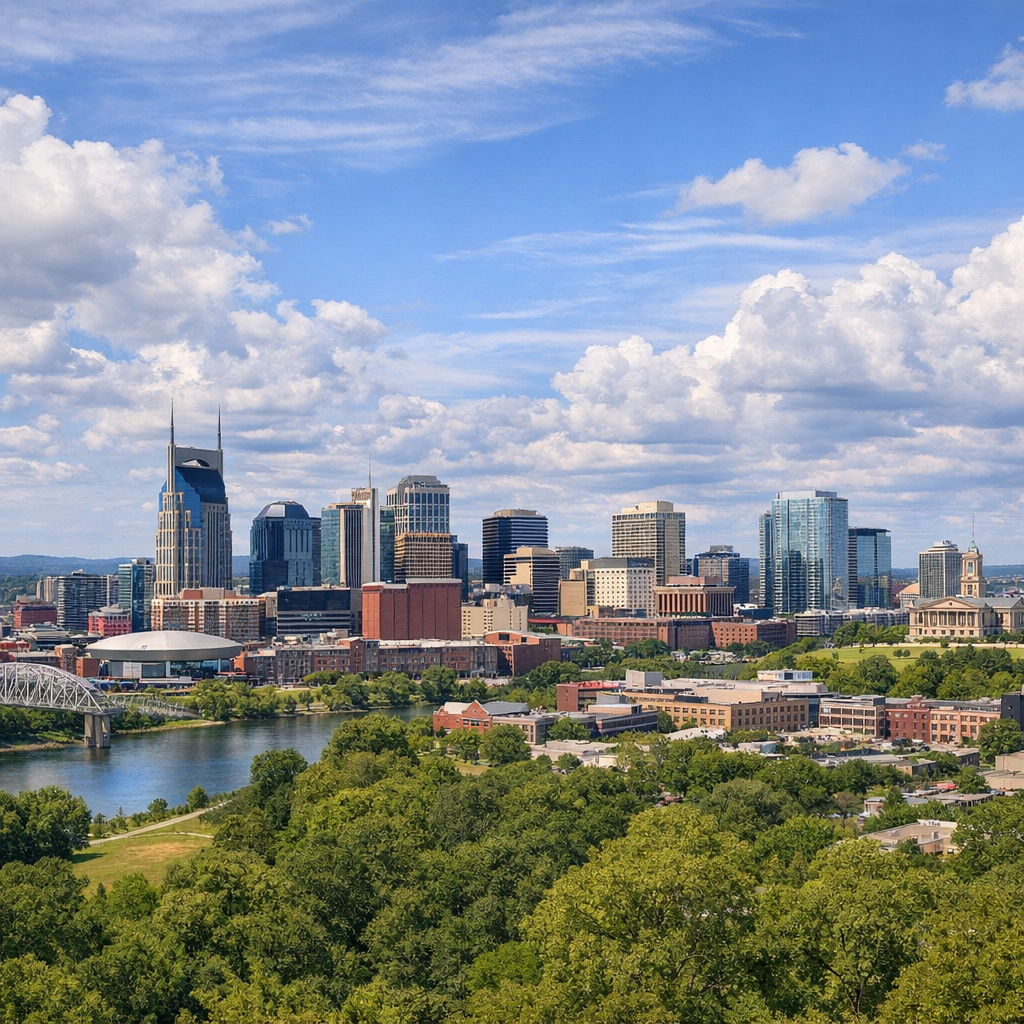
Nashville, Tennessee, experiences a humid subtropical climate, characterized by hot, humid summers and mild to cool winters. Understanding the city’s climate patterns is essential for residents and visitors alike.
Seasonal Temperature Variations
Throughout the year, Nashville’s temperatures fluctuate significantly. The hottest month is July, with average highs around 89°F (31.3°C), while January is the coldest, averaging lows near 30.6°F (-0.8°C). These variations influence daily activities and energy consumption, especially during peak summer and winter months.
Precipitation and Weather Events
Rainfall is fairly evenly distributed throughout the year, totaling approximately 53.5 inches (1357.9 mm) annually. May tends to be the wettest month, while November sees the least precipitation. Snowfall is occasional, averaging about 1.6 inches (4 cm) per year, primarily between November and February.
Environmental Challenges
Nashville faces several environmental challenges related to its climate. The city has experienced an increase in the frequency and duration of heat waves, with an average of three more heat waves per year since the 1960s, each lasting nearly a day longer. This trend poses health risks, particularly for vulnerable populations.
Air quality is another concern. The American Lung Association’s 2026 “State of the Air” report indicates that over 400,000 children in Tennessee are breathing unhealthy air, with the Nashville metro area receiving an F grade for ozone smog. However, the area ranks among the nation’s cleanest for daily particle pollution measures.
Urban heat islands exacerbate these issues. Approximately 71% of Nashville residents live in areas with higher temperatures due to infrastructure and limited green spaces. Efforts to combat this include implementing pavement coatings that reflect sunlight and increasing urban greenery.
Community Initiatives
Local authorities and organizations are actively working to address these environmental challenges. The Nashville Zoo, for instance, has opposed the construction of a large data center adjacent to its grounds, citing concerns over potential noise, light, and water pollution affecting animal welfare and conservation efforts.
Residents can contribute by adopting practices that reduce stormwater pollution, such as proper disposal of household waste and minimizing the use of fertilizers and pesticides. These actions help protect the Cumberland River, the city’s primary source of drinking water.
By staying informed about Nashville’s climate and participating in community initiatives, residents can better prepare for weather-related challenges and contribute to a healthier environment.