

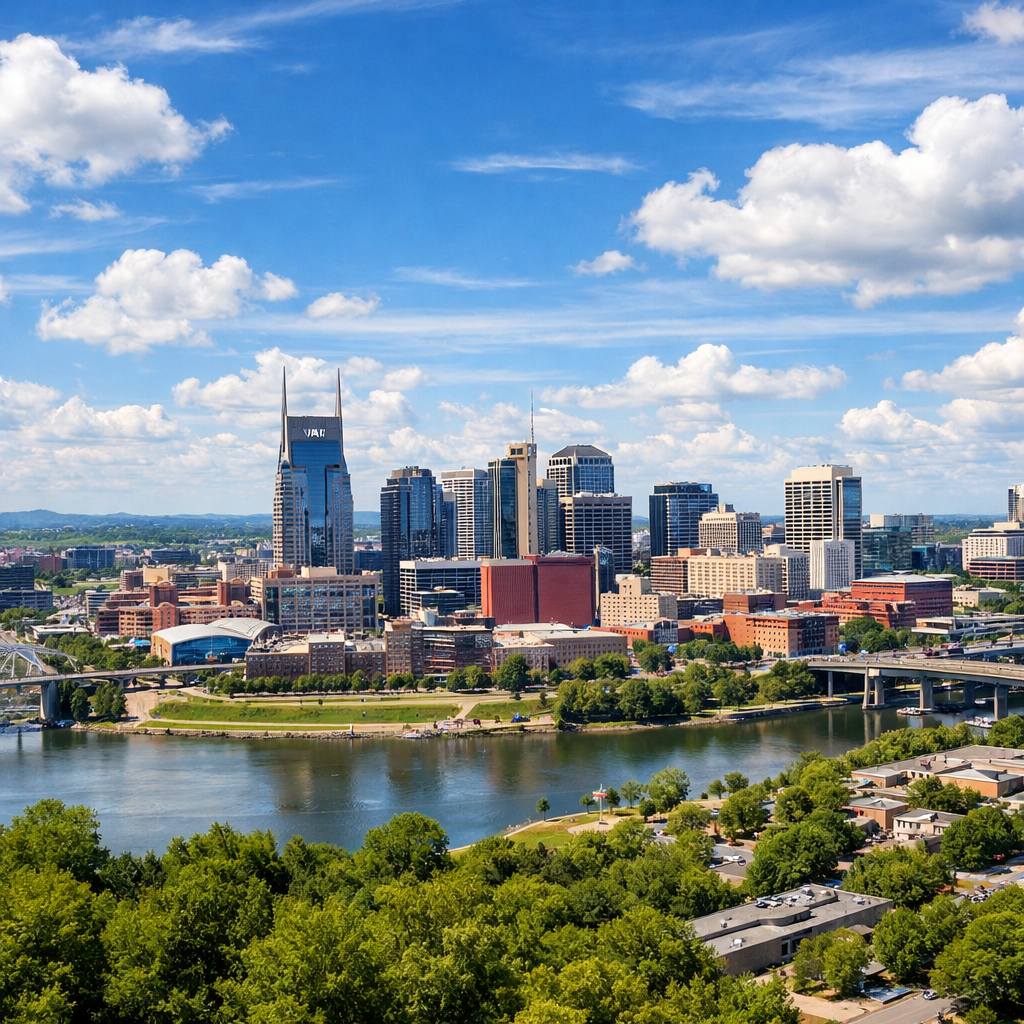
Nashville, Tennessee, experiences a humid subtropical climate, characterized by hot summers, mild winters, and moderate to high humidity throughout the year. Understanding these patterns can help residents and visitors prepare for the city’s diverse weather conditions.
Seasonal Temperature Variations
Throughout the year, Nashville’s temperatures fluctuate significantly:
- Winter (December to February): Average low temperatures range from 28.3°F (-2.1°C) in January to 30.8°F (-0.7°C) in February, with average highs between 47.3°F (8.5°C) and 51.5°F (10.8°C).
- Spring (March to May): Temperatures gradually rise, with average highs reaching 78.6°F (25.9°C) in May.
- Summer (June to August): The warmest months, with average highs peaking at 89.2°F (31.8°C) in July.
- Fall (September to November): A gradual cooling trend, with average highs decreasing to 60°F (15.6°C) by November.
Precipitation and Humidity
Nashville receives an average annual precipitation of approximately 53.5 inches (1357.9 mm), distributed fairly evenly throughout the year. May tends to be the wettest month, averaging 5.38 inches (136.65 mm) of rainfall, while August is typically drier, with around 3.74 inches (95 mm). Humidity levels remain moderate to high year-round, contributing to the city’s characteristic muggy summers.
Environmental Considerations
Urban development has led to the formation of heat islands in Nashville, where built-up areas experience higher temperatures due to infrastructure like buildings and roads absorbing and re-emitting heat. Approximately 71% of residents live in these heat-prone neighborhoods, which can exacerbate the effects of extreme heat, particularly for vulnerable populations.
To mitigate these effects, the city has implemented solutions such as pavement coatings that reflect sunlight and initiatives to increase green spaces. Additionally, residents are encouraged to take steps to prevent stormwater pollution, as rain and melting snow can carry pollutants from lawns and streets into creeks and streams, eventually affecting the Cumberland River, Nashville’s primary source of drinking water.
Preparing for Nashville’s Climate
Being aware of Nashville’s climate patterns allows residents and visitors to plan accordingly. During the hot and humid summer months, it’s essential to stay hydrated, seek shade, and limit outdoor activities during peak heat. In winter, while temperatures are generally mild, occasional cold snaps can occur, so having appropriate clothing is advisable. Staying informed about local weather forecasts and environmental initiatives can help everyone contribute to a healthier and more sustainable Nashville.