

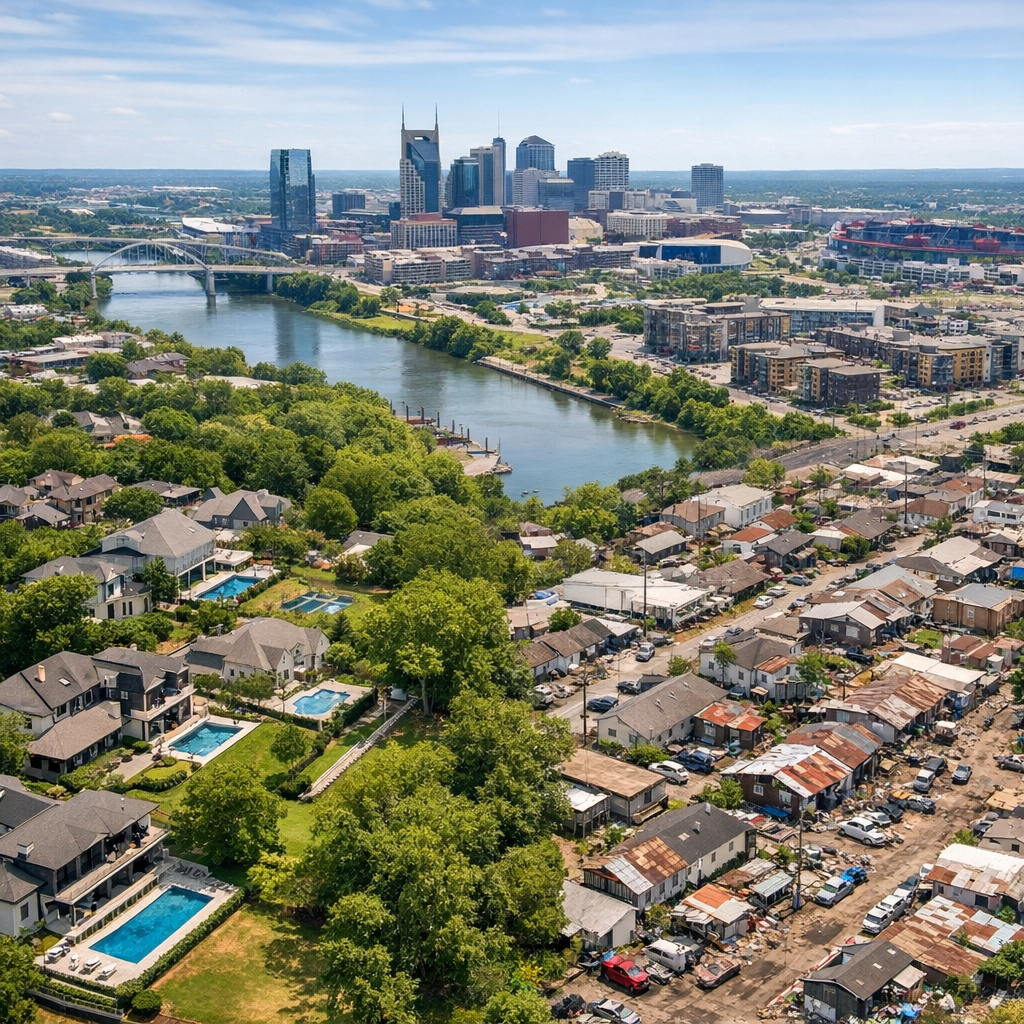
Nashville’s rapid growth has brought prosperity to many, but it has also intensified housing affordability challenges for a significant portion of its residents. Recent data underscores the severity of this issue, highlighting a widening gap between income levels and housing costs.
Stark Statistics Reveal the Crisis
A Vanderbilt University poll indicates that 82% of Nashville residents feel they cannot afford to purchase a home in Davidson County. This sentiment reflects the broader economic pressures facing the community, as housing prices continue to outpace income growth.
Further emphasizing the disparity, a housing and infrastructure study revealed that Black and Hispanic families can afford median-valued homes in less than 1% of Nashville’s 481 neighborhoods—specifically, just 0.8% for Black families and 0.6% for Hispanic families. This finding points to the city’s ongoing housing crisis, deepened by a long history of discriminatory practices such as redlining and racist land-use policies.
Historical Context and Contributing Factors
The roots of this crisis are multifaceted. Historical practices like redlining and discriminatory land-use policies have long marginalized minority communities, limiting their access to homeownership and wealth accumulation. These systemic issues have been compounded by recent economic trends, including a surge in property values and a competitive real estate market driven by Nashville’s popularity and growth.
Community and Policy Responses
In response to these challenges, local leaders have initiated several strategies aimed at increasing affordable housing availability. Mayor Freddie O’Connell has emphasized the importance of addressing housing affordability, noting that unaffordability threatens the long-term fabric of the community. Efforts include the Unified Housing Strategy, which aims to increase the supply of affordable housing units. In fiscal year 2025, city funding supported the construction and preservation of nearly 1,800 affordable housing units.
Despite these initiatives, public support for multifamily housing, which could improve availability, has waned, making the topic increasingly politically contentious. The Vanderbilt Poll surveyed 1,048 residents between February 20 and March 14, with a margin of error of ±4.05%. The mayor’s upcoming budget proposal is expected to emphasize housing affordability.
Looking Ahead
Addressing Nashville’s housing affordability crisis requires a comprehensive approach that considers historical inequities, current economic realities, and the diverse needs of its residents. Continued collaboration between policymakers, community organizations, and residents is essential to develop sustainable solutions that ensure all Nashvillians have access to affordable and stable housing.