

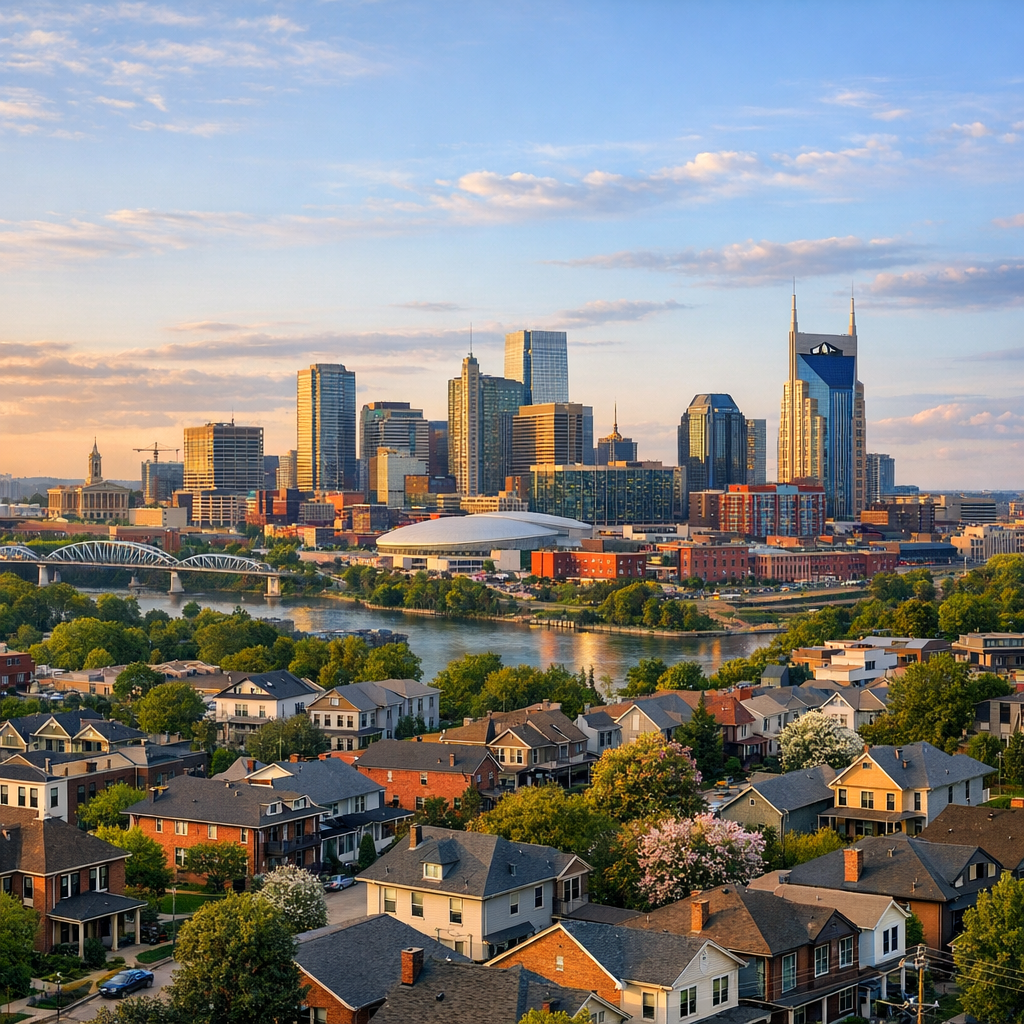
Nashville’s real estate market is experiencing notable shifts, presenting both challenges and opportunities for buyers and sellers alike. Understanding these changes is crucial for making informed decisions in this dynamic environment.
Market Trends
Recent data indicates a cooling in Nashville’s housing market. The average home value stands at $436,603, reflecting a 3.3% decrease over the past year. Homes are going pending in approximately 25 days, suggesting a more balanced market compared to previous years. Additionally, the median sale price is $458,333, with a median list price of $499,900. Notably, 14.8% of sales are closing above the list price, while 61.6% are below, highlighting increased negotiation between buyers and sellers.
Inventory and Buyer Leverage
The market has seen a significant increase in inventory, with 4,482 properties available as of June 30, 2026. This 12.3% year-over-year rise provides buyers with more options and greater negotiating power. Sellers are responding by adjusting pricing strategies and offering incentives to attract potential buyers.
Neighborhood Spotlight: Antioch
Antioch (ZIP code 37013) continues to lead Nashville’s real estate market, recording 1,121 home sales in 2025. This marks the third consecutive year Antioch has topped the list, emphasizing its rapid growth in southeastern Davidson County. The area’s affordability and new amenities, such as the upcoming Tanger Outlets and an In-N-Out location, contribute to its appeal among buyers.
Development Projects
Several significant developments are underway in Nashville. The Belle Meade Plaza site is set to transform into 1 Iris Lane, a luxury residential project featuring condos starting at $2.5 million. The development will include two residential towers with a total of 92 units, offering premium amenities like private mahjong rooms and a Pilates studio. Construction is expected to begin by the end of 2025, with completion targeted for early 2028.
In another notable move, the Nashville Metro Council has approved the use of eminent domain to prevent a $700 million data center development by DC Blox adjacent to the Nashville Zoo at Grassmere. The decision aims to protect the zoo’s environment and visitor experience, reflecting the city’s commitment to balancing development with community interests.
Conclusion
Nashville’s real estate landscape is evolving, with shifts in market dynamics and significant development projects shaping the city’s future. Staying informed about these trends is essential for anyone looking to navigate the housing market effectively.