

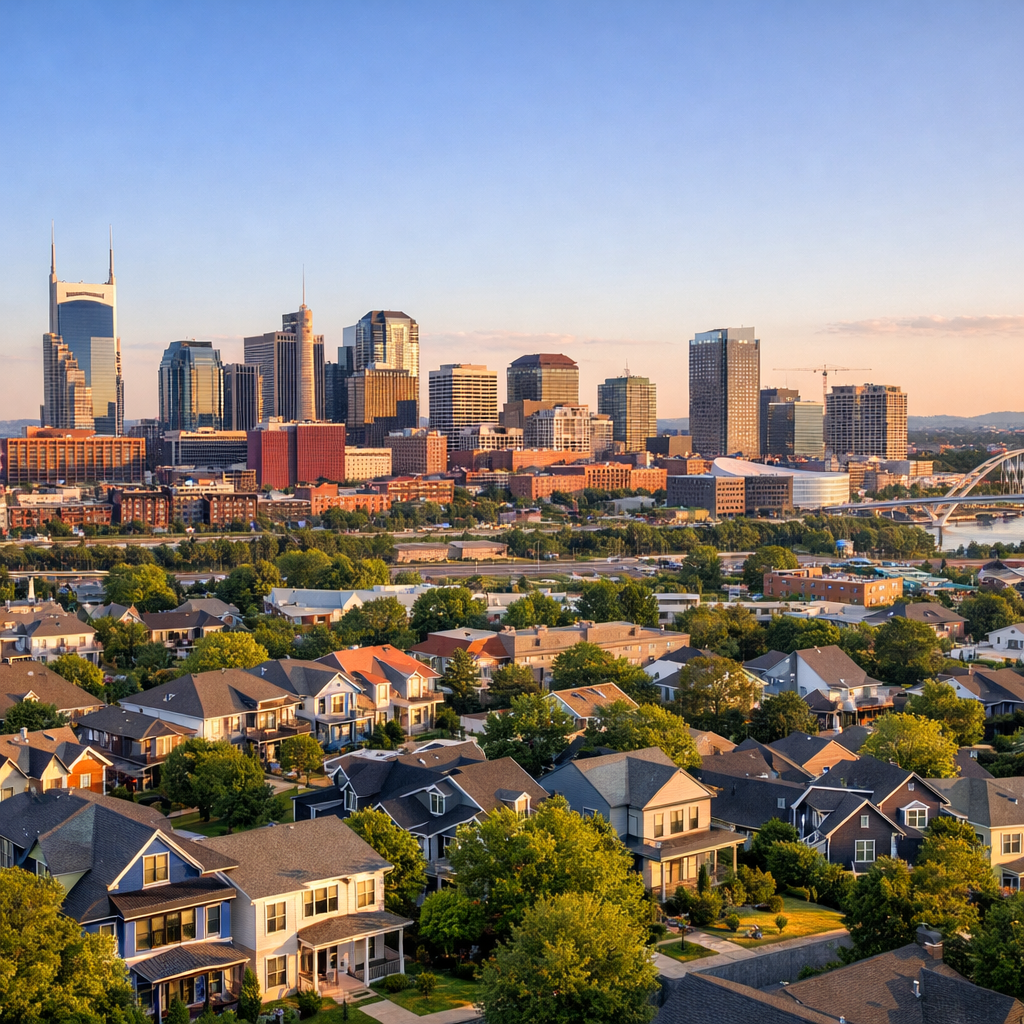
Nashville’s real estate market has experienced notable shifts in recent times, reflecting broader national trends while maintaining its unique local dynamics.
Market Trends
As of mid-2026, the average home value in Nashville stands at approximately $436,603, marking a 3.3% decrease over the past year. Homes are typically going under contract in about 25 days, indicating a market that, while still active, is experiencing a slight cooling period. This trend suggests that buyers may have more negotiating power than in previous years.
Inventory and Sales
The housing inventory in Nashville has seen a significant increase. In March 2026, there were 12,315 properties available for sale, a 12% rise from the previous year. This surge in inventory, coupled with slightly lower interest rates, has provided buyers with more options and leverage in negotiations. Consequently, sellers are adopting creative tactics, such as offering incentives, to attract buyers.
Neighborhood Highlights
Antioch (ZIP code 37013) continues to lead Nashville’s real estate market, recording 1,121 home sales in 2025. This marks the third consecutive year Antioch has topped the list, emphasizing its rapid growth in southeastern Davidson County. The area’s affordability and new amenities, like the Tanger Outlets and an upcoming In-N-Out, contribute to its appeal.
Development Projects
Significant development projects are underway in Nashville. The East Bank project, for instance, includes plans for 323 affordable housing units near the upcoming Titans stadium. This development also features an 8,700-square-foot daycare center and 12,700 square feet of street-level retail space, aiming to create a mixed-use community that caters to diverse needs.
In another notable development, the Nashville Metro Council has approved the use of eminent domain to prevent a $700 million data center project by DC Blox adjacent to the Nashville Zoo at Grassmere. The decision reflects the city’s commitment to preserving community assets and addressing residents’ concerns about potential disruptions.
Conclusion
Nashville’s real estate market is in a state of flux, characterized by decreasing home values, increased inventory, and significant development projects. These changes present both challenges and opportunities for buyers, sellers, and investors. Staying informed about these trends is crucial for making strategic decisions in this evolving landscape.