

By Mia Wilson
Current Market Trends: Prices and Time on Market
Home prices in Nashville remain elevated. The median sale price is around $480,000, about 1% higher than last year. Homes are sitting on the market longer—roughly two months—indicating a slight easing compared to rapid sales in previous years. There’s also some cooling: Zillow reports a 3.3% year-over-year decline in its Home Values Index. These patterns suggest a transition toward a more balanced market, especially for buyers who felt priced out in the peak period. Based on recent data, condos and smaller homes tend to lag single-family homes in price gains.
Affordable Housing Efforts and Public-Private Tools
Nashville is leaning harder on policy to boost affordability. The Payment in Lieu of Taxes (PILOT) program, now a decade in use, has supported more than 11,000 affordable units—both newly built and renovated. Importantly, many new developments under this program commit to long-term affordability via deed restrictions or long ground leases.
Another growing strategy: metro departments are evaluating Metro-owned parcels to use for housing—especially through public-private partnerships. The Infill Housing Initiative is a promising example: it identifies underused city land, releases select lots for bidding, and weighs proposals based on how affordable and deeply affordable units are.
Big Projects & Development Policy Shifts
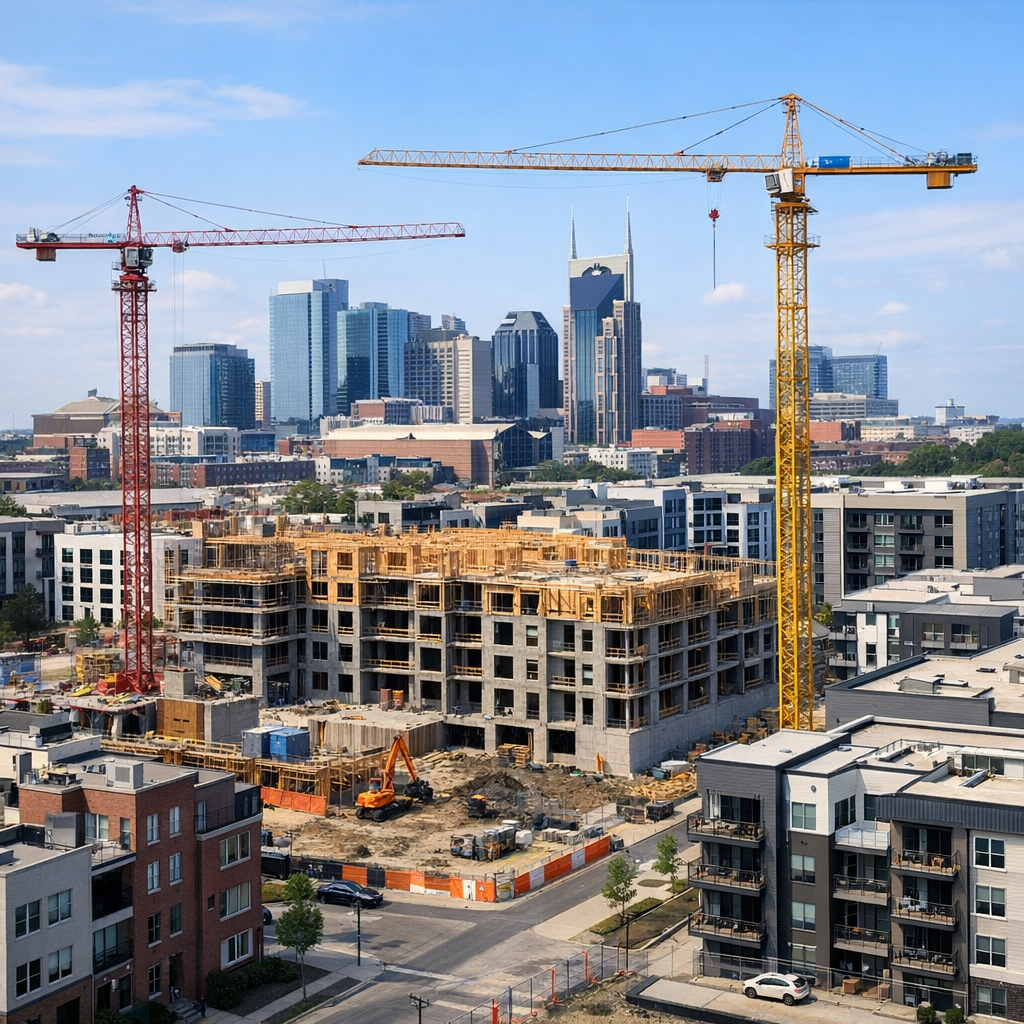
New large-scale developments are reshaping Nashville’s near-downtown geography. The East Bank initiative, led by Metro and The Fallon Company, will transform 30 acres of riverfront land with more than 1,500 housing units—nearly half designated at affordable rates. It also includes major infrastructure investments of approximately $147 million for utilities, bridges, and streets designed for pedestrians, bikes, and buses.
Meanwhile, Nashville’s Planning Department has launched the Design & Development Strategy. This initiative is revisiting zoning, design standards, and development review processes in the urban core. Its goals include preserving character, improving predictability for builders, and integrating housing and infrastructure plans like NashvilleNext and transit expansion.
What This Means for Buyers, Renters, and Neighbors
For those looking to buy: patience may pay off. Homes are lingering longer, so buyers might find more room for negotiation. However, high prices persist, especially in areas close to major transit corridors or projects like East Bank.
Renters continue to face affordability challenges. Even as market cooling sets in for home sales, many rental rates remain steep, particularly near strong job centers or public transit. Policies targeting affordable housing are crucial but often trail demand.
Neighborhoods undergoing rezoning, redevelopment, or infrastructure investment might see both opportunities and growing pains—traffic, construction, and shifting housing stock can alter local character. Staying involved in public planning processes can help residents influence outcomes.
Tips for Tracking Local Housing Trends
- Monitor Metro Nashville Planning Department updates (esp. Design & Development Strategy) to understand changes in zoning or allowable density.
- Check for new affordable housing funding rounds—PILOT and the Housing Trust Fund often reopen for applications.
- Keep an eye on involvements of Metro-owned lots or back-tax properties, which may be released for affordable housing use.
- Watch master-planned developments like East Bank. They can influence values, transit service, and infrastructure nearby.