

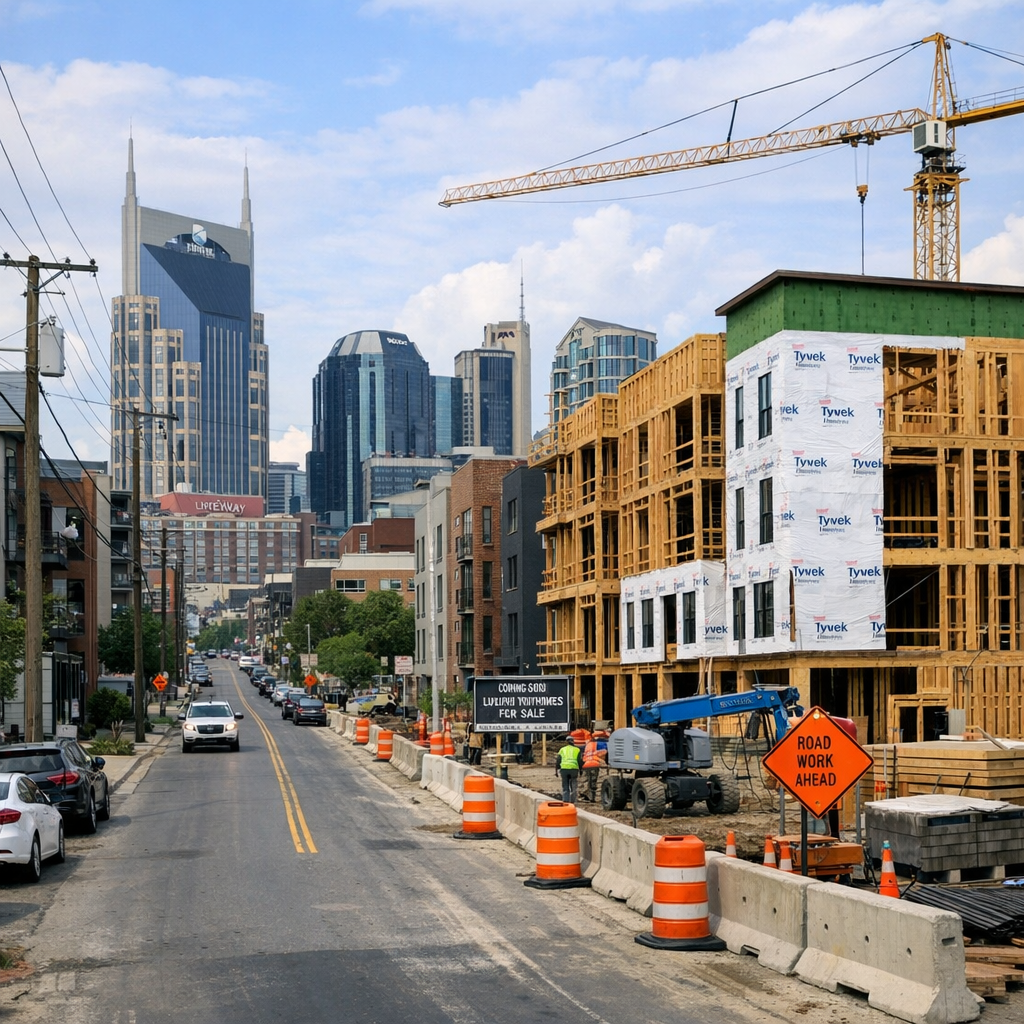
Hi, I’m Mia Wilson, checking in on what’s happening in Nashville’s real estate scene—from rising home prices and slowing sales to easing rents and more options for buyers.
Home Prices Still Climbing, but Buyers Have More Breathing Room
Nashville’s single-family home median price rose modestly over the past year to around $537,000, according to data from the first half of 2026 covering nine Middle Tennessee counties. Condominiums also saw increases, hitting roughly $350,000. These gains reflect steady demand, especially from people eyeing suburbs and exurbs.
What’s different now is that inventory is up. Listings have increased compared to last year, giving buyers more choices and taking some of the heat off bidding wars. Homes are spending more time on the market—average days on market are rising. Buyers are no longer racing headlong, but many are making trade-offs, like being more flexible on location or condition. <span class="citeturn0search0turn0search3
Rentals Cooling, More Options for Tenants
For renters, the market is showing signs of easing. The rental vacancy rate climbed to roughly 11.1% in 2025 in the Nashville area, up from about 8.5% in 2024. Rent growth has slowed too—with some asking rents holding steady or dipping slightly. <span class="citeturn0search11turn0search10
Demand still varies sharply by neighborhood. Areas that added lots of new apartment units—like The Gulch and Germantown—are starting to see softer rents. On the other hand, suburban areas farther out remain tighter, especially for single-family rentals. <span class="citeturn0search10
Opportunities and Headwinds for Buyers
Buyers are gaining leverage—there’s more inventory, fewer immediate offers over list price, and increased likelihood of price reductions or seller concessions. Nashville was ranked the second strongest buyer’s market nationally in June, with substantially more sellers than buyers active in the marketplace. <span class="citeturn0search5turn0search3
But challenges remain. Prices are high compared to incomes, and even with more options, many younger and first-time buyers are stretched by down payments, mortgage rates, or competing against cash offers. For these buyers, suburban counties like Rutherford, Dickson, and Montgomery are growing in appeal because of comparatively lower costs. <span class="citeturn0search3turn0news28
Local Development and Policy Moves You Should Know
The Metropolitan Development and Housing Agency (MDHA) continues to manage federal housing grants and programs that support affordable housing, home repairs, and rental assistance. These resources offer paths for moderate- and low-income residents to stay in the market. <span class="citeturn0search8
Meanwhile, city efforts to ease zoning restrictions and promote higher density development are underway. These changes are aimed at allowing more housing types—think duplexes, smaller lot single-family homes—to be built, especially within existing neighborhoods. If you’re buying land or working with a builder, it’s worth noting what zoning changes are in your area. <span class="citeturn0search3
Tips If You’re Renting Or Buying Right Now
- Get pre-approved even if you’re just looking; it strengthens your offer in competitive neighborhoods.
- Don’t skip inspections—older homes in East Nashville, Inglewood, or Germantown can have hidden infrastructure issues.
- Look a bit outside the core for value; drive time may increase, but you’ll find more affordable homes.
- If leasing, be open to negotiation—longer vacancy periods mean landlords may be more willing to offer discounts or improvements.
- Track upcoming zoning changes and housing programs—they may unlock unexpected opportunities.
The Nashville housing market is shifting from the fast-burn seller’s climate of a few years ago into something more balanced. That doesn’t make everything easier, but it does mean there’s more space and possibility—for buyers, renters, and communities.