

By David Hernandez
Nashville’s reputation as Music City runs deep, but the city’s arts and culture beat encompasses so much more than country music roots. Between public art, local galleries, and live music scenes that pulse through every neighborhood, Nashville remains a place where culture is not just preserved—it’s continuously created. Here’s a look at what keeps our creative pulse strong.
Public Art You Can Walk Through
The Metro Arts Public Art Collection boasts over 200 permanent artworks sprawling across Nashville–from community centers and libraries to parks and transit corridors. These pieces aren’t just background—they’re woven into daily life. In Donelson, for example, you’ll find Reverie, a series of sculptural benches in Tennessee marble that offer rest, atmosphere, and a dose of local creativity. Meanwhile, Amber Lelli’s Celestial Falls brings the Cumberland River indoors in a suspended installation inside the Donelson Library. These projects show how public art isn’t optional—it’s essential to how we move around this city.
Other standout landmarks include Ghost Ballet for the East Bank Machineworks, a striking modern sculpture near the John Seigenthaler Pedestrian Bridge, and Stix, a bold installation on Korean Veterans Boulevard. These works anchor the skyline and spark conversations about movement, history, and the urban landscape.
Theatre of Sound: Live Music Spaces Big & Small
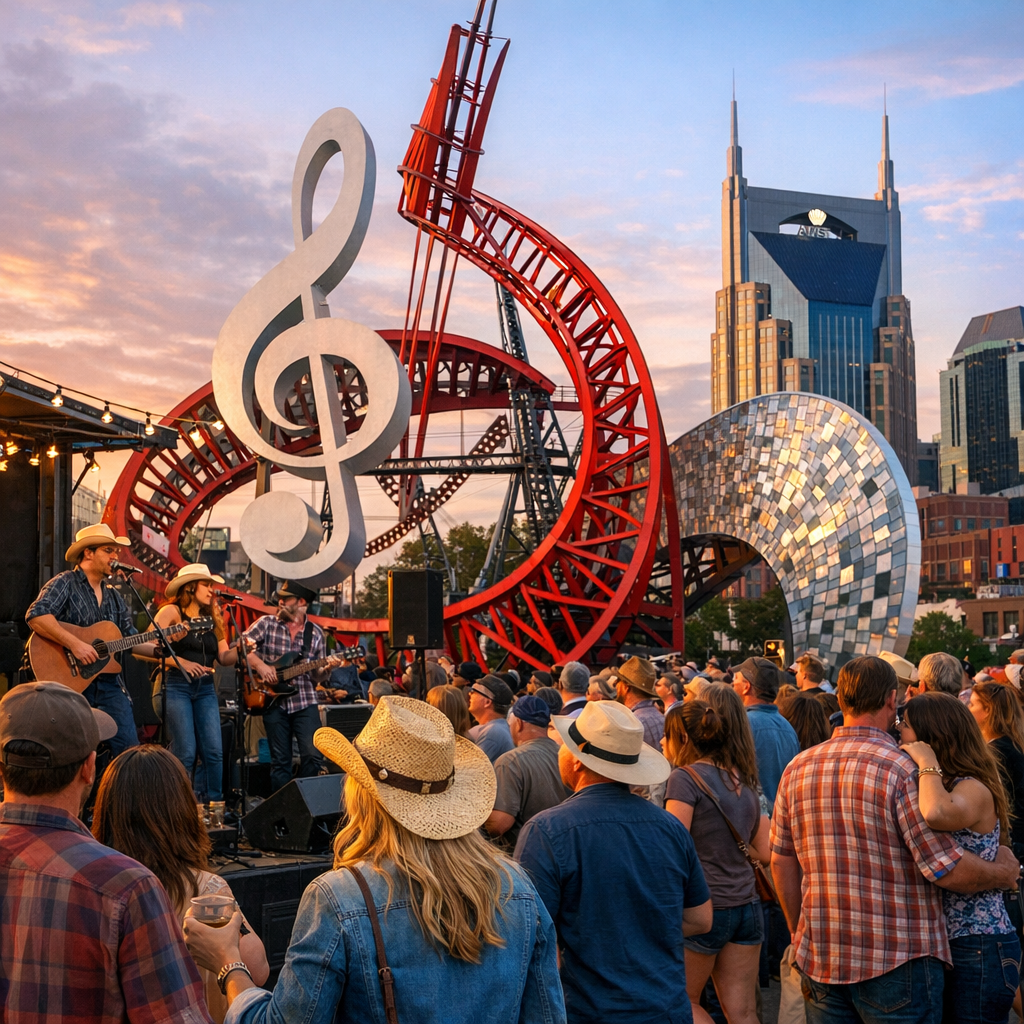
Live music in Nashville exists on a spectrum—from iconic halls to intimate rooms tucked down alleyways. The Grand Ole Opry and Ryman Auditorium deliver performances with grand scale and tradition. If you’re drawn to songwriting and quieter connection, spaces like the Bluebird Café or other listening rooms are where stories are shared quietly and deeply.
For those chasing spirited, local energy, neighborhoods like East Nashville, Midtown, the Gulch, and SoBro offer a mesh of bands, bars, and after-dark creativity. Venues like The Basement East, The 5 Spot, and The Station Inn offer ears a chance to hear something new—genre-bending, roots-driven, or just beautifully raw.
Music Row & Beyond: The Legacy in the Work
Music Row isn’t just history—it’s a living engine. Centered on 16th and 17th Avenues South, this historic stretch is home to recording studios, publishers, producers, and legendary rooms like RCA Studio B. Touring Studio B or passing the Musica roundabout and Owen Bradley Park provides context to the soundtracks many of us already know.
The songs written here shape both the past and present. Whether it’s writers collaborating over lyrics or engineers fine-tuning a track, Music Row is where music meets craft. Even if you can’t head inside a studio, walking its quiet early-morning streets or sitting at a café nearby shows a different, more intimate side of what creates our sound.
Making Your Own Arts & Culture Map
If you want a guide to immersing yourself in Nashville’s creative life, here are a few ideas.
- Built a walking tour around public artworks—you’ll find murals, sculptures, and benches that tell stories about our neighborhoods. Use Metro Arts’ public art map to plot your route.
- Pick one iconic venue show (Ryman, Opry, etc.), then round out the night with a listening room or dive bar in East Nashville or Midtown to hear something spontaneous.
- Check out monthly art crawls downtown or in the Arcade, or visit galleries like the Frist Art Museum. These are great for seeing local artists and getting into conversations with creators.
- Watch how the city’s public art evolves. We often forget that things like Stix or new library installations reflect both our heritage and where we want to go. Be part of the dialogue.
Nashville’s cultural strength comes from momentum—artists creating, neighbors listening, and public spaces that welcome anyone willing to look or listen. Whether you know every note of downtown’s neon rhythm or you’re new to what’s happening off Broadway, I hope this guide helps you explore what makes Music City too big to fit under one label.