

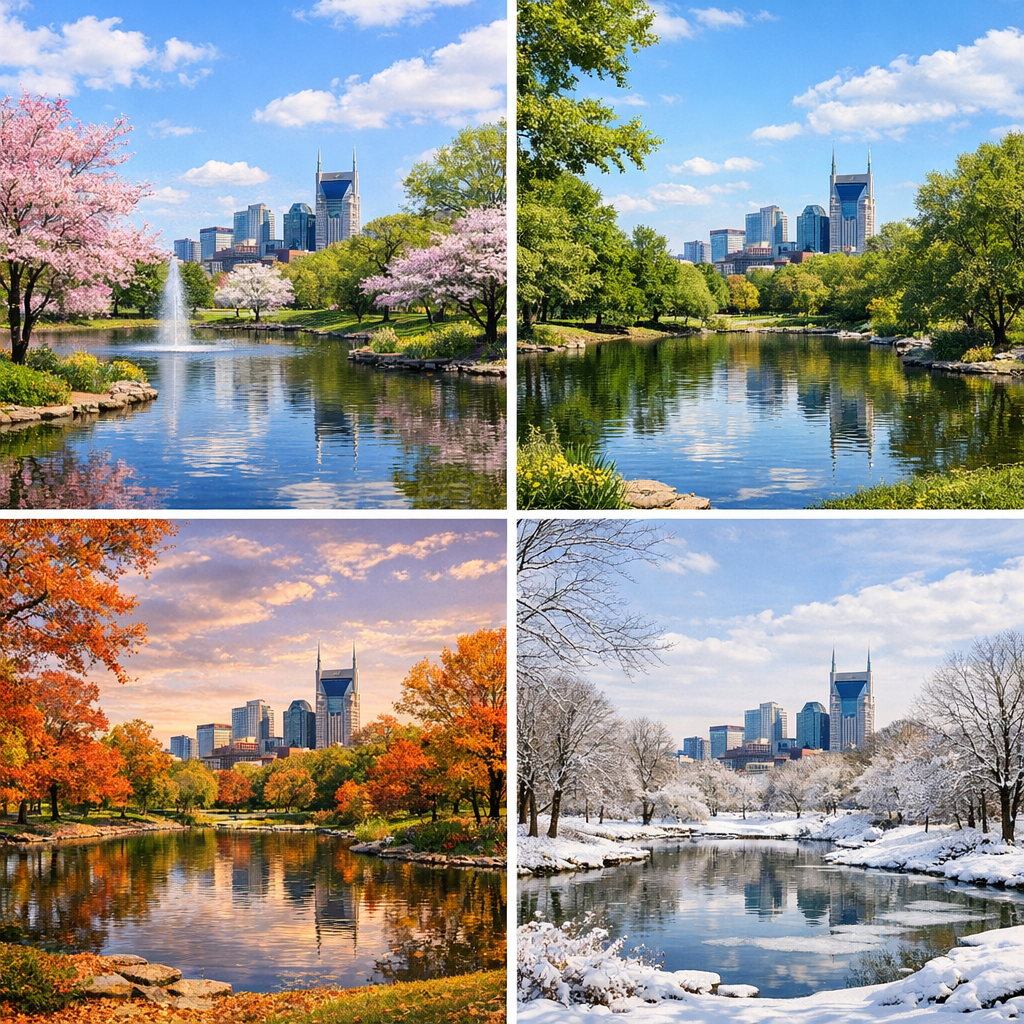
I’m William Thompson, bringing you a guide to the weather and environment here in Nashville. Our seasons are more than just a calendar—they shape the air we breathe, the plants we grow, and the storms we prepare for. Here’s what’s changing, what’s staying the same, and how we can adapt.
Temperature Trends and Seasonal Timing
Nashville has experienced noticeable warming over recent decades. Average winter lows are rising, and days without freezing temperatures—once common—are now rare. These shifts signal that spring is arriving earlier and autumn later than in past years.
Such changes affect many parts of life: planting schedules, energy needs, and even pest and disease cycles. For instance, warmer springs can lead to extended allergy seasons, while milder winters may fail to curb pests that used to be held in check by frost.
Rainfall Patterns, Flood Risk, and Drought
Precipitation is relatively abundant in our region, but it’s not evenly distributed throughout the year. Winters and early springs tend to be wetter, giving way to a drier stretch during summer and early fall. Thunderstorms are frequent during warmer months, sometimes bringing heavy downpours and localized flooding.
Meanwhile, dry spells—sometimes unexpectedly severe—can place stress on water supplies and ecosystems. As temperatures rise, soil moisture evaporates more quickly, and drought periods become more intense.
Air Quality: Ozone, Particulate Matter, and Health Impacts
Air quality varies by season. Ozone pollution tends to spike during hot summer days, while particulate matter (PM2.5) can be elevated year-round depending on weather conditions, wind, and emissions.
Middle Tennessee issues daily forecasts for PM2.5 and ozone to inform the public, especially sensitive groups like children, older adults, and those with respiratory issues. Staying aware helps—those days when the sun feels sharp and the air seems hazy are the ones to take precautions.
Green Spaces, Urban Heat, and Ecosystem Resilience
Nashville’s tree canopy, rivers, and green buffer zones are vital in moderating heat and storm impacts. Urban heat islands—areas with less vegetation, more pavement, and dense development—amplify high temperatures at night.
Efforts are underway locally to protect forests, conserve waterways, and prioritize green infrastructure. Doing so helps improve cooling, absorb rainfall, and support native plants and animals, all of which improve quality of life and environmental health.
How You Can Prepare and Engage
- Watch for air quality alerts on hot, dry days and limit strenuous outdoor activities if levels are unhealthy.
- Plan gardens and landscaping with native species—they tend to thrive in changing conditions and when established, demand less maintenance and water.
- Support and participate in local conservation efforts—the Ecological Conservation Strategy, for example, aims to protect green spaces and connect habitats around Nashville.
- Stay informed: daily forecasts, weather warnings, and environmental reports are essential as small variations now have bigger effects than before.
Nashville’s climate isn’t frozen in place—the rhythms are shifting. Understanding what’s changing and why helps all of us adapt—and ensures our seasons continue to nourish our city in every way.