

By Daniel Rodriguez
Nashville’s business climate continues to display a mix of robust opportunity and rising pressures. As entrepreneurs and established local employers look ahead, they are working to balance optimism with operational realities.
What local economic data shows
The unemployment rate in the Nashville-Davidson–Murfreesboro–Franklin metro area has been consistently low—hovering around 2.9 to 3.3 percent as of the latest labor statistics. That figure remains well below the national average, with growth strongest in sectors like leisure and hospitality as well as education and health services.
Employment growth overall has been modest. From roughly this time last year to now, total nonfarm employment rose by only about 0.1%. Construction and trade, transportation and utilities sectors saw slight declines, while professional/business services and hospitality posted stronger gains.
What local businesses are saying
The Middle Tennessee Business Confidence Index (BCI), released in mid-2026, reflects this dual nature. Businesses reported strong current conditions—solid sales and profits—but their expectations for the future came in more cautious.
Key concerns raised include increasing housing costs, which make it harder to attract and retain staff, and more burdensome permitting, zoning, and tax-related regulations. At the same time, many cited opportunities in expanding demand, adopting newer technologies, and stepping into growing markets tied to tourism and local commerce.
Nightlife, storefronts, and neighborhoods adapting
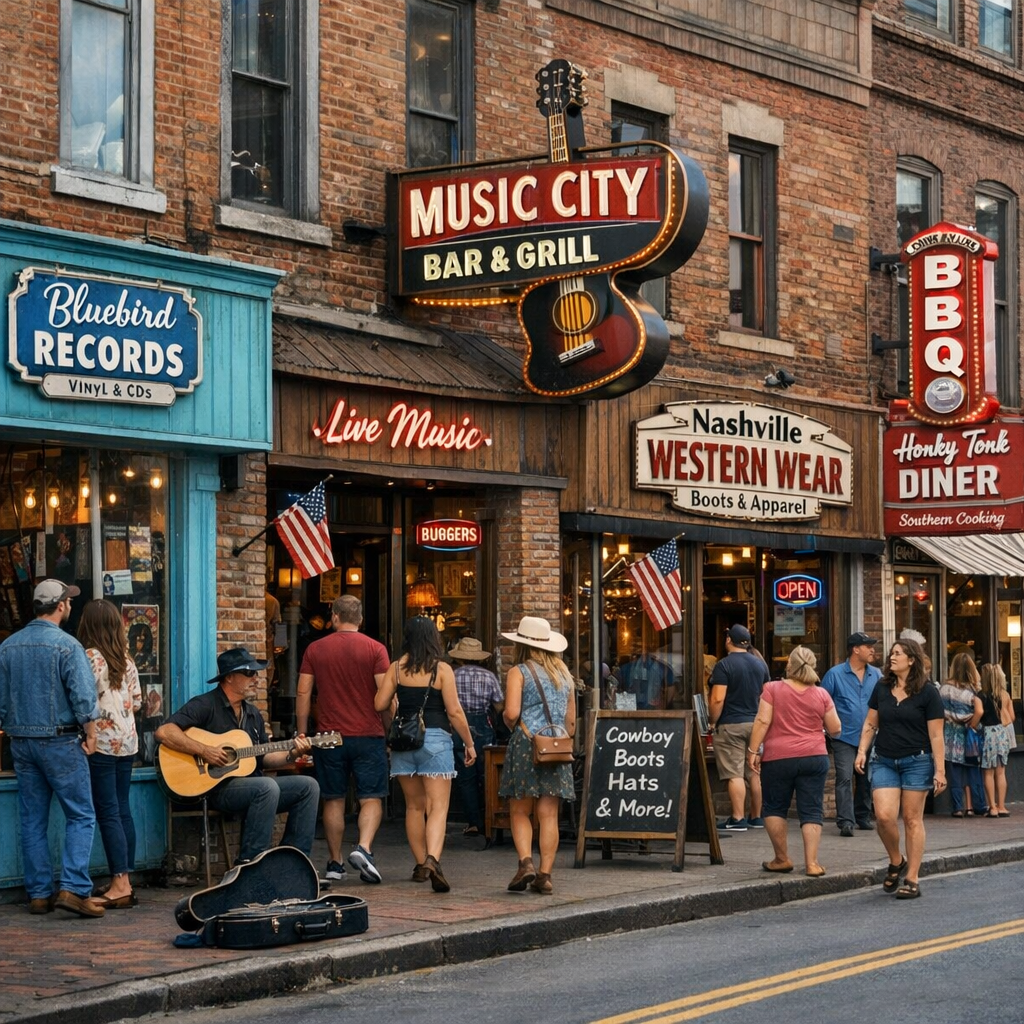
Across neighborhoods like 12South and along busy commercial corridors, there’s renewed energy. Vacant storefronts are being filled, new brands are arriving, and both online-first and brick-and-mortar ventures are investing in experience, visibility, and community.
Local institutions—from the Mayor’s Office to business incubators—are backing this growth. Initiatives targeting small business support, workforce development, and equitable access are being scaled. For example, the Nashville Entrepreneur Center offers programs tailored for founders in every stage: from idea to growth.
What this means for entrepreneurs and policy
For entrepreneurs, the message is clear: the fundamentals are favorable, but so are the challenges. Investing in tools to reduce overhead—such as efficient digital systems—and planning around workforce needs are critical. Housing affordability and regulatory barriers will have outsized impacts on whether new businesses thrive or stall.
On the policy side, business leaders are calling for clarity in taxation, more streamlined zoning and permitting, and infrastructure investments that support mobility and connectivity. These alignments can unlock more balanced growth across Nashville’s neighborhoods.
Looking ahead
Moving forward, Nashville’s economic health will depend on how well local actors can maintain momentum while addressing the pressures businesses face. Strong neighborhoods with resilient businesses, supported by smart policy, can help ensure growth isn’t just concentrated in a few areas but broadly shared.
The sustained confidence among business owners suggests Nashville remains a fertile ground for innovation and expansion—if the challenges are met with policy responses and community support proportionate to the stakes.