

By Ava Garcia
Growing AI Startup Scene Anchored in Local Industries
Nashville has quietly become a hub for AI-powered innovation, particularly in sectors where the city has deep roots—healthcare, logistics, and enterprise software. Startups like Amsive (marketing intelligence), HeroWear (industrial exoskeletons), Lumata Health (patient engagement), and PredictionHealth (AI that understands clinical documentation) are building tools for real-world problems. These companies benefit from proximity to regional partners, deep domain expertise, and the capital to scale. This isn’t hype: a recent report found that Nashville’s top AI startups have raised collectively around $29 million among the leading seed-stage companies. The pipeline is strengthening fast.
Tech Access and Digital Education as a Bridge
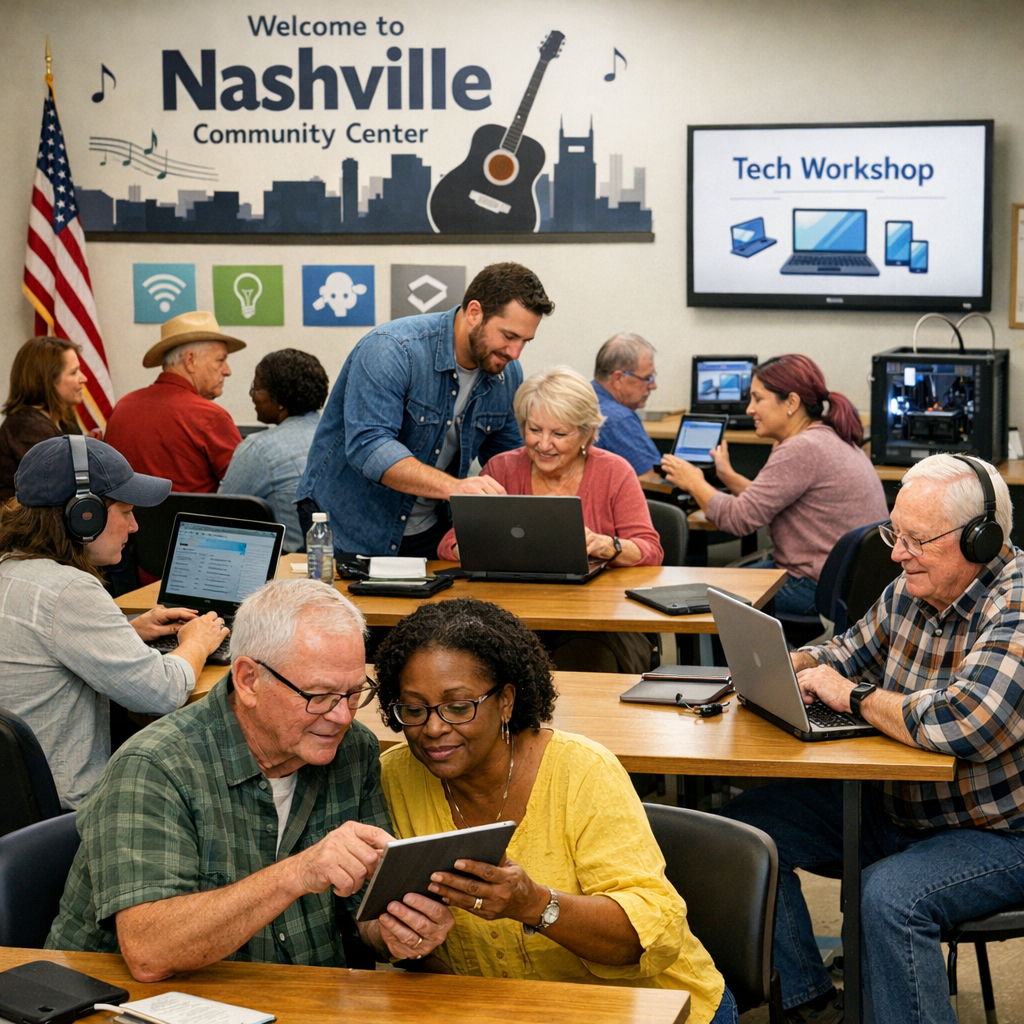
Technology’s impact isn’t felt equally. To ensure everyone benefits, Nashville has invested in digital inclusion programs. For many residents, navigating basic tools—email, word processors, resume software—can be a barrier to job opportunities. Programs like MDHA’s Skills for Success offer hands-on training, combined with device access, to build digital confidence. At the same time, nonprofit groups like Tech 4 All Tennessee provide workshops, distribute computers, and reinforce the idea that access without understanding limits tech’s potential.
AI in Local Government: Promise with Oversight
Metro Nashville is experimenting with AI, but not carelessly. The city adopted a formal AI policy in 2024 and expanded it in mid-2026. Key changes include clearer rules for classifying data, ensuring human review remains part of AI-driven processes, and maintaining accountability through a registry of tools in use by municipal agencies. City staff are mindful of risks like misinformation, bias, and transparency. For many Nashvillians, government AI shows up quietly—through document summarization, chatbot support for public queries, or internal tools—and those uses are governed by policy designed to protect civic trust.
Gadgets and Tech Tools in Everyday Homes
On a personal level, tech gadgets are no longer luxury items—they’re everyday companions. Smart speakers, fitness wearables, energy-efficient thermostats, and streaming devices have moved from niche to normal. For many, voice assistants or apps that automate home routines save time, cut energy costs, or help manage health. In a city where traffic, commuting time, and costs are growing concerns, technology that helps optimize time or reduce waste isn’t just helpful—it’s becoming part of what makes life better.
What to Watch Going Forward
- Equity in access: Ensuring reliable internet, updated devices, and digital skills training across neighborhoods remains a crucial gap.
- Responsible AI: As generative and predictive tools spread, oversight mechanisms—around bias, transparency, and data privacy—will matter more.
- Local impact: Startups grounded in solving local problems—health, housing, workforce—often produce durable innovation.
- Balancing automation and human touch: Tools can amplify productivity, but preserving human judgment, creativity, and connection is essential.
As Nashville’s tech ecosystem continues to mature, the influence of AI and gadgets on everyday life will only deepen. What matters is not just what we build—but how we make sure everyone can use, understand, and benefit from what’s built.