

By Emily Johnson
Behind distant headlines and technical reports, a quiet revolution is seismically shifting the global energy landscape: renewables—chiefly solar and wind—have now matched or surpassed coal in generating electricity. This isn’t a one-off moment but part of a broader trend with deep implications for climate, economies, and international relations.
The Tipping Point in Electricity Generation
In 2025, global renewable electricity generation—covered by solar, wind, hydropower, bioenergy, and nuclear—nearly matched coal-fired electricity worldwide for the first time in non-crisis conditions. Renewables not only grew faster but accounted for the majority of new electricity generation that year, while coal’s output declined. Solar PV recorded its largest year-on-year jump ever.
What’s Driving the Shift
Solar PV in the Lead
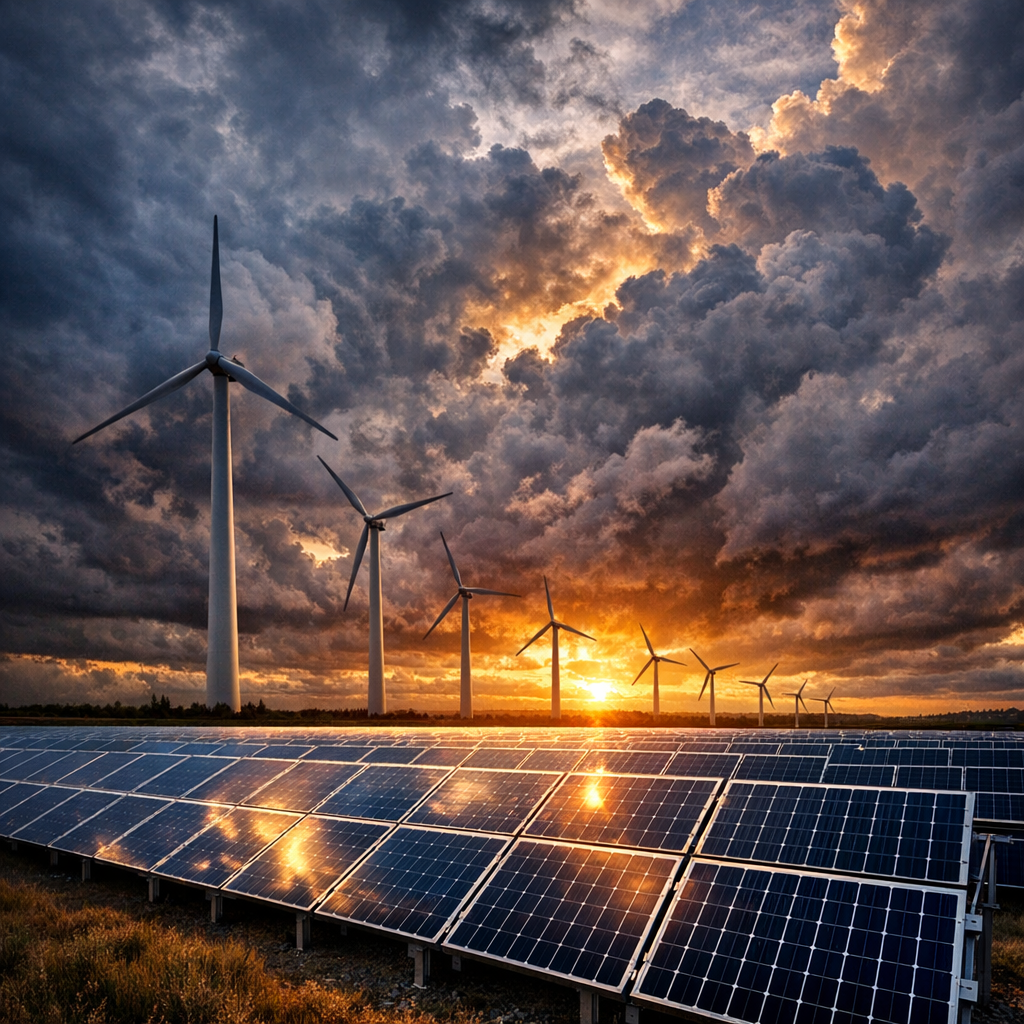
Solar photovoltaic (PV) panels now dominate new renewable installations globally: over three-quarters of all new renewable capacity added in 2025 came from solar PV. Wind energy also surged, increasing by around 40% over 2024 levels, even in the face of grid, financing, and supply chain challenges.
Coal’s Decline & Renewables’ Rise in Emerging Economies
In China and India, solar and wind capacity jumped dramatically, helping reduce coal’s share of electricity generation. Globally, renewables rose to about 34% of electricity output, a hair above coal’s 33%. In many countries, coal still fuels a large share of power, but its dominance is weakening.
Challenges Ahead
Even with all the momentum, the trajectory isn’t smooth. Integrating variable renewables like wind and solar requires big upgrades to power grids, better storage, and smarter regulation. Regions dependent on coal face fiscal, political, and social obstacles in shifting away. Forecasts also suggest that while global renewable capacity will more than double by 2030 compared to a few years prior, current policies still fall short of ambitious targets.
Why This Matters Locally
The implications of this global energy transition reach Nashville—and Tennessee—too. As costs drop, renewables become more competitive, impacting energy bills, job markets in solar and wind, and regional conversations about grid reliability. Transportation electrification, demand trends, and state-level policy will all be influenced by global shifts.
What to Watch Next
- How countries revise energy policies to speed up coal phase-out.
- Investment flows toward solar, wind, storage, and grid modernization.
- How climate events (such as droughts, wind variability, heat waves) affect renewable output.
- Trends in energy access, especially in developing regions where electricity demand is rising fast.
The tide has unquestionably turned: renewables are no longer a hopeful horizon but the defining landscape of our energy future.