

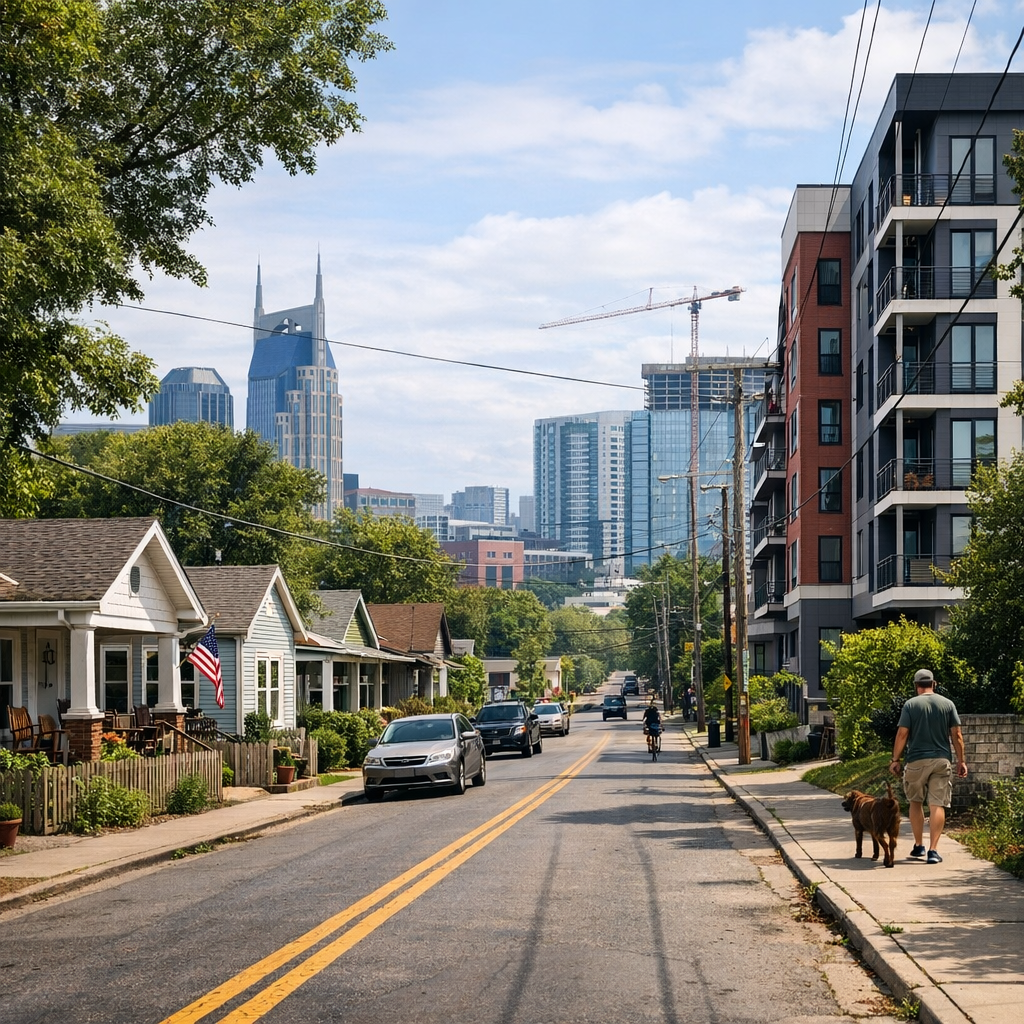
My name’s Benjamin Lopez, and I’ve watched Nashville grow from both sides. I’m among the many who’ve put down roots here—working, raising family, and slowly realizing the stakes of a housing crisis that feels too close to home.
Not just numbers, but people
Recent city data shows nearly half of renters in Nashville spend more than 30% of their income on housing. Many are paying over 50%—meaning every paycheck is stretched tight to toss aside enough for rent. The strain disproportionately falls on Black and low-income Nashvillians, building upon generations of inequality. These are more than stats—they’re stories of families deciding between stability and leaving town.
The affordability wall
A Vanderbilt poll found 82% of Nashville residents believe they can’t afford to buy a home in Davidson County. The luxury towers, new developments, and rising property values are changing what it looks like to live here. For many, staying isn’t a choice; it’s a fight.
Through the cracks—and into the light
There are signs that Nashville is trying—creatively, messily, but genuinely. The city’s recent Unified Housing Strategy aims to weave together policy, purchase resources, and neighborhood input into solutions. Beyond talk, we’ve seen affordable apartments preserved, and for the first time, permanent supportive housing for people without homes.
Where the community leads
Neighborhood projects—from North Nashville to Napier-Sudekum—are refusing displacement without protest. Stories of long-time residents organizing community festivals, supporting small Black-owned businesses, and securing community land trusts show that Nashville’s heart lives in these acts, loud and persistent.
What comes next
We need housing that doesn’t ask us to choose between food, medicine, or a roof over our heads. That means local government and community groups staying in dialogue, pushing for zoning changes to allow missing-middle housing, and ensuring affordable homes are built in neighborhoods across the city—not just near downtown. We need systems that protect residents from rising property taxes, displacement, and the loss of neighborhood character.
Because this is home
Nashville isn’t just changing—it’s being reshaped. But who lives here, who thrives, who gets to stay—these questions are about more than real estate. They speak to our shared identity, memory, and promise. If we’re serious about being a city where people can stay and grow, now’s when we decide whose voices matter most.