

By Benjamin Lopez
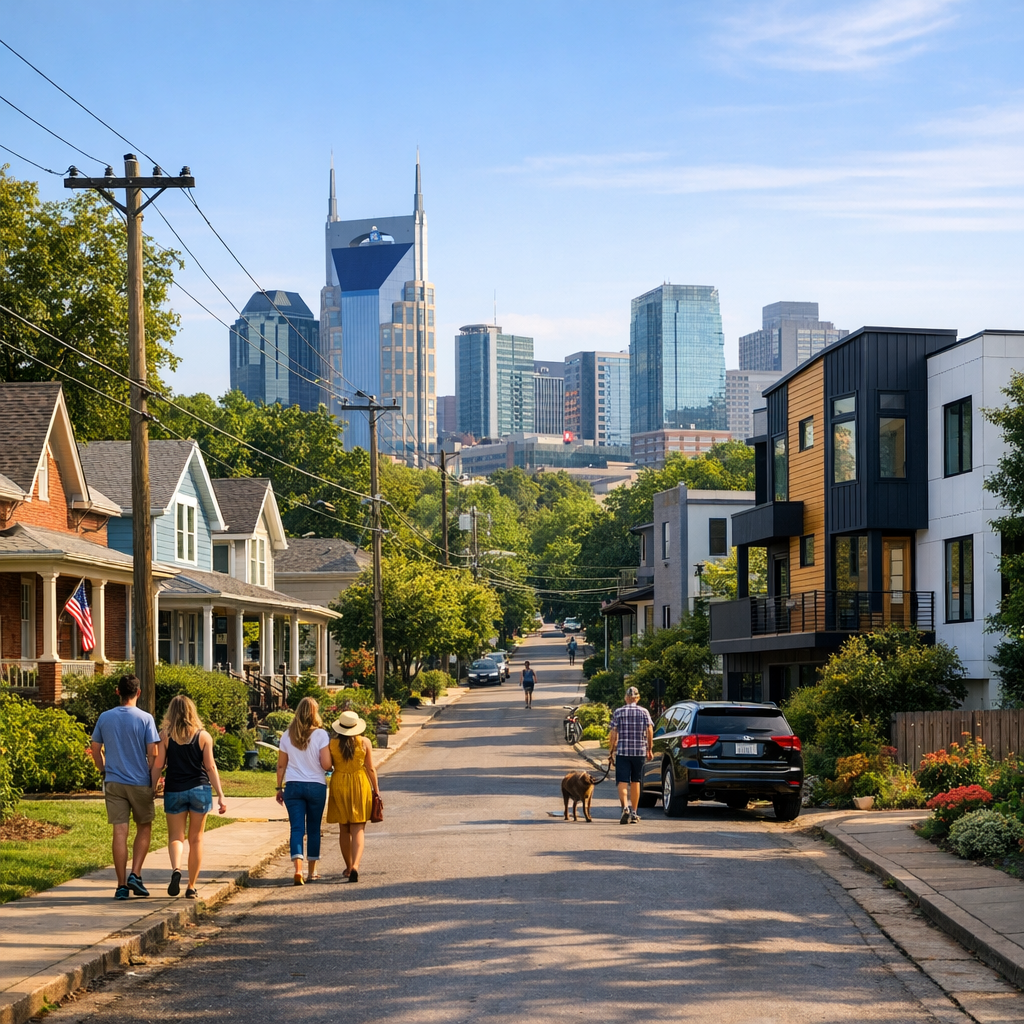
They say Nashville is booming. From the luxury condos downtown to the expanding neighborhoods east and west, development is everywhere. But amid the cranes and skyrocketing rents, Nashvillians are asking: Who gets to call this place home?
Longtime Residents Feel the Shift
In Cleveland Park and Edgehill, neighborhoods with deep Black roots, residents say demographic shifts are more than numbers—it’s their sense of home changing. Once over 75% Black households, Cleveland Park has steadily lost its Black population over recent decades, bringing tension between rememberers and newcomers.
In Edgehill, where historic institutions and family homes once formed the neighborhood backbone, rising property values and large-scale developments strain both the cultural identity and affordability that anchored generations. Community members feel the character they love slipping away.
“Belonging” Isn’t Equally Shared
Surveys from Imagine Nashville found that young people and residents of color often report lower feelings of belonging. White youth, on average, were more likely to feel they belong compared to Black or Middle Eastern or multi-racial youth.
Meanwhile, in the Vanderbilt poll earlier this year, affordable housing emerged as a top concern—resident priority over traffic, public safety, or even the city’s economy. For many, the question is no longer “Where will I live?” but “Will I be able to keep living here?”
Growth with No Uniform Alarm Bells—But Many Warnings
Take The Nations neighborhood. Neighbors raised objections to proposed large-scale upzoning—concerns about density, infrastructure, and losing the small-scale feel. They felt unheard when zoning overlays were pushed forward with limited community input. That petition they circulated wasn’t just paper—it was a declaration that decisions without voices feel like erasure.
In East Hill, a neighborhood meeting brought up another concern: sidewalks. A developer sought to skip required sidewalks on a new lot. This might seem minor—but for many, it’s a sign development is marching ahead without the foundational parts that make neighborhoods walkable and welcoming.
What Residents Want
- Accountability in Planning: Fair and clear processes for public hearings, zoning and building decisions that let local voices matter. No token consultations that make people feel seen—but not heard.
- Preserving Neighborhood Identity: Keeping Black-owned businesses, historic buildings, cultural gathering places. Telling the stories of what made these places home.
- Affordable Housing That Works: Not just numbers or targets on paper—homes people can actually afford, without giving up community or being pushed to the fringe.
- Infrastructure That Keeps Up: Sidewalks, transit access, green spaces, community resources—basic investments that sustain rather than erode quality of life.
Belonging Starts Where Neighbors See One Another
I’ve seen this in my own life too. It’s new faces at the corner store, closing of familiar storefronts, and watching friends move farther out because they can’t stretch their incomes this far anymore. But I’ve also seen the kindness that persists—a wave on the sidewalk, neighbors sharing harvests, people organizing for better streets and more trustworthy governance. Those small acts—they matter deeply.
Nashville’s growth doesn’t have to feel like losing. We can choose to build in ways that respect those who’ve carried this place, those who live here now, and those who will one day call it home.