

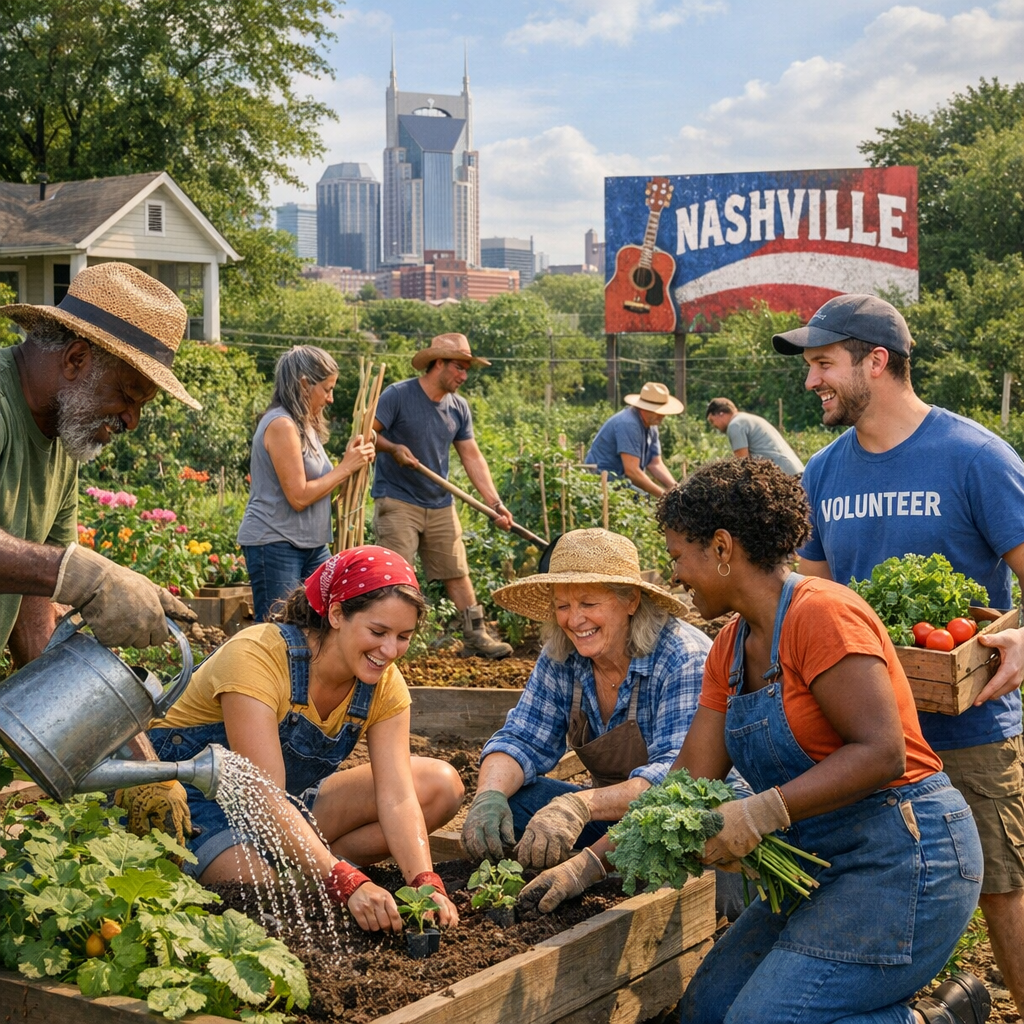
As a Nashville resident who’s spent time in both busy streets and quiet corners of this city, I’ve come to see community gardens as more than patches of soil. They’re vital threads in our neighborhood fabric—offering fresh food, dignity, and connection where it’s often needed most.
Roots in Local Reality
Nashville Food Project’s Community Agriculture Network (CAN) operates multiple garden and orchard sites—from Donelson Community Gardens to the McGruder Family Resource Center—providing tools, training, and fresh produce to low-income neighborhoods. These sites aren’t about charity; they’re about neighbors sharing labor and harvest. CAN supports both established gardens and new ones set to begin soon.
More Than Just Vegetables
These gardens do more than supply food. They restore green spaces, offer places for kids and elders to work side-by-side, and help people reconnect with nature. The orchards—planned with CAN and partners—will bring fruit trees into existing gardens, amplifying benefits like urban cooling, stormwater control, and biodiversity.
Challenges That Need Attention
While demand is growing, hurdles remain. Vacant land is limited and often expensive. Gardeners need ongoing support for tools, soil care, and coordination. Cities must balance land use policies, zoning, and infrastructure so that community gardens are durable parts of neighborhood life—not short-term projects. Galvanizing resources can only go so far without consistent public investment.
How Individuals Can Make a Difference
- Join or start a garden plot in your neighborhood.
- Volunteer with programs like CAN to help plant, maintain, and distribute produce.
- Advocate locally for green space preservation, zoning that supports gardens, and funding that sustains them.
Why It Matters
Community gardens are rooted in equity. For families in neighborhoods with little access to full-service grocery stores, they bring fresher, healthier food. They can lift spirits, teach new skills, and help stabilize local food systems. When we invest in them, we’re tending to more than soil—we’re cultivating stronger neighborhoods.
I’ve seen what happens when gardens thrive: neighbors greet each other, share lessons, and savor vegetables they grew themselves. That kind of ownership changes a block, inspires pride, and grounds Nashville in what makes it beautiful: people coming together to grow good things, for everyone.