

By David Hernandez
New Spaces Poised to Shape the Live Experience
Nashville continues its legacy as a city built around performance, and recent developments reflect both scale and purpose. The Tennessee Performing Arts Center is working on a landmark 307,000-square-foot campus on the East Bank of the Cumberland River. It will include a grand Broadway hall, opera and dance venues, a flexible black-box theater, intimate cabaret spaces, rehearsal studios, public gathering areas—all designed for both large touring productions and community programming. TPAC’s move marks a major step for performance infrastructure in the city.
Adding variety to Broadway’s skyline, “Kane Brown’s On Broadway”—a multi-story bar, restaurant, and live music venue—aims to capture the spirit and energy of Lower Broadway with levels tailored for big stage-shows, intimate DJ sets, rooftop views, and shared celebration. These new venues underscore Nashville’s push to evolve what “a night out” can mean.
Public Art Making Everyday Spaces Shine
Nashville’s public art collection now features over 200 permanent artworks placed across libraries, community centers, parks and bridges. These efforts serve not just as decoration, but as places for encounter, reflection, and identity.
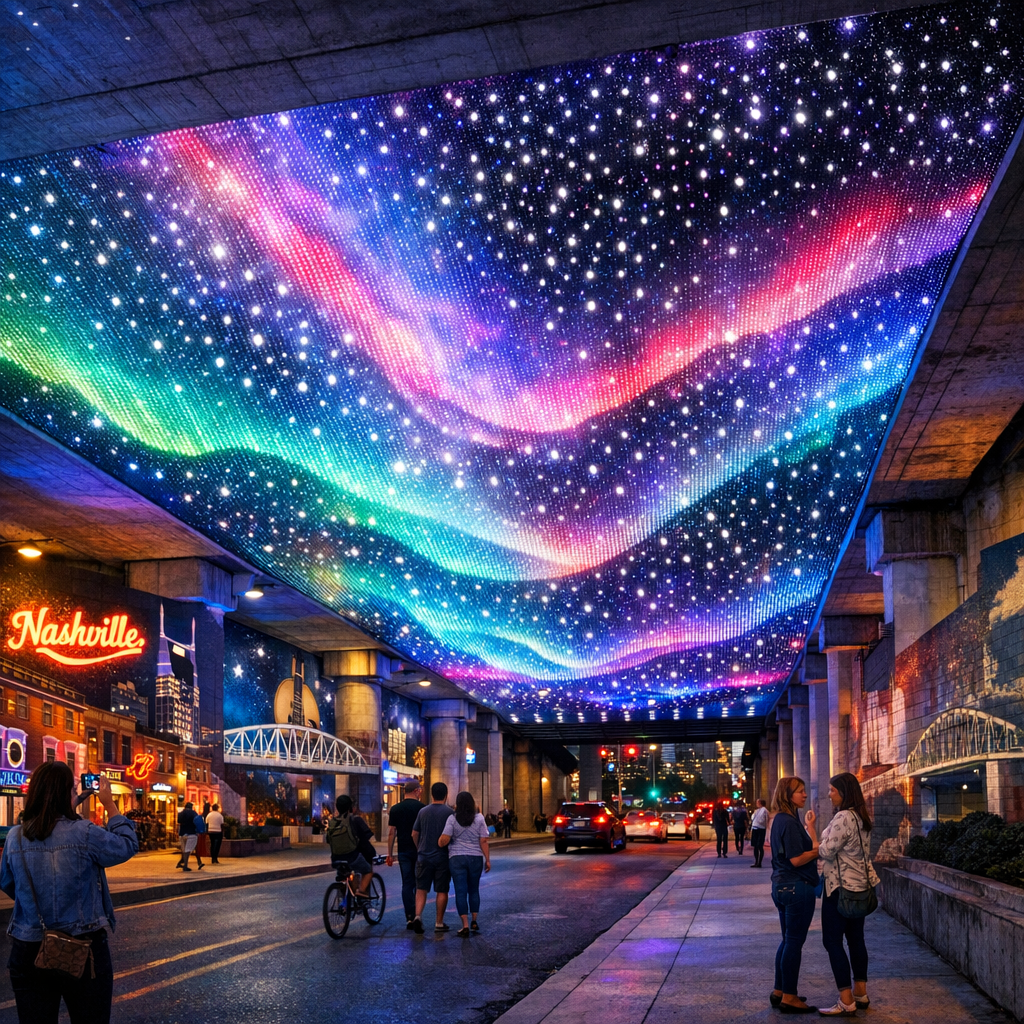
One standout is Be As Water, a multimedia canopy of LED lighting slated for the underpass where Arthur Avenue meets Interstate 65 in North Nashville. The project envisions transforming dim infrastructure into a luminous connector, honoring neighborhood history and giving residents a symbolic bridge between divided spaces.
How Historic & Independent Venues Are Holding Their Ground
As new buildings rise, community voices continue to rally around longtime landmarks. Small music venues like the Bluebird Cafe and the Station Inn remain vital—nestled in historic neighborhoods and nurtured by devoted audiences. A recent study of Nashville’s independent music venues highlights both their cultural impact and the challenges they face amid rapid development pressures.
City support through Metro Arts is also adapting. Alongside grant programs that award operating support to both small and large arts organizations, there are calls for stronger policies around equity, historic preservation, and places where local artists can grow without displacement.
Festivals & Events That Bring Music City Together
Nashville’s festival scene has always been vibrant. Each year, traditions like CMA Fest, the Tomato Art Fest, Musicians Corner, Shakespeare in the Park, Full Moon Pickin’ Party, and others draw audiences from across neighborhoods and beyond. These aren’t just one-off shows: they function as connectors—between musician and listener, neighbor and neighbor.
These events also create space for emerging voices and genres, giving opportunity to them beyond the spotlight drawn by well-known headliners. The calendar remains full, and the energy stays local.
Why This Matters for the Community
Nashville’s arts & culture ecosystem is not just about big shows or tourist dollars. It’s about preserving roots while supporting growth—in public art, in stage venues, in civic spaces. When a mural gets restored, a venue adds a studio, or a young artist sees their work in a public corridor, those things signal that arts belong here, that culture is anchored in this place.
And for Nashville, a city whose identity is inseparable from music and creative expression, investing in these foundations ensures that what’s new lifts up what already inspires—invisible histories, everyday stories, chance encounters, once-quiet corners turned radiant.