

By Sophia Anderson
Nashville continues to push ahead with wide-ranging transportation initiatives focused on safety, accessibility, and long-term mobility. Here’s what’s happening now, what’s changing where you live, and what still needs attention.
Choose How You Move delivers new investments
“Choose How You Move” (CHYM), the voter-approved program funded by a dedicated half-cent sales surcharge, is busy turning plans into visible upgrades across Davidson County. Recent investments include:
- Modernizing traffic signals: more than 90 intersections slated for new signal installations along key corridors like Gallatin Pike, Wedgewood Avenue, Edgehill Avenue, and Hillsboro Pike.
- Transit expansions: $25 million set aside for the Donelson Transit Center plus upgrades for WeGo Access and maintenance facilities.
- Safety upgrades: new sidewalks, protected crossings, and Complete Streets designs rolled out along East Thompson Lane, Jefferson Street, Lebanon Pike, and more.
As of mid-2026, more than $160 million in projects were actively underway or finished, including expanded service, upgraded signal technology, and early corridor work.
Safety concerns increasing public pressure
Fatal crashes and pedestrian deaths continue to be a concern. In response, city officials are accelerating additions like raised crosswalks, concrete curb barriers, and safer crossings at intersections deemed high-risk.
Many of these changes are part of broader “Vision Zero” and All-Access corridor strategies aimed at reducing serious injury and death on Nashville streets.
Where neighborhoods see change—and concerns
Certain areas are seeing more rapid transformation:
- Gallatin Pike and Nolensville Pike corridors are both seeing signal modernization and sidewalks improvements. These aim to make these busy thoroughfares safer for drivers, transit riders, and pedestrians.
- Transit centers like Donelson Transit Center are in development, which could improve regional connectivity and travel reliability for non-car users.
- Historic corridors like Jefferson Street are getting redesigns to balance cultural preservation with infrastructure upgrades.
Despite the momentum, residents have raised issues:
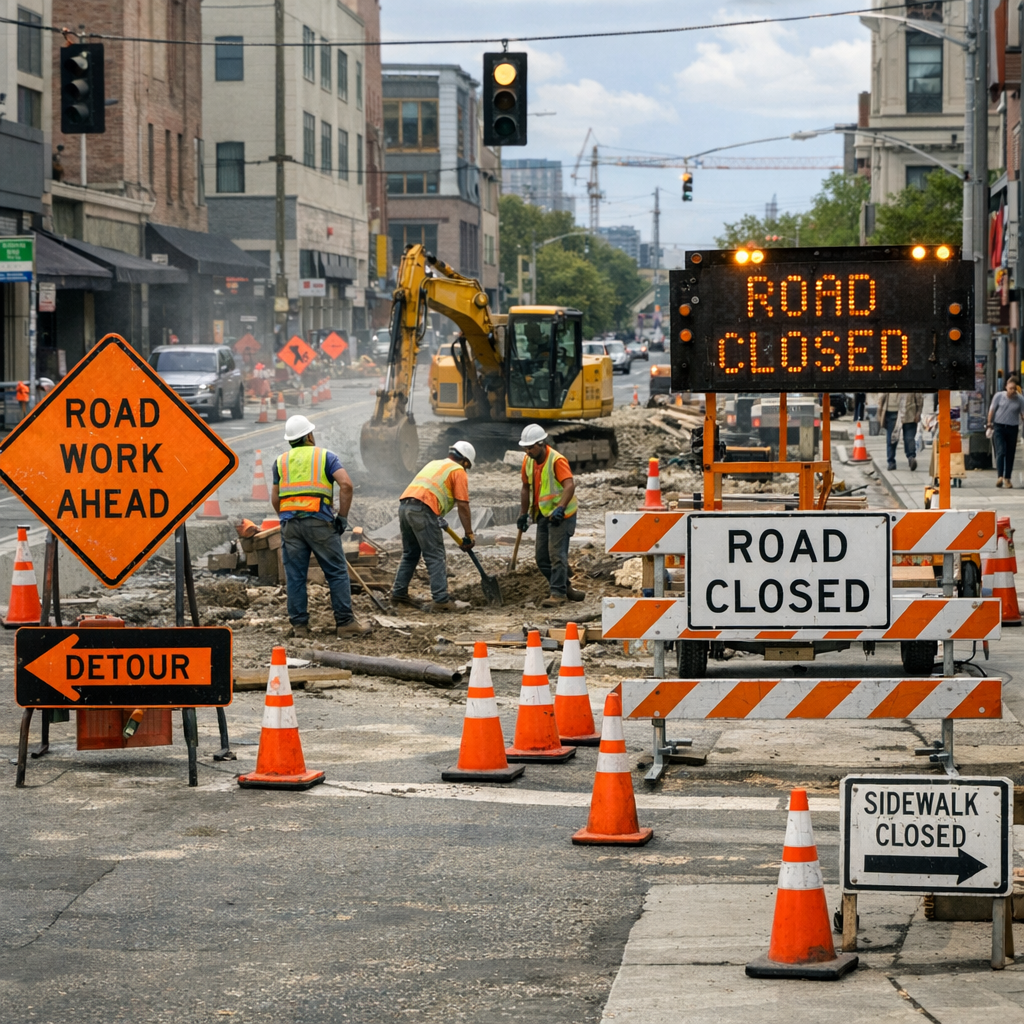
- The pace of construction is disruptive to local businesses and traffic flow, particularly along active project corridors.
- Some fear upgrades bring rising property values and potential displacement risks as neighborhoods become more walkable and connected.
- Equity concerns remain over who benefits most—in some parts of the city, sidewalks or transit service are improving faster than in others.
What still needs attention
While much is underway, certain gaps are still visible:
- Funding and delivery timelines: Several projects have long lead times, especially when land acquisition, utility coordination, or railroad crossings are involved. Full roll-out of corridor plans will take years.
- Transit service beyond core areas: Even with service expansions, people who live farther from downtown or outside major corridors still face limited options. More frequent bus service, safer sidewalks, and better connections are needed.
- Public engagement: Continued outreach—especially in historically under-invested neighborhoods—is essential so residents have input into designs, safety decisions, and timing.
Why it matters
Transportation shapes daily life in tangible ways—commutes, safety, affordability, and access to jobs, schools, and services. These recent investments represent more than just new sidewalks or signals; they are decisions about what kind of city Nashville becomes.
For Nashvillians, that means watching and participating: learn what’s planned in your neighborhood, attend public meetings, and offer input where possible. As much as infrastructure shapes life, community voice shapes which infrastructure gets built—and how well it serves everyone.