

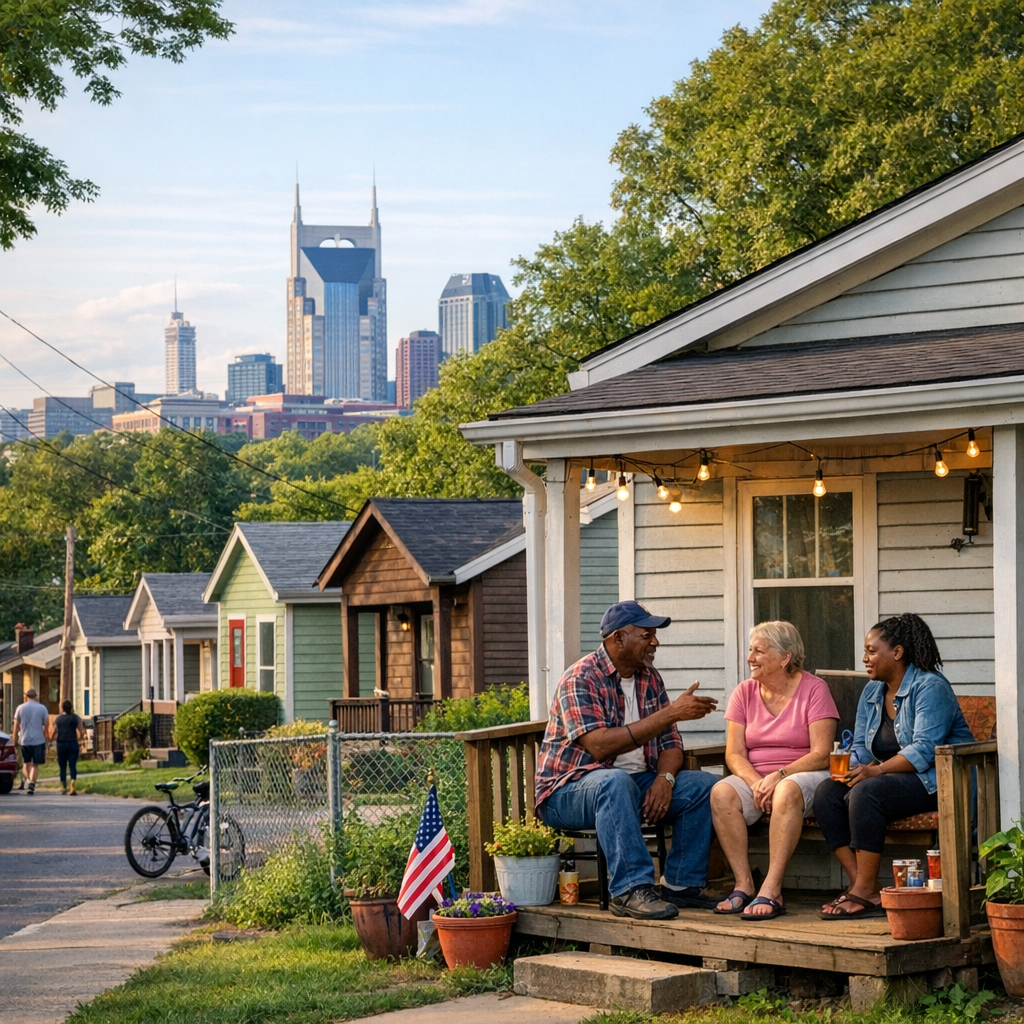
My name is Benjamin Lopez, and I’ve lived in East Nashville for over a decade. I moved here chasing that classic Music City feeling—musicians on porches, indie coffee shops, parks full of laughing kids. I found community, I found belonging. But lately something else is creeping in: enough fear that this city might stop feeling like home.
What “affordable” actually means
Polls show that an overwhelming majority of Nashvillians say they can’t afford to buy a house in Davidson County. Around 82% indicated the dream of owning withered under the weight of rising home prices and high mortgage rates. This isn’t just numbers—it’s friends who left, neighbors who can’t stay. It’s people like me watching familiar faces traded for new ones, as long-time residents are forced outward.
What most people see as affordable housing is often anything but. Federal formulas tie affordability to the Area Median Income (AMI), but in our case, Williamson County’s rich numbers are skewing Nashville’s AMI much higher than what people here actually earn. The result: even units deemed “affordable” come with price tags that are out of reach for many families.
Community through the cracks
Belonging is Nashville’s strength—we value parks, art, gathering places. Surveys show many people still feel connected to this city. But belonging without equity feels hollow. For residents with lower incomes, older Nashvillians, people of color, and folks who aren’t in a swelling downtown ZIP code, the benefits of the city often feel remote. Many feel left out as growth charges forward.
What we need to protect our roots
- Redefine affordability so that it truly reflects local incomes, not averages skewed by surrounding riches.
- Increase housing options in every neighborhood—think small homes, walkable designs—not just luxury subdivisions where profit is higher.
- Preserve the character of long-standing communities, both through policy and through honoring their stories in planning decisions.
- Community voices must guide decision-making—those who are most affected by high costs should have real seats at the table, not symbolic ones.
Holding onto what makes Nashville us
I believe this city can grow without losing what makes it feel like home—its people, its history, its open arms. But love of city isn’t enough; we need policy, compassion, and community listening. Otherwise, belonging becomes a luxury—and not one many can afford.
If we want Nashville to keep being more than just a place to live—if we want it to be somewhere people stay when the roof over their heads feels secure—we have to make it possible for all of us to belong, in every sense of the word.