

By Benjamin Lopez
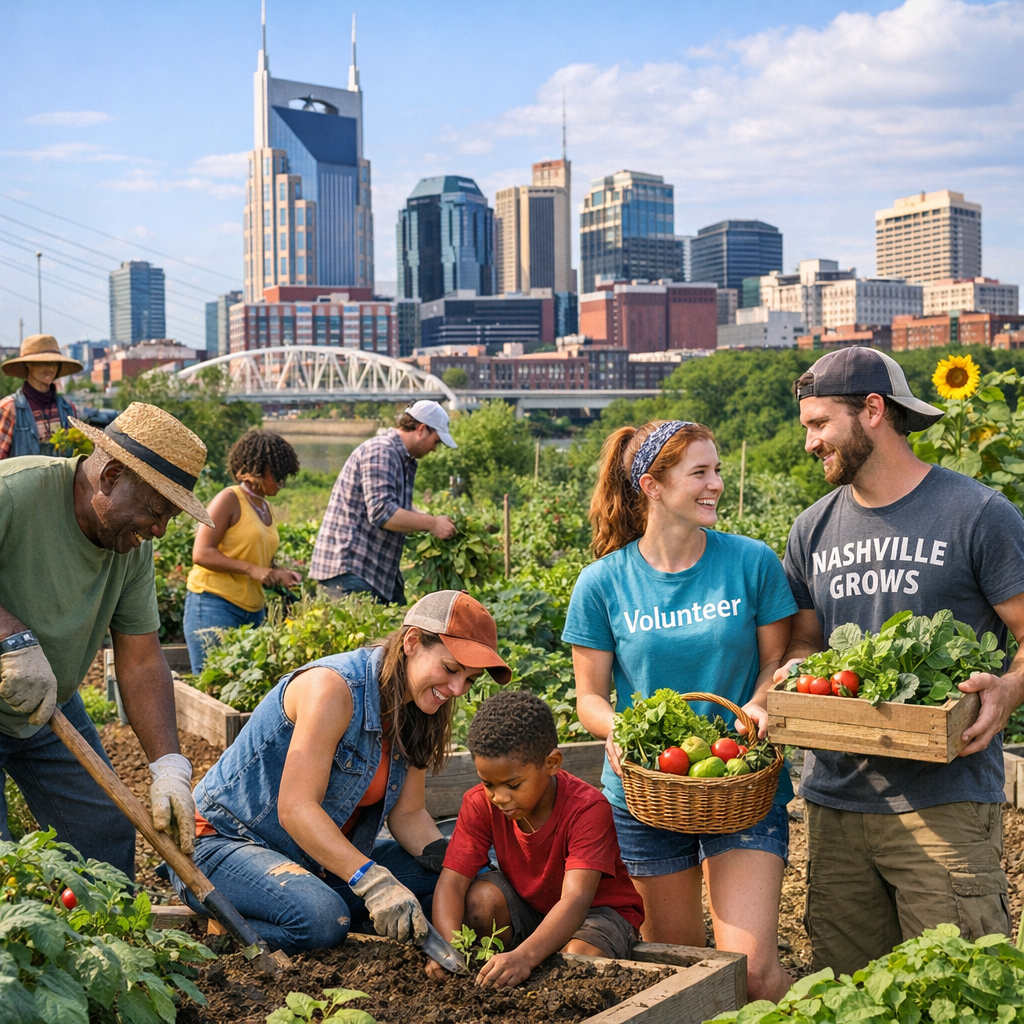
I’ve walked by the McGruder Community Garden many times. It smells like warm soil, sweet peas, and possibility. I think about how such a simple thing—soil, seeds, neighbors—can anchor so much of what makes community.
Growing food, growing people
Community gardens in Nashville—from the plots at Heartland Park Donelson to the McGruder Family Resource Center—do more than produce tomatoes. They’re places where fresh food meets urgent need. Neighbors without easy access to grocery stores find leafy greens, vivid peppers, and smiling faces. Those who pull weeds together often also share meals, advice, and laughter. The Nashville Food Project’s Community Agriculture Network supports these gardens—providing tools, training, and volunteers so leaders can focus on growing community as much as crops. Their harvests are shared freely or sold at low cost in neighborhoods where food access is limited. Source: Local Nashville Food Project reporting
What makes them thrive—and what holds them back
Success comes from shared ownership: garden stewards, longtime volunteers, and newer neighbors each claim a patch. Fellowship blossoms when people of different backgrounds work side by side. Gardens also teach—youth learn where carrots come from, elders teach soil wisdom, newcomers find a sense of belonging.
But there are challenges. Finding and securing land is hard in growing neighborhoods. Policies about zoning and land use can limit where gardens go. The labor is heavy, funding inconsistent, and volunteers get stretched thin as priorities shift. Despite Metro Nashville allowing gardens on public land, many still lack the formal resources to do outreach, education, or long-term maintenance. Source: Metro Nashville Consumer Horticulture
Why these gardens matter long term
Food security is one clear benefit. But equally important is the trust gardens build among neighbors—and between communities and local government. When people come together caring for a shared space, voices rise: concerns about affordability, about public health, about what neighborhoods look like. Gardens become spaces where people are heard.
Gardens also connect with issues like equity and climate resilience. Access to green space in neighborhoods often parallels broader inequalities—income, health outcomes, infrastructure. Garden sites can reduce urban heat, lower stress, and give educators and nonprofits rallying points to address bigger issues like obesity or environmental hazard.
How you can help cultivate change
- Volunteer in your nearest community garden—whether for planting, maintenance, or events.
- Support local organizations that center community-based leadership in garden programs.
- Advocate for policies that allow gardens to flourish—zoning flexibility, public land access, land trust models.
- Promote education through schools—classroom gardens, visits, and youth-led plots.
- Donate tools, seeds, or small grants; even modest investments let gardens grow with purpose.
In Nashville, our gardens are more than farms in small plots—they seed community resilience. When we cultivate our shared soil, we grow more than vegetables: we nurture connections, purpose, and home. And that matters.