

By Mia Wilson
Slow Price Growth Means A Bit More Space for Buyers
After years of rapid rises, Greater Nashville is seeing home prices inch up, not leap. According to recent data, the median home price in the metro area is around $480,000—just a slight increase from one year ago. Homes are also staying on the market longer—around 60 to 65 days, compared to under two months in more frenzied years.
For first-time buyers and those priced out of inner suburbs, the shift offers small relief. It doesn’t mean affordability has returned, but the market feels a bit more navigable.
Rentals & Under-Market Options Still Strained
The rental landscape is steadier than it was during the pandemic surge, though moderate increases in average rents continue. Average rent in Nashville is roughly $1,800–$1,900 per month. Lower-priced units—especially ones tied to income limits—are still in high demand, and scarcity in the affordable stock makes competition stiff.
Major Developments Are Shaping Where Boston Builders Are Looking
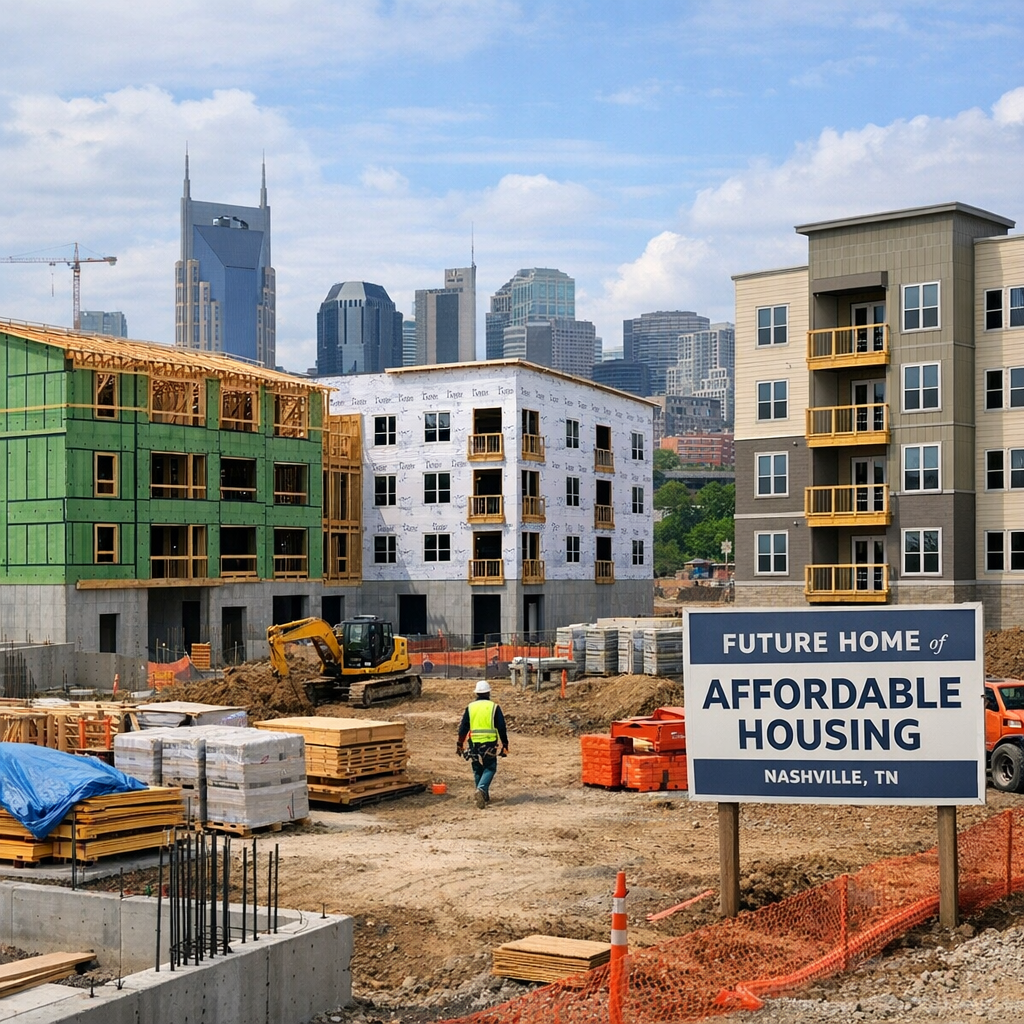
Large mixed-use projects are underway that aim to bring in new housing, retail, even childcare, especially along Nashville’s East Bank. A notable example is Eastpoint Flats, offering more than 300 affordable units, a childcare facility, and retail space—all part of a 30-acre redevelopment planned around the new Titans stadium.
Also unveiled recently: 200 new affordable units in Park Point East, including over 100 set aside for former residents of Cayce Place. This is part of the broader Cayce Transformation and signifies Nashville’s push to pair redevelopment with resident protections.
What This Means for Different Neighborhoods
Counties farther from downtown—such as Rutherford, Dickson, and portions of Montgomery—are seeing more activity from buyers seeking value. Homes with similar prices get more land, more room, and often better proximity to highways, though commute times can climb.
High-cost counties like Williamson remain outliers, with median prices over $1 million. On the flip side, Davidson County’s median hovers closer to the overall metro median—but buyer expectations about condition, amenities, and location still matter a lot.
Tips for Navigating the Current Market
- Get pre-approved and clear about priorities. With more inventory, but still high prices, knowing what you can afford—and what features matter most—will help you move quickly and wisely.
- Explore new and upcoming affordable housing projects. Developments like Eastpoint Flats or Park Point East offer below-market units tied to income and often come with amenities that support working families.
- Consider location trade-offs. Being further from downtown may save money on housing but costs more in transport. Balance total cost of living—not just mortgage or rent—when comparing places.
- Work with local brokers versed in micro-neighborhoods. With the market differently tight in different places, knowing the lay of the land matters. What’s tough downtown might be more relaxed just a few miles out.