

By William Thompson
Nashville’s weather has long been characterized by humid summers, mild winters, and abundant spring rain. Yet subtle shifts in climate are changing how we experience each season, from growing seasons to severe storms, air quality, and environmental stressors. Here’s a look at what’s changing, how it affects our city, and what we can do to adapt.
Temperature Trends & Milder Winters
The growing season in the Nashville area is now roughly 38 days longer than it was in the late 1970s. Winters are becoming noticeably milder: frost days are decreasing, and the number of cold nights where temperatures drop below freezing has fallen significantly. These changes mean fewer days of snow and freezing conditions. While that might sound welcome, it has downstream effects—including on plant life cues, pest survival, and water demand. Mountains and higher elevations still see colder winters, but overall, Nashville is warming.
Shifts in Rainfall Patterns & Drought Risk
Rainfall in Middle Tennessee is generally plentiful, with winter and spring delivering steady, large‐scale moisture events. Summer often brings thunderstorms, while fall tends to be the driest season. But recent years reveal a worrying trend: 2023 saw many areas—including Davidson County—receive well below normal precipitation. Drier summers and falls, coupled with rising temperatures that increase soil moisture loss, heighten drought vulnerability. Flash droughts—those rapid onset dry spells—are of growing concern.
More Intense Storms & Heavy Rain Episodes
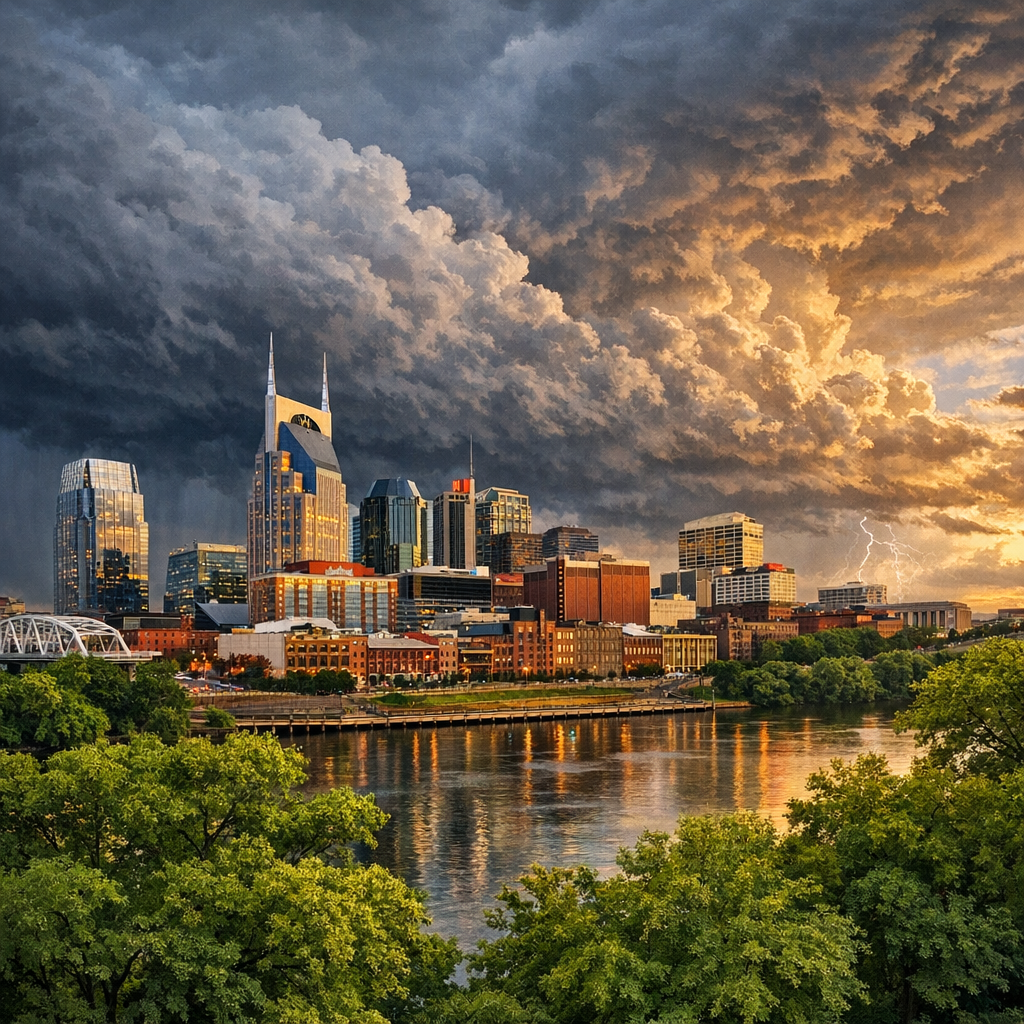
Nashville is seeing more intense rainfall when storms do hit. The percentage of rain falling in the heaviest events—those most likely to cause flash flooding—is climbing. NOAA and state planners track this increase in extreme weather tied to climate change. Metro’s recent adaptation plan cites severe storms and flash flooding among Nashville’s top climate stressors, showing preparedness for such events is more important than ever.
Air Quality & Heat Stress
With warming and longer stretches of hot weather, air pollution and ground‐level ozone can become more problematic. Nashville’s Air Quality Index regularly tracks key pollutants including ozone and particulates. On days when air quality is rated “Moderate” or higher, sensitive groups—those with asthma, older adults, and children—are particularly at risk. Strategies like staying indoors on bad air days, reducing outdoor burning, and using well‐maintained air filters can help.
Ecological Impacts & What’s at Stake
The timing of seasonal events—when flowers bloom, when trees change color—is shifting. Warm springs may trigger early blooms, but sudden cold snaps can damage foliage. Wildlife, especially migratory or hibernating species, may have fewer cues for when to move or rest. Plants adapted to cooler winters risk being outcompeted by species better suited to warmer, wetter climates. Our native cedar glades, limestone outcroppings, and Cumberland Plateau ecosystems face increasing stress with rising heat, heavier rains, and longer dry spells.
What Can We Do Locally?
- Grow resilient green infrastructure—shade trees, rain gardens, permeable surfaces—to mitigate heat and manage stormwater.
- Support local climate adaptation policies like Metro Nashville’s new Climate Adaptation & Resilience Plan to guide infrastructure and neighborhood planning.
- Pay attention to air quality alerts. On days with high ozone or particulate matter, limit strenuous outdoor activities.
- Create wildlife‐friendly spaces in your yard with native plants, especially those that handle heat and drought.
- Conserve water during dry periods; even small changes—like mulching or fixing leaks—make a difference.
Nashville’s climate is shifting in ways that touch all of us—how we garden, how we travel, how we prepare our homes, and even how we experience our seasons. Keeping informed and making small, local changes can help us adapt—and thrive—in a changing environment.