

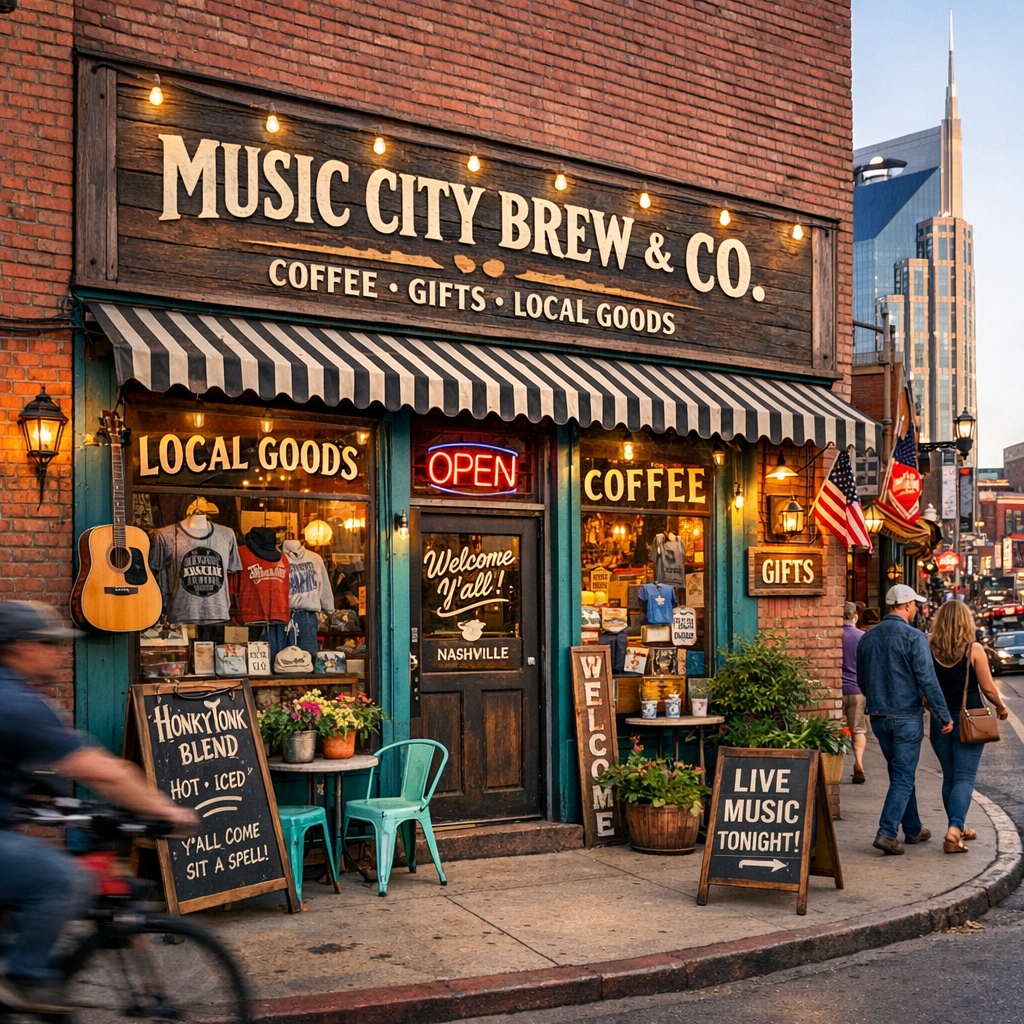
By embracing both cautious planning and creative pivots, local businesses in Nashville are working to thrive amid rising costs, tight labor markets, and fresh policy support. These forces are reshaping the city’s economic terrain—and offering lessons for entrepreneurs, employers, and employees alike.
Supportive Policy Moves Taking Shape
The recent launch of new initiatives by Mayor Freddie O’Connell’s administration signal growing public-sector backing for Nashville’s small business community. These include a Legacy Business Program designed to help firms operating 15 or more years to modernize and stay rooted in their neighborhoods, and a Workforce Advancement Incentive Program offering grants to help companies recruit and retain skilled staff through training and professional development. There’s also an expansion of the Property Investment Incentive Program, now including interior improvements and a higher-value commercial property cap.
These programs aim not only to help individual businesses, but to shore up neighborhoods, preserve local character, and make operations more sustainable—especially in areas feeling squeezed by rising costs. The public acknowledgment that businesses often struggle with increasing overhead underscores why policy responses matter as much as market responses.
Labor Challenges and Wage Pressure
Nashville’s economy continues to create jobs, particularly in healthcare, technology, professional services—and in jobs like food service, cleaning, maintenance, and personal care. Yet many jobs in these latter sectors pay well below $15 an hour, placing workers under financial stress given rising housing, transportation, and living expenses. There’s a widening gap between what entry- and lower wage-earning roles offer and what it takes to cover basic costs.
Companies in competitive sectors are feeling the crunch: recruiting and retaining workers in Nashville requires adapting benefits, boosting wages when possible, offering flexible hours, or even reshaping job responsibilities. This isn’t just a moral question—it’s an economic necessity as workforce shortages can sabotage productivity, service quality, and growth.
Office Strategy, Real Estate & Flexibility
Startups and growing businesses are rethinking their physical presence. Demand for flexible, move-in-ready office space continues, especially where costs are predictable and contracts avoid long-term lock-ins. In regions like The Gulch and Wedgewood-Houston, price-per-desk for such spaces ranges depending on amenities and location, but flexibility has become more valuable than footprint alone.
At the same time, many businesses are evaluating hybrid work models, remote options, or mixed-use workplaces—acknowledging that offering flexibility can be a differentiator when hiring talent. For some, reducing office space or focusing workspace on collaboration and meeting areas instead of traditional desks has become part of the cost-optimization toolkit.
Opportunities Within the Challenges
Despite pressures, several trends offer openings. First, niches like legacy businesses—those integral to local culture and neighborhoods—are getting more recognition and targeted help. Businesses that commit to modernization: updating operations, investing in resilience, engaging in digital marketing are seeing both short-term gains and longer-term positioning benefits.
Second, the growing strength of sectors like health-tech, professional services, and entertainment tech continues to attract talent and investment. A strong local talent pipeline—fed by universities, community colleges, and an increasing number of incubator and accelerator programs—helps. To benefit, businesses need to stay agile, identify their distinct value, and evaluate which spaces to compete in rather than trying to match every trend.
What Local Business Owners Can Do Now
- Assess whether your wage and benefit offerings are competitive within your industry and cost-of-living realities.
- Explore training grants, workforce development programs, or incentive initiatives for upgrading staff or processes.
- Rethink your workspace strategy—could hybrid or shared office setups reduce overhead without sacrificing team cohesion?
- Strengthen your operations digitally—from e-commerce to marketing to customer engagement—to lean into modern consumer expectations.
- Tap into local networks: neighborhood business associations, city programs, peer mentorship—connection often brings new ideas and partnerships.
Nashville businesses are operating in a moment of both challenge and choice. How companies adapt to cost pressures, labor shortages, and evolving customer expectations—and how policies support or lag—will shape not only individual succeeders, but the character and economic health of the whole city.