

By Mia Wilson
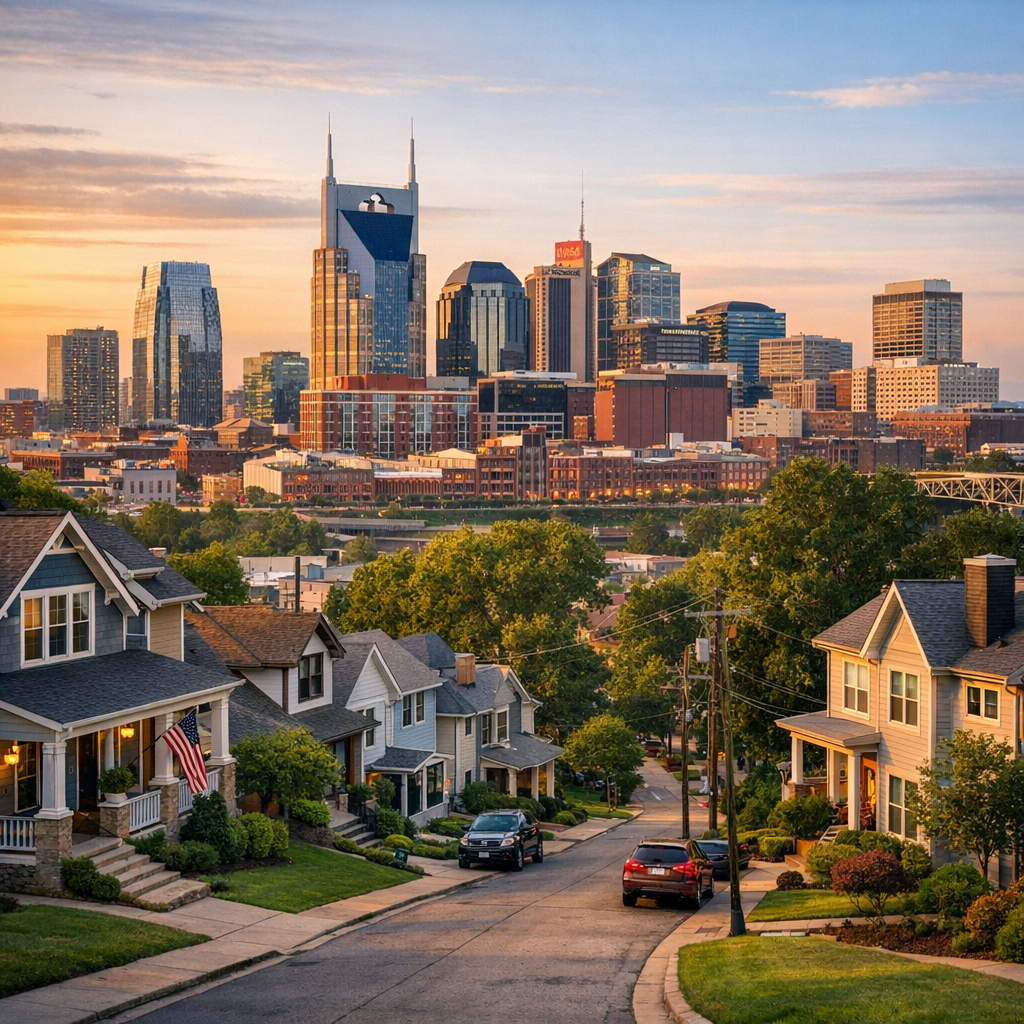
Nashville’s real estate market has entered a phase of moderation. After years of steep price growth and tight inventory, recent data points toward a more balanced market that affects both buyers and renters.
Home Prices & Inventory: Slowing, Not Crashing
The median listing price in Nashville is hovering around $598,000—slightly down from a year ago. Homes are spending more time on the market, usually around 72 days, and sellers are feeling more pressure to adjust prices or be patient. While values are easing in some parts, single-family homes remain above $500,000 in many areas. Condominiums, although still desirable, are generally less expensive but follow the same slowing trends.
Rental Trends: Some Relief, But Options Vary Widely
Rents have seen modest declines—often around 2–4% year-over-year—especially in smaller units. The median rent for all home types is about $2,200–$2,400 monthly, with apartments coming in at lower end, houses and townhouses at higher. While this softening is welcome to renters, rents are still high relative to many incomes, and neighborhoods vary a lot.
Rent vs. Buy: The Case for Each
A common measure, the price-to-rent ratio, puts Nashville in a “toss-up” range—meaning neither option is a clear winner for everyone. Monthly costs for owning (mortgage, taxes, insurance) tend to run substantially higher than renting—sometimes by hundreds of dollars—but ownership may win out over several years if you plan to stay put, build equity, and absorb ownership costs like maintenance.
What This Means for Locals
For prospective homebuyers: Focus on neighborhoods where prices have softened most and watch for sellers open to negotiation. Get pre-approved and calculate full costs—not just mortgage payments—to understand affordability.
For renters: Bargains can be found, especially in older apartments or further-out neighborhoods. Don’t forget to check total costs—utilities, commuting, amenities—that affect monthly expenses more than headline rents.
Local Development & Public Policy Signals
New construction is picking up, from luxury projects to affordable housing. City leaders are moving forward with plans for an affordable housing bond, and mixed-use developments are in process in areas like the East Bank near downtown. These efforts aim to increase supply, particularly of more modest homes or rentals, but they take time to execute.
Takeaway
Nashville’s housing market isn’t what it was a few years ago—there’s less frenzied price growth and more chances for buyers and renters to breathe. But costs remain high, and the right choice between renting or buying depends heavily on your personal timeline, budget, and neighborhood preferences.