

By Benjamin Lopez
Nashville is growing—economically, culturally, physically. And sometimes in that growth there’s a risk of losing what makes us more than just neighbors. But I believe one of the most hopeful antidotes to disconnection is happening quietly across the city: in community gardens.
More Than Soil: What Community Gardens Cultivate
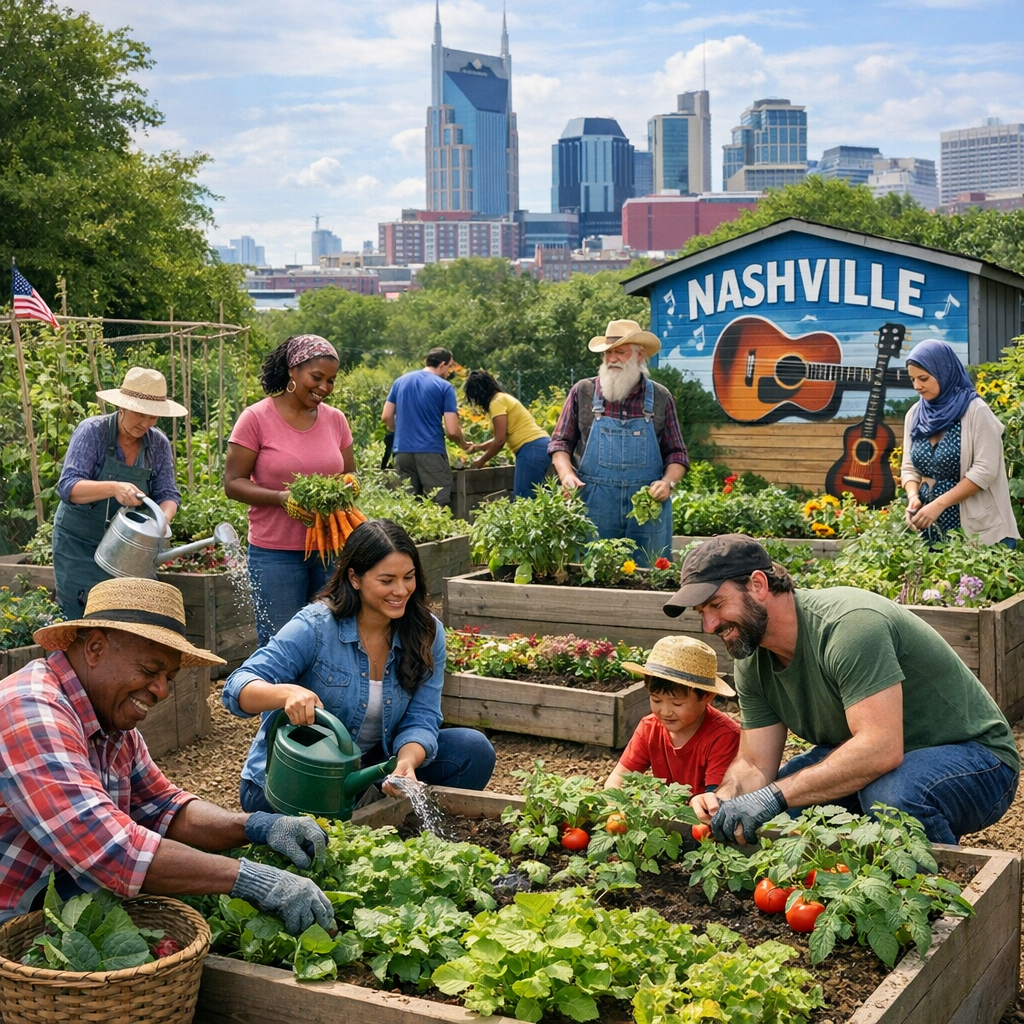
In places like North Nashville’s Hope Garden or the Brooklyn Heights Community Garden, folks have turned overgrown lots into shared spaces filled with okra, strawberries, basil, and something even more essential—belonging. These gardens aren’t just about food; they’re places where people reconnect with land, with culture, and with one another. Longtime residents recall how Hope Garden was once abandoned, tangled in Bermuda grass. Now, children learn to grow things. Neighbors pass seeds. Stories travel.
Connections Across Generations and Heritage
Brooklyn Heights Community Garden, for example, is rooted in the memory of Ms. Pearl, a neighborhood organizer whose vision was healing through cultivation. It’s a garden in the concrete, but also a garden of culture—where Black and Indigenous histories are honored and offer a foundation for work today. Community gardens become places to teach not just how to garden, but whose voices matter and which histories are seen. That kind of space transforms spaces of division into spaces of understanding.
Challenges That Grow Like Weeds
Still, these gardens don’t flourish without struggle. Land access is uncertain. Funding and resources are patchworked. Volunteers give tirelessly, but consistent institutional support is harder to find. There’s the water issue. Soil contamination. Zoning constraints. These aren’t small inconveniences—they’re the make-or-break for whether a garden becomes a permanent fixture of the neighborhood or just a fleeting chance at beauty.
What It Means for Nashville’s Future
If we want Nashville to be a place where people feel included, cared for, where histories matter, then we need more of what community gardens offer. That means Metro and nonprofits investing in land security, in water access, in training and mentorship. It means integrating these gardens into broader strategies of affordable housing, health, youth engagement, social justice. When community gardens thrive, everyone grows—not just plants, but trust between neighbors.
These gardens may not headline development plans or draw big political speeches. But they are quietly doing the work of knitting Nashville’s future—where growth doesn’t erase, but enriches us all.