

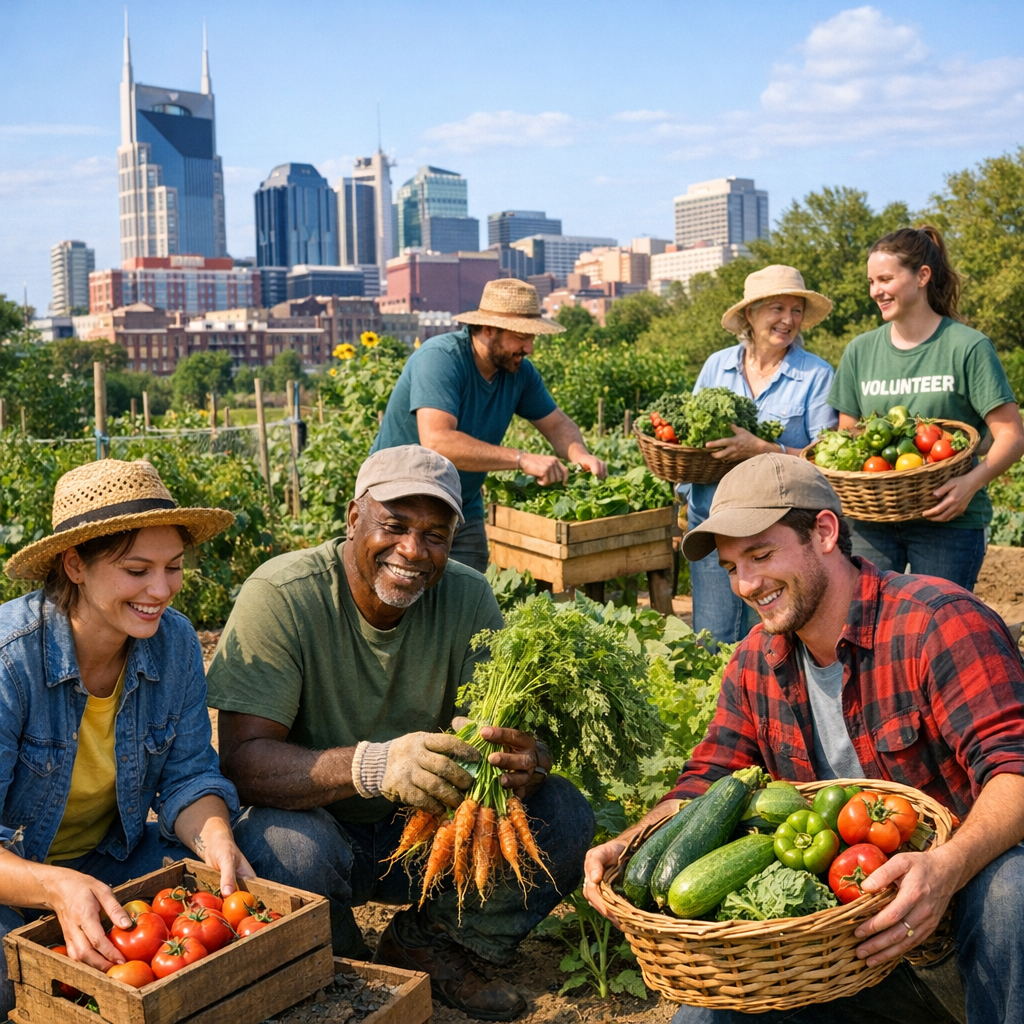
Every week, I walk past planters brimming with tomatoes, squash, and herbs in Edgehill. It’s not just the smell of fresh soil that pulls me in—it’s the reminder that something as simple as a neighborhood garden can be a gentle force for change.
The Roots of Something Bigger
Community gardens in Nashville are quietly doing a lot more than producing fresh vegetables. They offer food access in neighborhoods designated as “food deserts”—including parts of Edgehill, North Nashville, and East Nashville. Gardens like Farm in the City, Wedgewood Urban Gardens, the Vanderbilt Community Garden, and Bellevue’s Edible Learning Lab are places where neighbors come together. They share knowledge about growing, harvest together, and build relationships across generations and backgrounds. These community green spaces become meeting points for what matters most: health, belonging, and dignity.
Health, Stability, and Education In the Soil
For many folks, access to fresh produce means a chance to change the narrative of their daily health. Studies in the Nashville region show that gardens do more than grow food—they improve nutrition, promote physical activity, reduce stress, and support mental well-being.
The gardening initiatives at Metro Public Schools and local nonprofits also educate kids and parents—not just about planting, water usage, or pest control—but about where food comes from and why eating fresh matters. Growing up with that knowledge can shift diets, expectations, and ultimately health outcomes.
Challenges Becoming Opportunities
Gardens need land, funding, and community support to thrive. Access to land can be particularly tough in neighborhoods with rising property values and growing demand for housing. Funding for soil, water systems, and repairs often relies on grants or small donations—making sustainability a constant concern.
Recognizing these issues, Nashville’s agricultural extension programs and public agencies are stepping in. Metro’s Consumer Horticulture department offers support for starting community and school gardens. It helps with permits, educational resources, and connections to gardeners.
Growing Community One Plot at a Time
Here’s what happens when gardens flourish: Children harvest their first vegetable and surprise their parents. Seniors lean on the shade of fruit trees as they chat with neighbors. A young family who didn’t know their neighbors by name now shares salsa made from the peppers they grew together. These stories may seem small, but they stitch the community closer.
I believe community gardens are among Nashville’s quiet strengths—spaces where nourishment includes food, friendships, and belonging. They aren’t a total solution to everything: they can’t single-handedly fix housing instability or healthcare gaps. But in my own walks through our neighborhoods, I see gardens as proof that when we plant together, we grow together.