

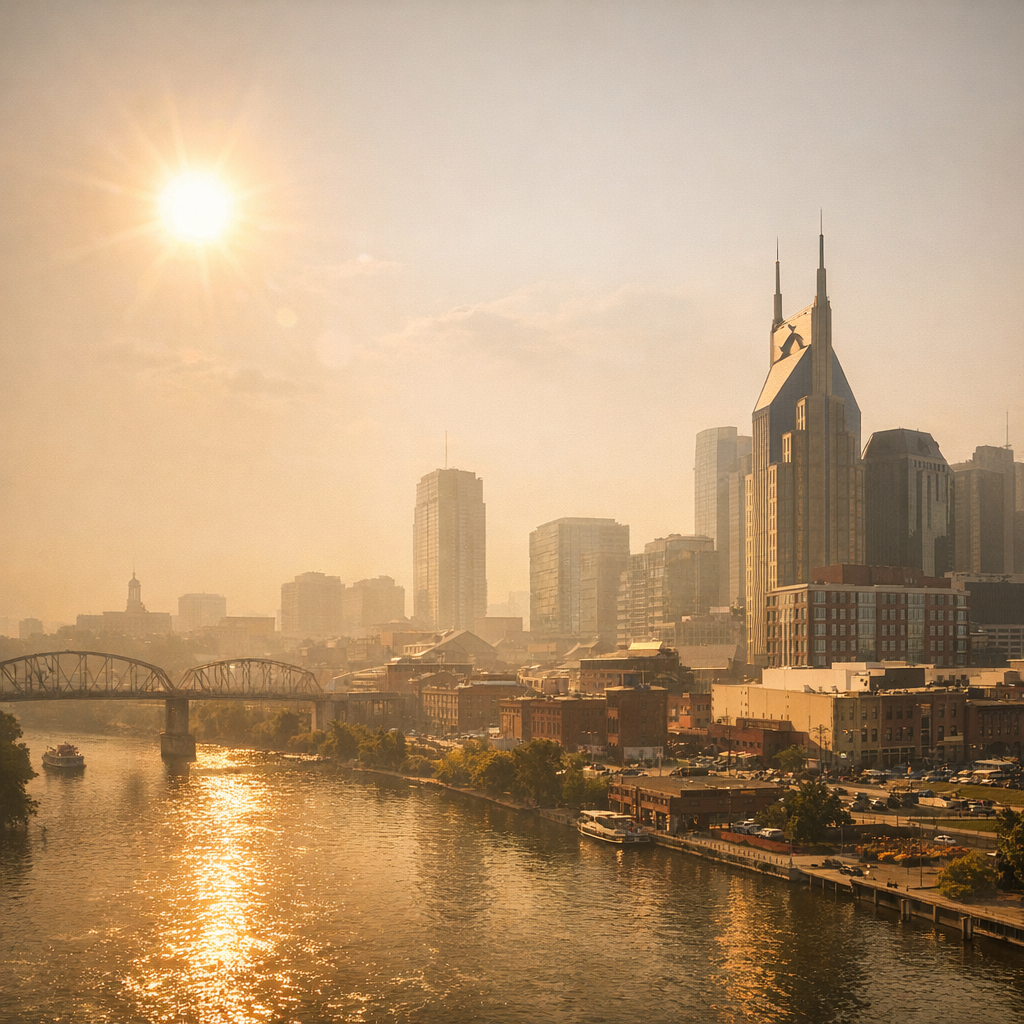
Here in Nashville, we’re seeing clear changes that go beyond simply warmer or cooler days—they’re reshaping our air quality, urban environment, and the way we plan for a resilient future. As seasons come and go, what we once accepted as “normal” weather now bears the mark of shifting climate trends. If you live here, it matters.
Hotter Summers & Fewer Freezing Nights
Nashville’s climate has warmed significantly in recent decades. Summer highs in June–August have steadily increased, and winters have become milder. One indicator: days when temperatures dip below freezing are growing rare. In fact, the “frost days” count has dropped by over 20 days annually compared to 50 years ago. These shifts extend the growing season and affect everything from what trees and plants thrive here to how mosquitoes and pests behave.
Intense Rain and Storm Patterns
Rainfall is getting heavier—a sign of intensifying storms that can quickly send water into creeks and undersized drains. Middle Tennessee’s wet season—stretching through spring into summer—still delivers most of our annual rain. But intense downpours are now more common, leading to increased risk of flooding, erosion, and stormwater runoff issues.
Air Quality: Smog, Ozone & What They Mean
Hotter weather doesn’t just feel worse—it works with vehicle emissions to create more ground-level ozone. That’s a major concern during summer months when ozone-forming conditions intensify. Nashville recently earned an “F” on the ozone smog grading scale, reflecting rising concentrations in the air we breathe. At the same time, however, the region is performing relatively well on fine particle pollution (PM2.5) in daily short-term spikes.
Planning for a Resilient Environment
To address these risks, the city is working on two key fronts. First, the broader climate resilience strategy focuses on adapting infrastructure, neighborhoods, and land use to increasing hazards like extreme heat, winter storms, and flash floods.
Second, the Davidson County Ecological Conservation Strategy aims to protect Nashville’s natural spaces—forests, waterways, hillsides—while accommodating growth. It’s about maintaining the landscape that makes Nashville unique, and ensuring ecosystems function sustainably as our climate shifts.
What You Can Do
Even without government policymaking, local action matters. Here are steps each of us can take:
- Monitor air quality forecasts, especially on hot days. Avoid heavy outdoor activity when ozone or PM2.5 levels are high.
- Plant native trees and maintain green spaces to help reduce heat and improve air quality.
- Support and follow the city’s conservation and resilience plans—speak up during public comment periods.
- Make everyday choices that reduce emissions—carpool, use public transit, ensure home insulation.
If we pay attention and take these actions together, Nashville can navigate hotter summers, shifting weather patterns, and air quality concerns in ways that keep our community healthy and resilient.