

By William Thompson
Weather shapes Nashville in many ways — from our daily plans to longer-term concerns like health, environment, and safety. Here’s what locals need to know about climate patterns, air quality trends, and staying prepared year-round.
Seasonal Shifts: Nashville’s Weather Patterns
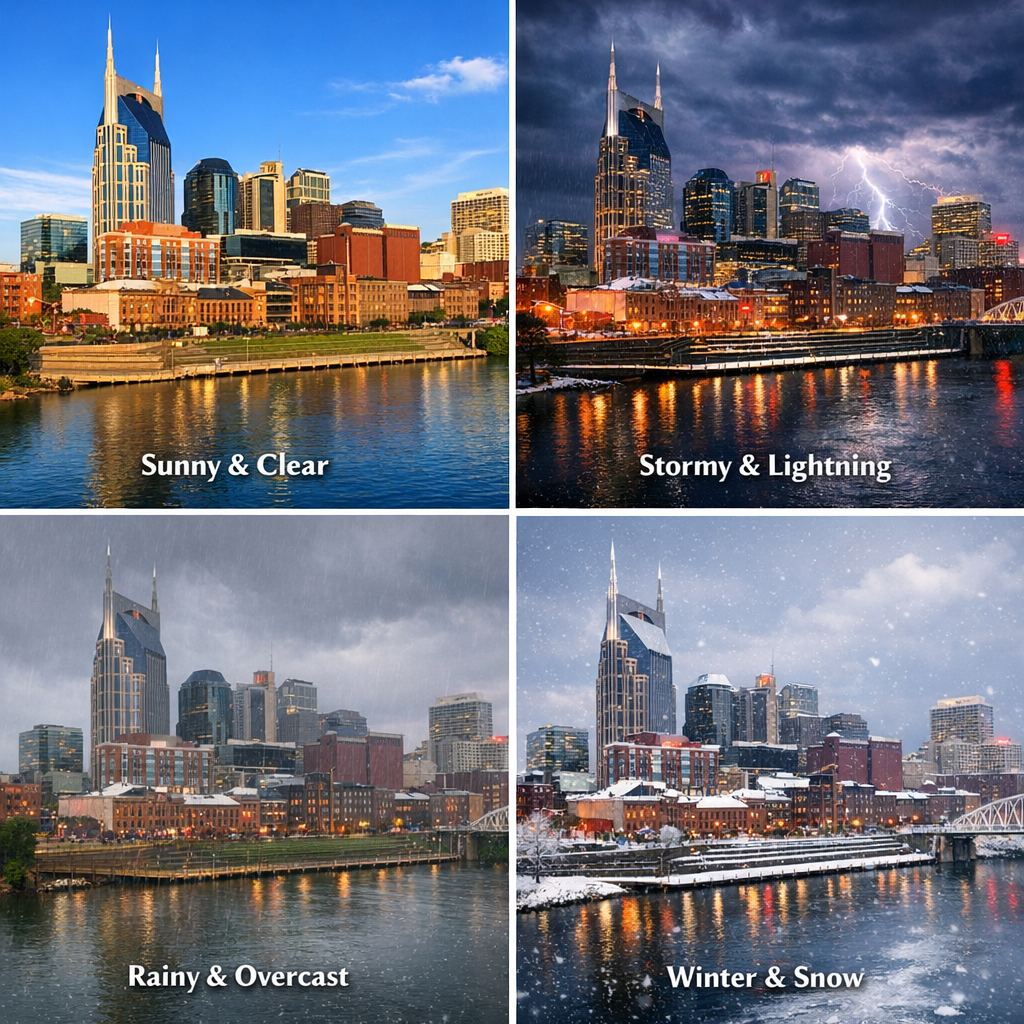
Nashville lies in a humid subtropical zone, which brings warm, humid summers; cool winters; and fairly mild transitions in spring and autumn. Our spring warm-ups tend to begin in April with daily highs rising from around the 50s toward the 80s as temperatures climb steadily. Nighttime lows hover in the 30s and 40s early on, then creep into the 60s. Cloud cover gradually decreases over late spring even as humidity rises and rainfall remains frequent. Snowfall is rare, concentrated in winter with most snow falling in January or February, though measurable accumulations are uncommon. Rainfall is heaviest late winter through summer, while fall generally trends drier with clearer skies.
Air Quality and Environmental Trends
Air quality in Nashville is under ongoing pressure, especially from ozone (ground-level smog) and small-particle pollution. These pollutants tend to spike during warmer months when heat and sunlight interact with emissions from vehicles. Though long-term reductions in many pollutants have been achieved, recent reports suggest ozone pollution remains a concern. Sensitive groups—children, older adults, people with respiratory issues—are particularly affected. Our local governments monitor air quality daily and issue guidance when conditions reach “unhealthy for sensitive groups” or worse.
Nashville’s environmental stewardship efforts are also gaining ground. Key priorities include growing and protecting urban tree cover, preserving green spaces and waterways, reducing waste, and building resilience to climate extremes. These are part of broader sustainability plans tied to public health, quality of life, and managing frequent, heavy rains or intense heat waves.
Weather and Safety: What You Can Do
• Watch forecasts during spring and summer for thunderstorm activity. Nashville’s transitions into warmer months often bring strong storms, sometimes severe. Be ready with ways to receive weather alerts—local radio, apps, or alerts through your phone.
• On high-ozone or high-particle days, limit outdoor vigorous activity, especially midday or afternoon. Use air quality reporting tools.
• Heat safety matters: stay hydrated, avoid prolonged exposure during peak afternoon heat, and check on vulnerable neighbors.
• Winter cold snaps can still happen. Though extremes are rare, one or two nights each winter may drop well below freezing. Be prepared with warm layers, protection for outdoor plants and pipes, and heating backups if possible.
• Flooding from heavy rainfall—flash or urban—is a hazard. Know safe evacuation and avoid driving through standing water.
Takeaway
Nashville’s weather brings variety: warm humid summers, crisp winters, and distinct transitions. While many seasonal patterns remain familiar, trends like worsening ozone levels and earlier springs are signals of change. Staying informed, preparing with common-sense safety steps, and supporting environmental efforts help ensure that our weather works with us—not against us.