

By Benjamin Lopez
Nashville is growing fast. New people, new buildings, new businesses. But growth also brings change—sometimes welcome, sometimes hard to swallow. As I walk from East Nashville back toward Edgehill, I’ve noticed something: no matter what the city adds or how fast skylines shift, what people value most is still the same—a sense of belonging.
Holding on to Roots in Edgehill and Beyond
Edgehill, one of Nashville’s oldest historically Black neighborhoods, was founded by freed African Americans after the Civil War. Over time it gained character through locally owned businesses like mom-and-pop grocery stores, family homes, and tight-knit social connections. Lately, many longtime residents tell me they no longer recognize their own streets—new homes where yards once were, rising property values pushing out families who grew up here, and cultural landmarks that begin to fade. In their voices, I hear both loss and resolve.
One neighbor said she remembers buying produce down the street from a Black-owned store whose owner knew her by name—and whose price was fair. That store is gone now, and often replaced by developments or rent hikes. Still, people collect memories in churches, at community events, through stories passed at porches.
Connecting Across New Divides
In East Nashville, I talked with folks who’ve moved in more recently, drawn by music, murals, and vibrant food scenes. They love the energy—but they also see how quickly composition shifts and worry it may wedge gaps between long-term residents and newcomers. One longtime musician worries new bars replacing old gathering spots might dilute cultural roots. A family who arrived last year feels both excitement and guilt: happy to be here, but cautious about unintentional consequences.
What Belonging Looks Like Today
To belong here now means more than owning property or settling into your block. It means:
- Listening: Asking older neighbors about neighborhood history; acknowledging the business, musical, and social contributions they made.
- Participating: At block parties, churches, schools, public meetings—showing up even when you don’t have a vote in every decision being made.
- Advocating: For things that serve everyone—affordable housing, mixed-use spaces, public transportation that connects more than just the downtown core, services in neighborhoods that aren’t suddenly in the spotlight.
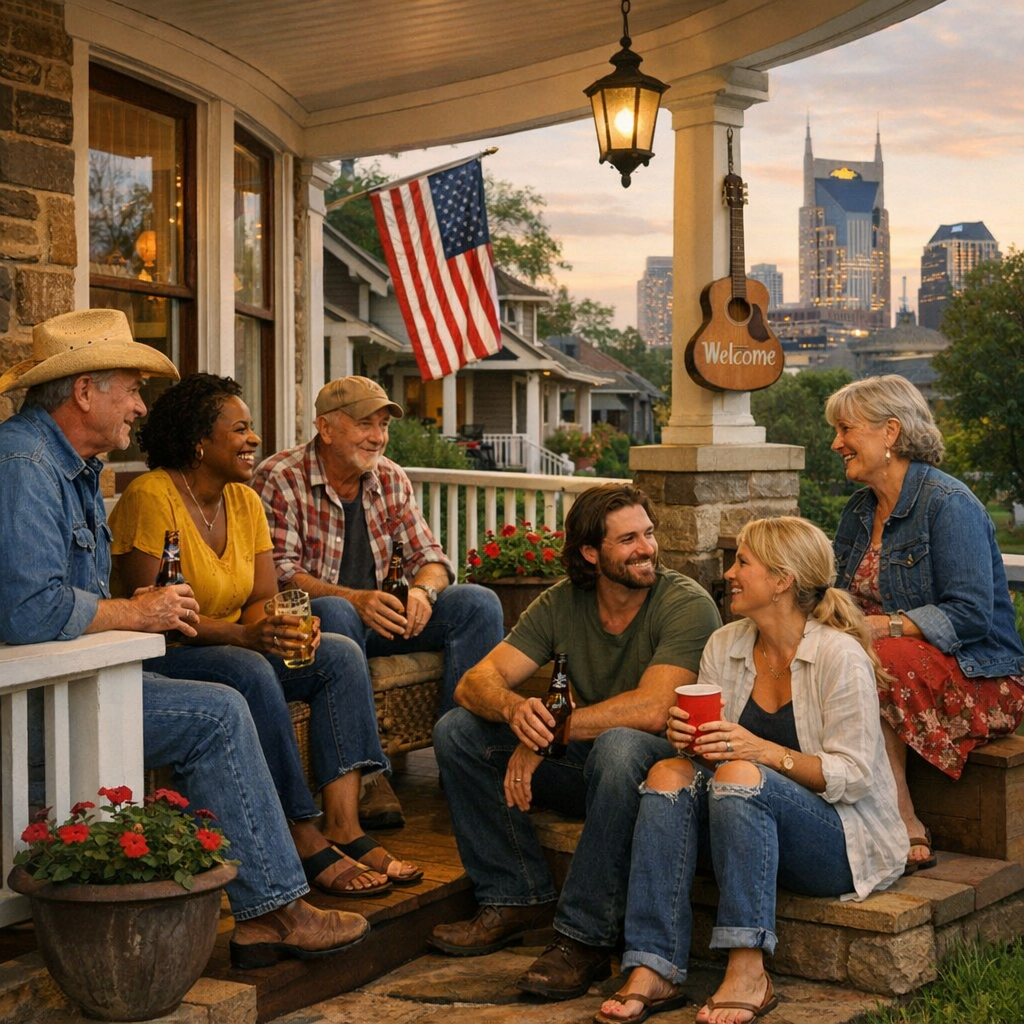
- Celebrating: Mardi Gras parades in Edgehill, local band nights in East Nashville, church cookouts—these aren’t just fun. They’re what ground identity.
Keeping Community Alive During Change
Change is inevitable. But community doesn’t have to be collateral damage. When we tell stories—ours, ours together—we remind ourselves that this city is made of more than brick and street signs. It’s made of memories, music, care, and shared struggle.
Nashville’s beauty isn’t just in its skyline or its bursts of bright new development. It’s in the voices of people who stayed. In the hands that built homes for decades. In gatherings just for the sake of gathering. It’s in the good places we refuse to lose.
I believe Nashville can grow without erasure. If we commit to belonging, we can build forward while holding close what brought so many here—roots, connection, and community.