

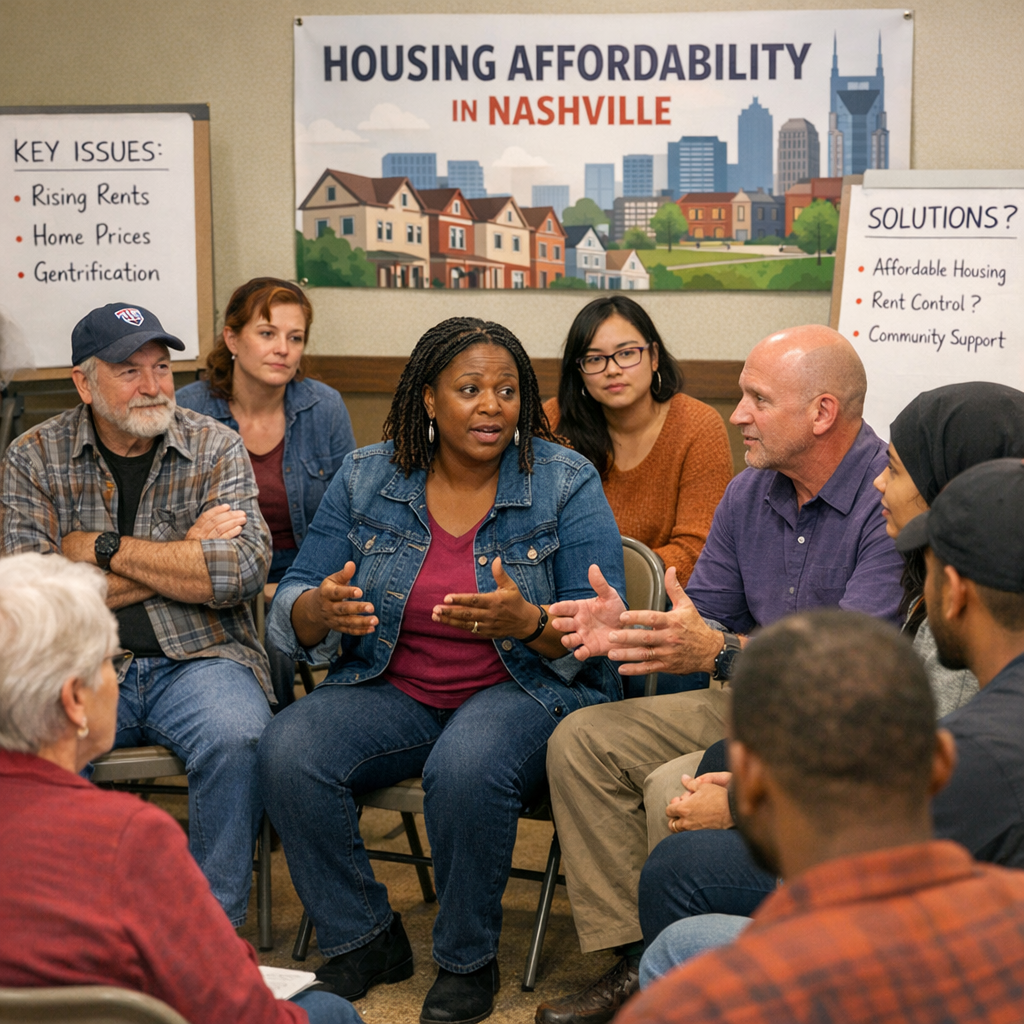
Nashville is grappling with a significant housing affordability crisis. A recent Vanderbilt University poll reveals that 82% of residents feel they cannot afford to purchase a home in Davidson County. This concern is further underscored by the fact that nearly half of all renters in the city are “cost-burdened,” spending more than 30% of their income on housing.
The crisis disproportionately affects Black and Hispanic families. A housing and infrastructure study found that these families can afford median-valued homes in less than 1% of Nashville’s neighborhoods. This stark disparity highlights the enduring impact of historical discriminatory practices and the urgent need for equitable housing solutions.
In response, local leaders have initiated several measures. Mayor Freddie O’Connell’s administration has proposed a $3.8 billion operating budget, which includes efforts to increase affordable housing supply. Additionally, the city’s Unified Housing Strategy aims to construct and preserve nearly 1,800 affordable housing units in the fiscal year 2025.
Community organizations are also stepping up. The Nashville People’s Budget Coalition advocates for participatory budgeting to allocate resources toward affordable housing and genuine community safety. Their efforts emphasize the importance of community involvement in addressing systemic issues.
While these initiatives are steps in the right direction, the scale of the problem requires sustained and collaborative efforts from both public and private sectors. Ensuring that all Nashvillians have access to affordable housing is crucial for the city’s continued growth and the well-being of its residents.