

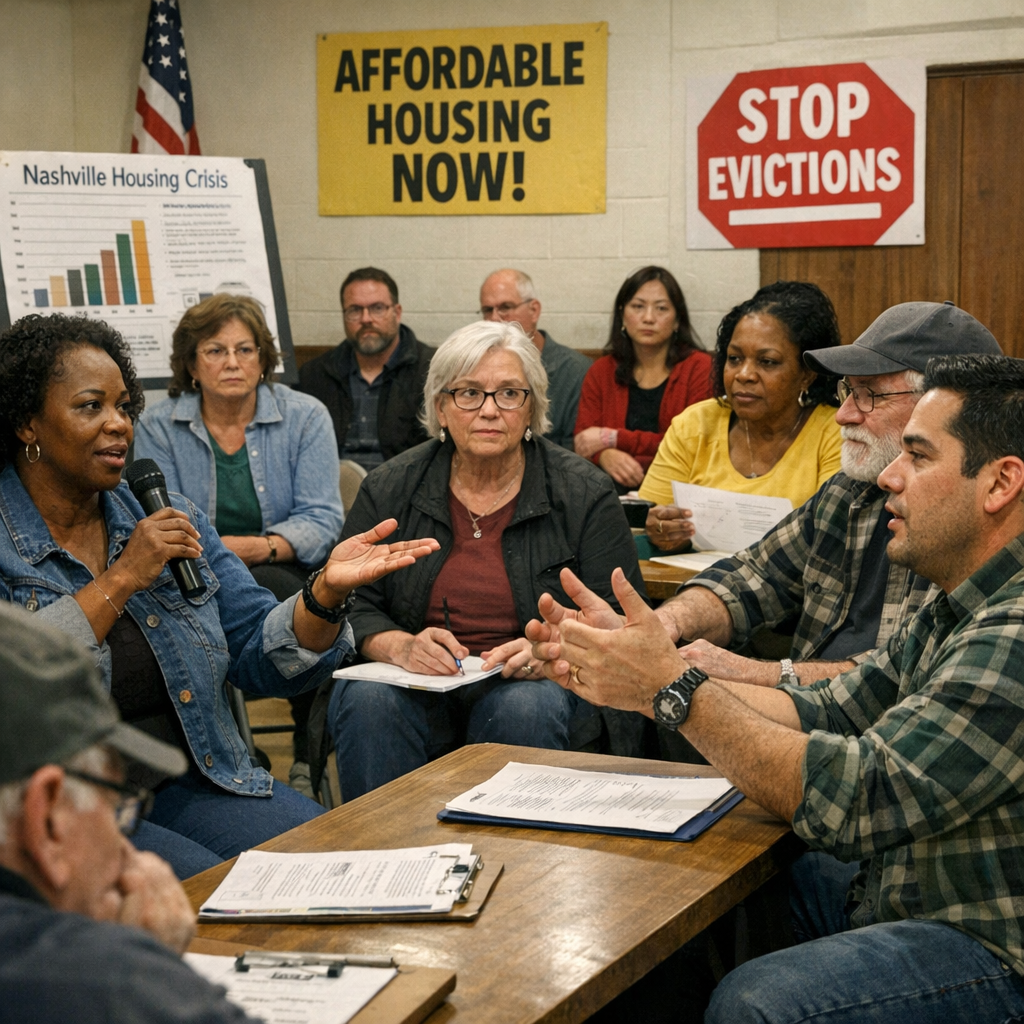
Nashville is grappling with a significant housing affordability crisis. A recent Vanderbilt University poll reveals that 82% of residents feel they cannot afford to purchase a home in Davidson County. This alarming statistic underscores the growing economic challenges faced by many Nashvillians.
In response, local leaders have initiated several strategies to address this pressing issue. Mayor Freddie O’Connell’s administration has been actively working on the Unified Housing Strategy, aiming to increase the supply of affordable housing. In the fiscal year 2025, city funding supported the construction and preservation of nearly 1,800 affordable housing units.
Despite these efforts, the affordability crisis persists. The median household income in Nashville is approximately $91,000, yet an annual income of around $120,000 is necessary to afford a median-priced home. This $30,000 gap highlights the financial strain on many residents.
Furthermore, a housing and infrastructure study revealed that Black and Hispanic families can afford median-valued homes in less than 1% of Nashville’s 481 neighborhoods. Specifically, only 0.8% for Black families and 0.6% for Hispanic families, pointing to deep-seated disparities in housing accessibility.
To combat these challenges, the city’s Community Health Improvement Plan for 2026-2028 has prioritized housing. The plan sets a goal of using the Unified Housing Strategy as a roadmap to identify immediate, low-barrier actions to improve equitable health outcomes for vulnerable populations.
While these initiatives are steps in the right direction, the path to resolving Nashville’s housing affordability crisis remains complex. Continued collaboration between city officials, community organizations, and residents is essential to develop sustainable solutions that ensure all Nashvillians have access to affordable housing.