

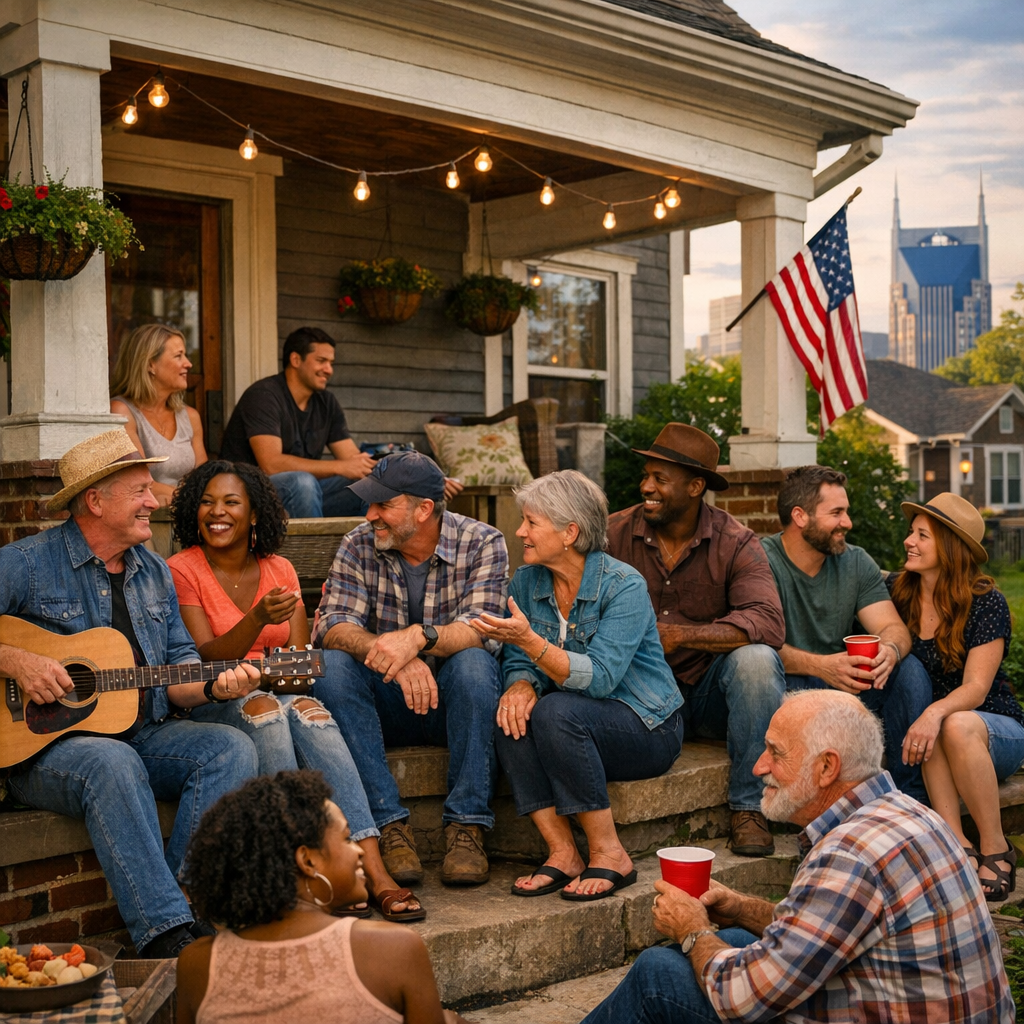
I remember growing up hearing stories about my grandparents gathering on front porches in neighborhoods where everyone knew each other’s name. Kids played until the sun went down. Folks shared meals, tears, laughter—without expectation. Those were the roots of community that felt solid, dependable.
Today Nashville is growing faster than ever—new businesses, shiny rooftops, more cars on the road. We’ve seen our city expand, and yes, that brings energy and opportunity. But as I walk past the concert halls and cranes, I often wonder: when did we stop seeing our neighbors as people and start seeing them as foot traffic?
The Loss I See
Homes once passed down for generations are disappearing. Rents are rising. Many Nashvillians share how Black and Hispanic families can’t afford many neighborhoods anymore. These changes are not just economic—they’re personal. People are being uprooted from places that once defined their identity. Families who loved this city are moving away simply to afford safety and belonging elsewhere.
Alongside displacement, safety concerns have steadily chipped away at our trust. Burglaries, vandalism, and theft are more than headlines—they affect whether we feel comfortable letting our kids play outside, whether we wave when we see someone we recognize, whether we stay.
Where Community Still Thrives
Yet there’s light in the stories people share. In East Nashville, neighbors still return home and gather in community gardens. In South, someone still knocks to borrow a tool, or checks in when a car’s in trouble. These everyday acts, often small and unseen, matter more than we admit. They stitch together belonging—if we allow them.
Volunteering is one pathway back. Organizations in our city offer many ways to serve. Whether you tutor a young student, drive someone to an appointment, or visit elders—you’re choosing connection. Groups like Empower Nashville and United Way of Greater Nashville respectively list ongoing individual volunteer needs—from adult education to helping refugees access food benefits. There are always channels open to build bonds. (If you’re looking, I can connect you.)
Belonging as Practice
Belonging isn’t just feeling; it’s action. It happens when we slow down just enough to care, open our front door or window, or risk being neighborly. It’s choosing inclusive interactions in daily life—smiling, listening, welcoming, staying put, demanding fairness in who benefits when Nashville grows.
I believe Nashville can be more; can return to being a place where growth happens without leaving people behind. But that won’t come from the skyline. It comes from us—how we treat one another, how we shape policy through our ballots, how we steward our neighborhoods with heart. If enough of us choose belonging, maybe one day our children won’t need to ask what a real neighborhood feels like—they’ll just live it.
Benjamin Lopez is a Nashvillian who writes about what it means to belong in a changing city.