

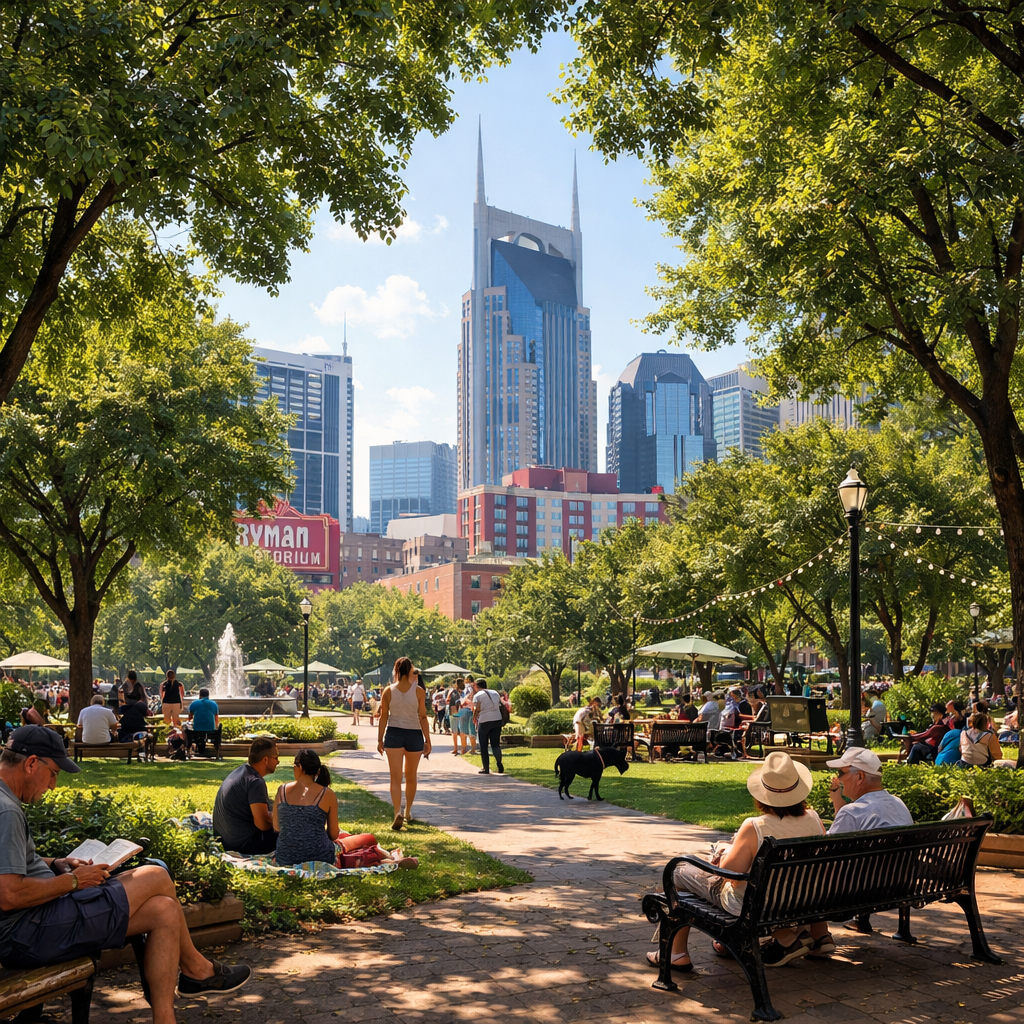
Nashville’s rapid urbanization has led to a significant increase in the urban heat island (UHI) effect, where city areas become notably warmer than their rural surroundings. This phenomenon results from factors such as extensive concrete surfaces, dense building layouts, and limited vegetation, all of which absorb and retain heat.
Understanding the Urban Heat Island Effect
The UHI effect arises when urban materials like asphalt and concrete absorb solar energy during the day and release it slowly at night, preventing the area from cooling efficiently. This leads to higher temperatures in urban areas compared to nearby rural regions. In Nashville, this effect is intensified by the city’s growth and development patterns.
Impact on Nashville’s Communities
Elevated temperatures associated with the UHI effect can have several adverse impacts:
- Health Risks: Increased heat can exacerbate respiratory and cardiovascular conditions, particularly among vulnerable populations such as the elderly and children.
- Energy Consumption: Higher temperatures lead to increased use of air conditioning, resulting in higher energy bills and greater strain on the power grid.
- Environmental Degradation: Elevated temperatures can negatively affect local flora and fauna, disrupting ecosystems and reducing biodiversity.
The Cooling Power of Trees and Green Spaces
Integrating trees and green spaces into urban planning is a proven strategy to mitigate the UHI effect. Trees provide shade, reducing surface temperatures, and release moisture through transpiration, which cools the surrounding air. Additionally, green spaces can absorb less heat compared to concrete surfaces, contributing to overall temperature reduction.
Local Initiatives and Community Involvement
Recognizing the importance of green infrastructure, Nashville has undertaken several initiatives:
- Heat Mapping Campaign: In 2022, a collaborative effort involving local experts and volunteers measured temperatures across the city to identify the warmest areas and inform mitigation strategies.
- Tree Planting Programs: Organizations like the Nashville Tree Conservation Corps advocate for tree conservation and organize planting events to increase the city’s canopy cover.
Community participation is crucial in these efforts. Residents can contribute by planting trees in their neighborhoods, supporting local green initiatives, and advocating for policies that prioritize green infrastructure.
Looking Ahead
As Nashville continues to grow, addressing the UHI effect through the expansion of green spaces and tree cover is essential for enhancing the city’s resilience to heat. By investing in urban forestry and sustainable planning, Nashville can create a healthier, cooler environment for all its residents.