

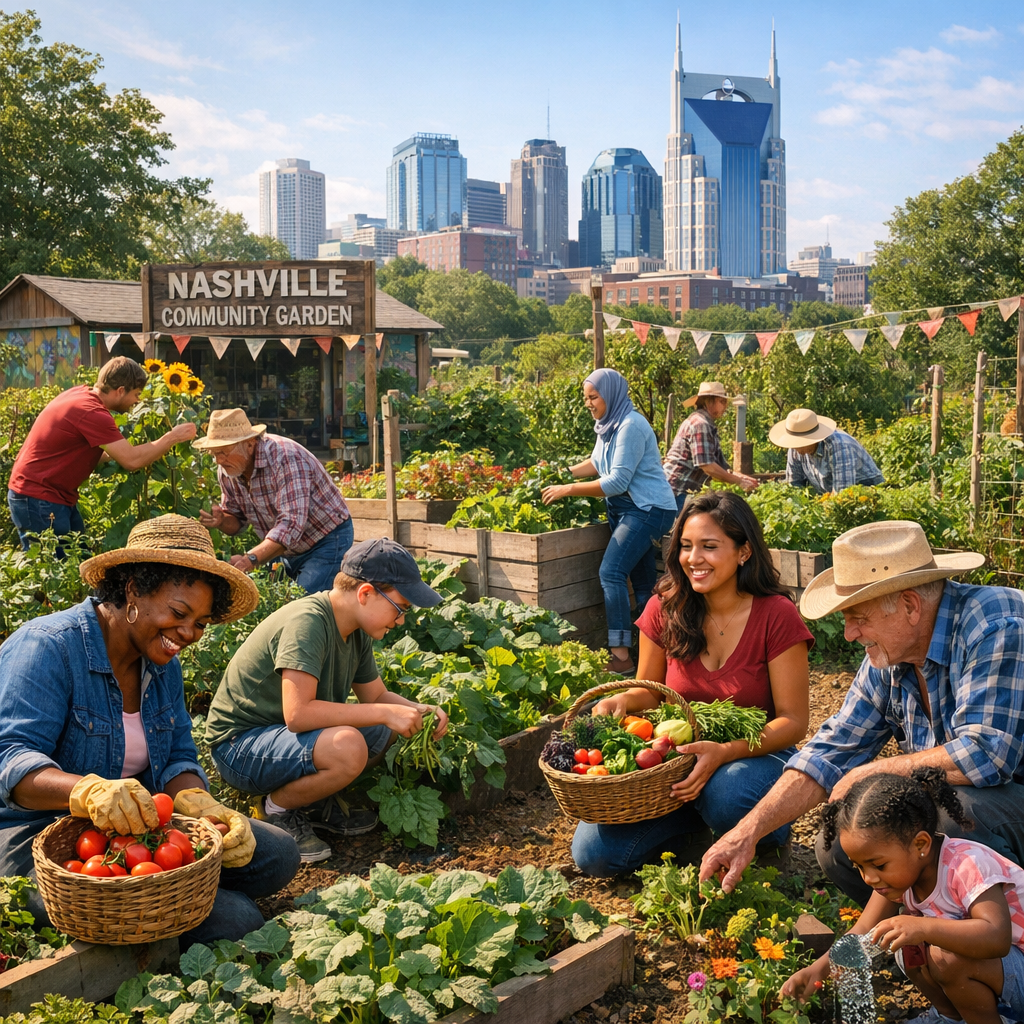
In neighborhoods across Nashville, community gardens are blossoming into vital spaces that provide fresh produce and strengthen community bonds. These gardens address food insecurity and promote sustainable urban agriculture.
The Nashville Food Project’s Community Agriculture Network
The Nashville Food Project spearheads the Community Agriculture Network, supporting gardens and orchards citywide. This initiative offers tools, training, and resources, enabling garden leaders to focus on cultivation and community engagement. Harvests are shared freely or at low cost, enhancing access to nutritious food in underserved areas.
Brooklyn Heights Community Garden
In North Nashville, the Brooklyn Heights Community Garden, founded by Nella “Ms. Pearl” Frierson, transforms vacant lots into a thriving urban farm. This garden provides fresh produce to residents and serves as a hub for intergenerational learning and community building.
The Trap Garden
Established by Robert “Rob Veggies” Horton, The Trap Garden addresses food deserts by creating gardens in unlikely places. This initiative increases access to healthy foods and fosters community engagement through workshops and volunteer opportunities.
Trevecca Urban Farm
Located on the campus of Trevecca Nazarene University, the Trevecca Urban Farm serves as a teaching tool for sustainable agriculture. With livestock, vegetable gardens, and an urban orchard, it produces food while educating students and the community about urban farming practices.
Getting Involved
For those interested in participating, the Nashville Community Garden Coalition offers opportunities to volunteer and connect with local gardens. Engaging with these initiatives not only provides access to fresh produce but also fosters a sense of community and shared purpose.
As Nashville’s community gardens continue to flourish, they play a crucial role in promoting food sovereignty, environmental sustainability, and neighborhood cohesion. These green spaces are more than just plots of land; they are the heartbeats of their communities, nurturing both the land and the people who tend it.