

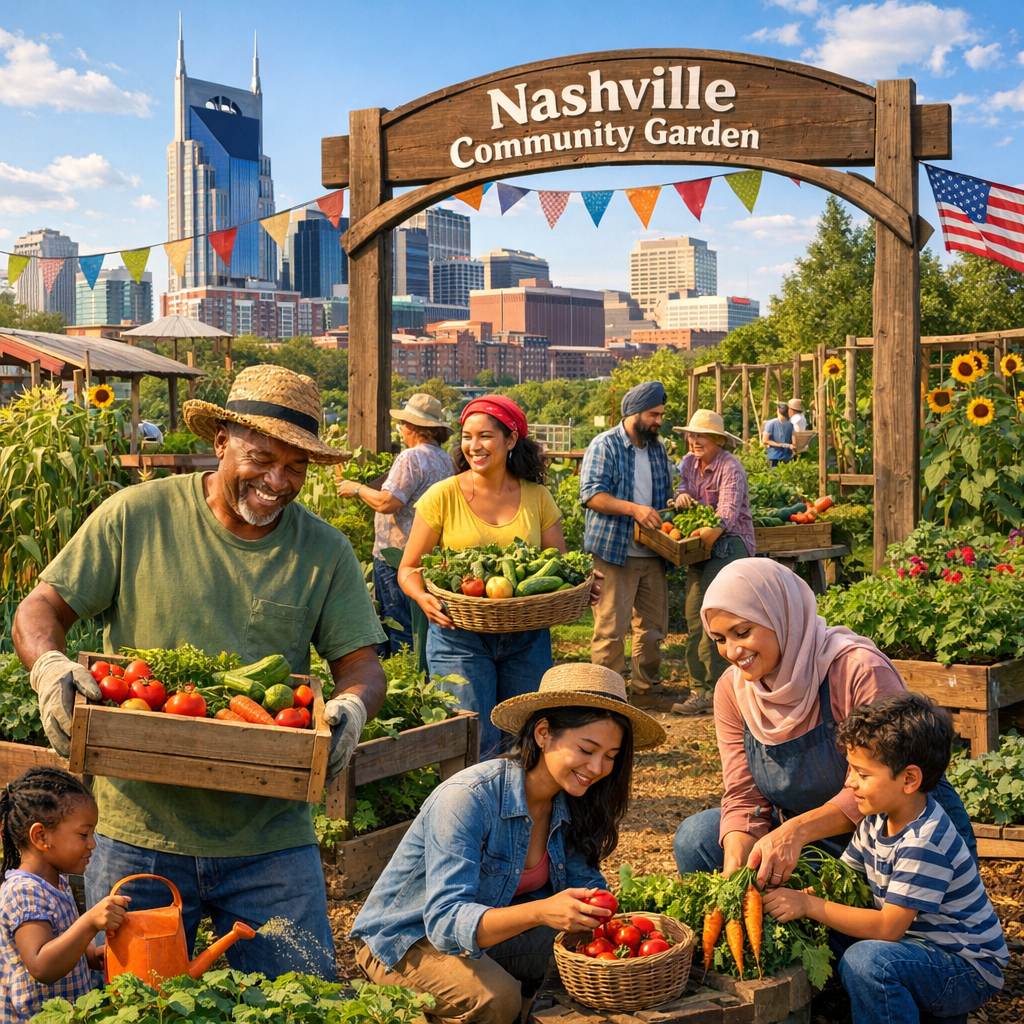
In the heart of Nashville, community gardens are blossoming, offering residents not only fresh produce but also a sense of connection and purpose. These green spaces are transforming neighborhoods, promoting food security, and fostering community engagement.
The Rise of Community Gardens
Community gardens have become vital in urban settings, providing accessible spaces for residents to grow their own food. In Nashville, organizations like the Nashville Community Garden Coalition (NCGC) are at the forefront of this movement. The NCGC unites various community gardens, working collaboratively to promote food sovereignty and justice throughout the city. They offer support to existing gardens and assist in the development of new ones, ensuring that more neighborhoods have access to these valuable resources.
Notable Initiatives
Several initiatives stand out in Nashville’s community gardening landscape:
1Acre Project
The 1Acre Project integrates technology with community gardening by connecting gardens with IoT sensors and gamified rewards. This innovative approach allows volunteers to see the tangible impact of their efforts through real-time data, enhancing engagement and productivity.
Cosecha Community Development
Focusing on the Nolensville Pike corridor, Cosecha brings neighbors together to foster community through school and community gardens. These spaces serve as centers for education, neighborhood gatherings, and access to healthy, locally grown food.
BELL Garden
Located on the Bellevue Middle School campus, BELL Garden is a hybrid school and community garden. Since its founding in 2012, it has been dedicated to building healthier communities through garden-based education, volunteerism, and food distribution to those in need.
Getting Involved
For those interested in participating, the NCGC provides opportunities to volunteer or join existing gardens. They encourage community members to reach out via email to learn more about monthly meetings and ways to contribute.
Additionally, the Nashville Food Project’s Community Agriculture Network offers avenues for involvement. They support community gardens and orchards, providing tools, training, and resources to garden leaders. Their initiatives aim to expand food access and bring neighbors together through shared agricultural efforts.
Conclusion
Nashville’s community gardens are more than just plots of land; they are vibrant hubs of activity, learning, and connection. By participating in these initiatives, residents can contribute to a healthier, more connected community while enjoying the fruits of their labor.