

By Benjamin Lopez
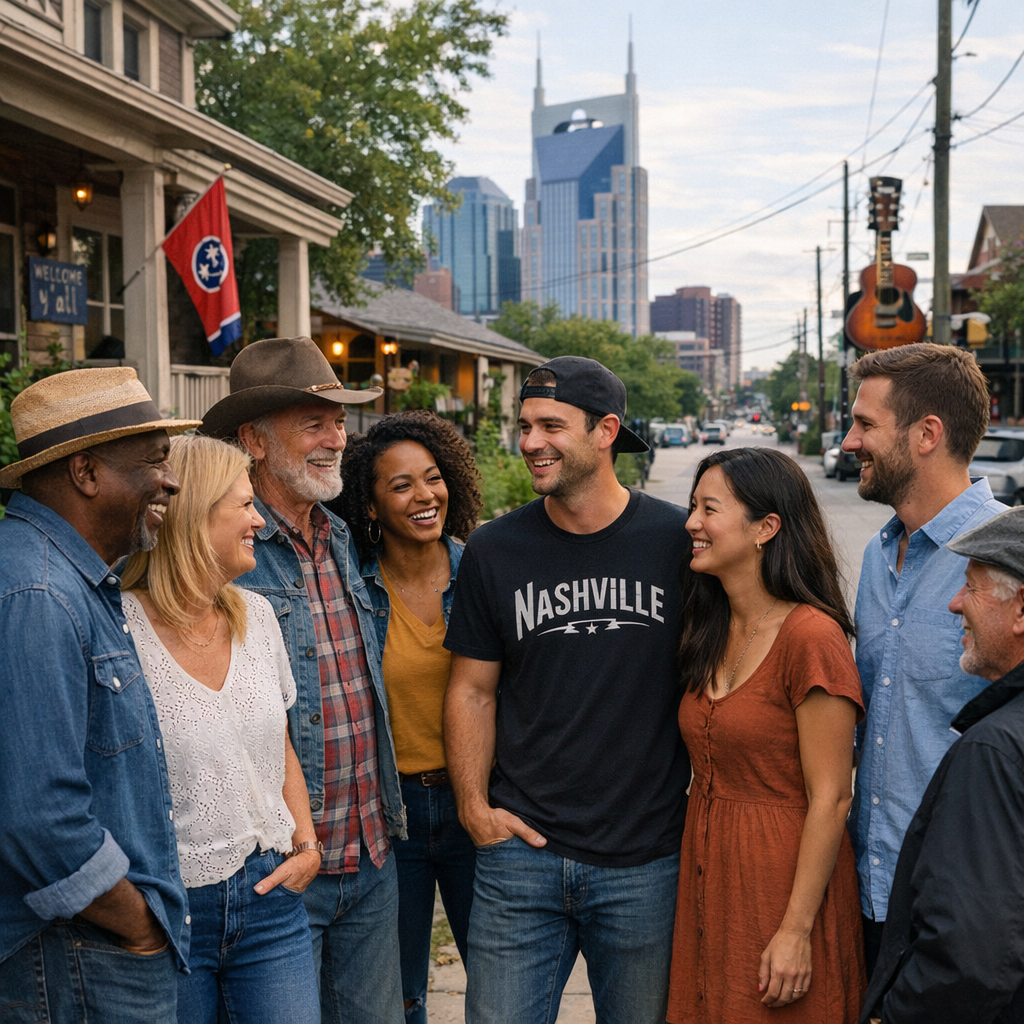
Nashville feels different these days. Between booming development, ballooning property values, and a stream of new faces, many longtime residents tell me the city they remember is slipping away. But I don’t believe that change has to mean loss—especially if we’re intentional about what we hold on to, and what we build anew together.
The sense of place through shared daily moments
Some of the most powerful threads of connection in Nashville are woven through the everyday: the taco truck on a corner, late-night conversations after church, the greenway jog past old oak trees. These are small touchpoints, but they’re what people point to when they describe why they stay—even when the rents rise and traffic gets worse.
One resident in Donelson told me they keep returning to their porch to watch neighbors walk by with the same dog, wave, small nods of “I see you.” It sounds simple, but it’s a gesture that anchors belonging. Another shared how stepping inside a family-run restaurant—where the owner remembers your name—feels like being seen in a city that’s growing faster than affection sometimes shows.
Grief, frustration, and the call for responsible growth
Still, not all feelings are hopeful. Many Nashvillians are deeply frustrated by unrestrained development. Sidewalks disappear beneath new builds, infrastructure lags behind construction, and what used to be affordable housing becomes a distant dream.
Survey data reflects this: some of the highest concerns are traffic congestion, cost of living, growth that feels unmanaged, and shrinking options for housing people can afford. Civic leaders are hearing this. Organization after organization is pushing for more involvement in planning, more oversight on development, and policies centered on inclusion and fairness.
Bridges across generations and neighborhoods
To hold on to what makes Nashville special, folks are finding way to bring together different groups: elders and youth, longtime neighbors and newcomers. Programs that archive oral histories; neighborhood meetings where anyone can speak; grassroots nonprofits raising concerns about displacement, infrastructure, and public safety.
One example: Voices of Resilience, an archive where people share how climate and environmental change are affecting them directly. Stories like that don’t give us solutions always—they give us understanding. And that’s the soil where meaningful policy and community connection can grow.
So what’s keeping me here?
For all the change around me, I stay because this city still has room for the intimate and the expansive. I stay for neighbors who know your birthday, the curves of hills you learned to love, for streets where multiple generations walk past selected oak and maple trees. I stay because connection still moves through shared meals, backyard conversations, farmer’s markets, neighborhood watch groups.
If I may suggest: maybe what will preserve Nashville isn’t fighting growth blind, but shaping it. Ensuring there are voices at the table who remember the old trees, but also students, immigrants, young professionals, people priced out in the past and those aching to belong now. If enough of us show up—and we do—then maybe Nashville can feel new and familiar at once.