

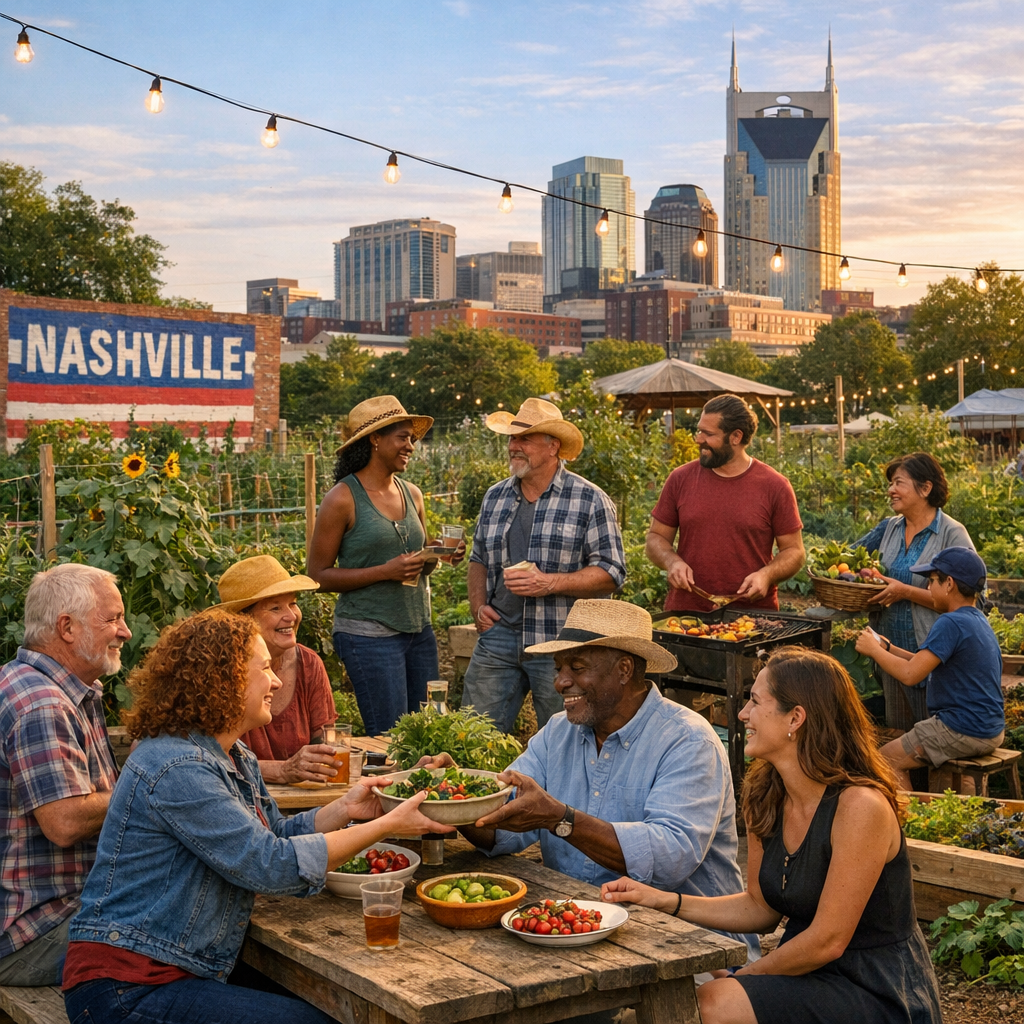
My name is Benjamin Lopez, and I’ve lived in Nashville for over a decade. I’ve watched the city grow—streets fill, skyline stretch—and I’ve felt the invisible lines widen: between longtime residents and new ones, between folks who feel included and those who don’t. Yet, amid that change, I’ve seen something powerful: small gestures, grassroots efforts, and quiet daily choices that are stitching our city back together.
From Sidewalks to Block Parties
Take East Nashville, where neighbors organized a block garden. What started as curious looks soon became shared soil. Folks who greeted each other only with nods now swap seeds, stories, and hopes under the shade of tomato vines. On another side of town, a once-empty lot now hosts monthly potluck dinners: strangers—kids who ride their bikes nearby, older folks from the duplexes, new families who’ve moved in—gather around long tables to eat, laugh, and ask, “How are you doing, really?”
Shared Spaces, Shared Belonging
Libraries—especially branch libraries—have sprouted up not just as places to check out books, but to host seed swaps, story hours, and healing circles. Similarly, community centers, churches, and even storefronts are reimagining what it means to “belong.” One coffee shop in South Nashville now opens its backdoor for free art gallery nights featuring local youth, turning catwalks of painted canvases into conversation starters. These shared spaces remind us: belonging isn’t just somewhere you live—it’s someone who listens.
Small Acts, Big Ripples
On my walk home the other night, I paused when I saw a painted rock sitting on a stoop with a simple message: “You belong here.” A child had crafted it—no formal organizers, no announcements—just intention. It felt like Nashville’s unstructured glue: moments of embracing beauty, kindness, and the idea that we each carry threads of this city’s story.
What Leaders Can Do, Too
Local leaders and institutions have the chance—and responsibility—to support these quiet revolutionaries. That means:
- Allocating funding for neighborhood “third places”—sidewalk libraries, gardens, shared backyards.
- Making zoning and transportation decisions with community input—not after decisions are made but before the blueprints are drawn.
- Partnering with storytellers to record and share stories from every corner of Nashville, both old and new.
- Embedding belonging into public policy: access to green space, transit, housing that isn’t just affordable—but dignified.
Why It Matters
When folks have a real sense that their presence—voice, life, laughter—makes a difference, neighborhoods flourish. Crime is lower. Mental health improves. Generations remember both what was hard and what was beautiful here.
We may not control every shadow cast by growth and inequality. But Nashville’s heart beats strongest when those shadows shrink through connection. So, what small thing will you do this week to remind someone—and yourself—that they belong?