

By Olivia Nguyen
A Nationwide Shift: More Players, Fewer Barriers?
Recent national data shows record participation in team sports—with nearly 92.3 million Americans playing in 2025. Growth is most pronounced in youth sports and among girls, especially in newer offerings like flag football and wrestling. Yet a decline in youth coaches and rising costs challenge access and equity. Many families now cite financial strain in keeping children active in costlier leagues. What this means in Nashville is a crossroads: expanding opportunity without pricing out participation.
Nashville Highlights: Schools, Leagues and Levels
High School Athletics under TSSAA
At the high school tier, the Tennessee Secondary School Athletic Association (TSSAA) continues shaping competition standards—eligibility, scheduling, classifications—for fall, winter, and spring sports. Local schools like Montgomery Bell Academy and Christ Presbyterian Academy have garnered attention in recent rankings for offering wide sport rosters and competitive success.
Spotlight: Metro Nashville Public Schools and James Lawson HS
MNPS offers a spectrum of sports across grades, from elementary through high school: football, volleyball, cross country, unified sports, and more. These programs emphasize personal development—leadership, resilience, community as much as athletic achievement. At James Lawson High School, the recent hire of Montario M. Hardesty, former college player, as head football coach is a sign of ambitious leadership hungry to build deeper, stronger programs.
Community-Level Sports: Clubs, Parks & Youth Programs
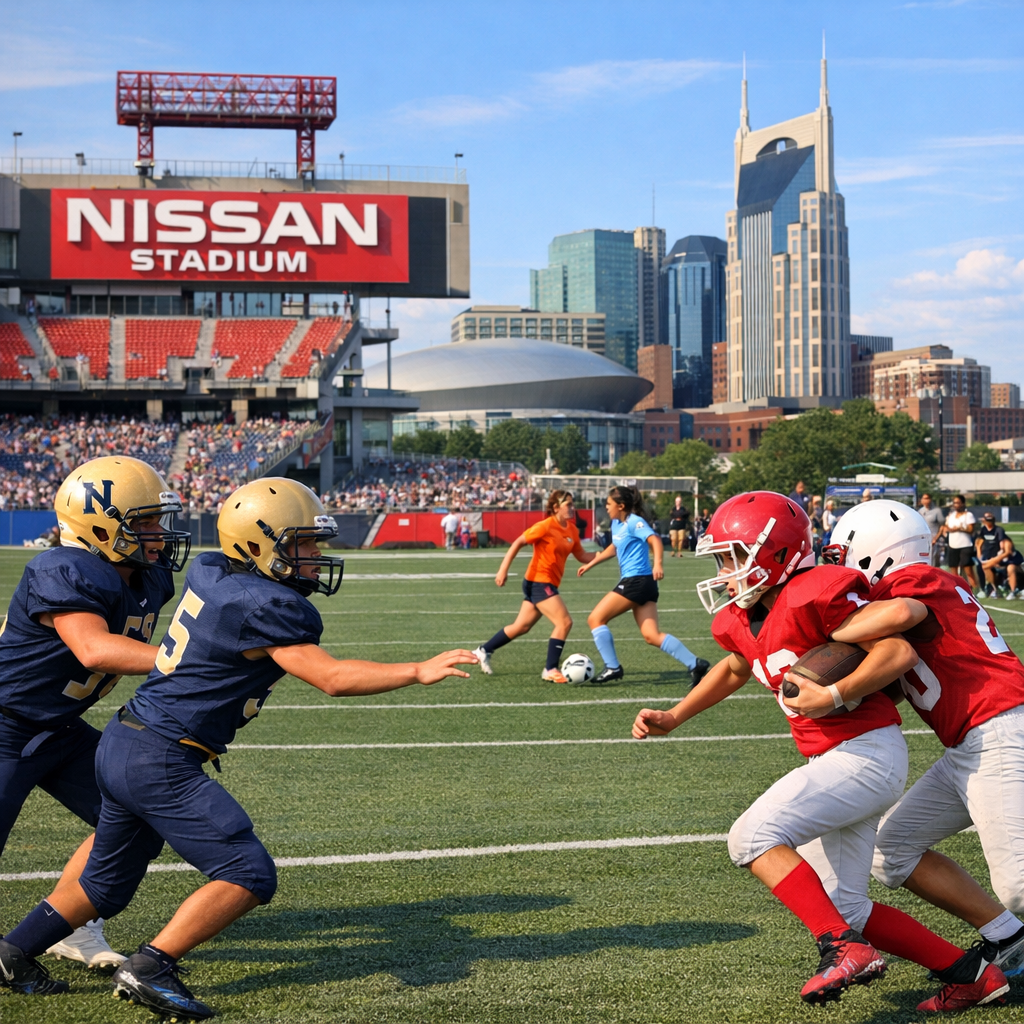
Outside school walls, youth and community sports remain vital. Nashville’s Metro Parks department runs leagues for flag football, T-ball, basketball, volleyball, and more. The Harpeth Valley Athletic Conference supports middle school private and charter schools with season-based competition. These platforms offer accessible entry points and sustained growth for kids who may not participate in more competitive circuits.
Challenges and Opportunities Ahead
- Coach shortage: With rising youth participation, the drop in available coaches is putting pressure on program quality and safety. Encouraging more adults to take roles is crucial.
- Cost equity: Travel, equipment, club fees—these can put barriers in the way. Local leagues and schools can explore sliding-scale fees or sponsorships to ease the burden.
- Inclusive options growing: Girls’ flag football, unified sports—both are expanding quickly, opening athletic doors for more students.
- Maintaining balance: Competition matters, wins matter, but sports remain strongest when they teach teamwork, perseverance, and well-being—values inside and outside gyms and fields.
Why It Matters Locally
Sports are more than scores. They bind neighborhoods. Build confidence. Offer mentorship. For Nashville, striking the right balance—between elite and accessible, competitive and character-building—can help communities thrive. Coaches, parents, administrators: the coming seasons will be shaped by how we choose to invest not only in programs, but in people.