

By Emily Johnson
Disaster at the Nepal-Tibet Border
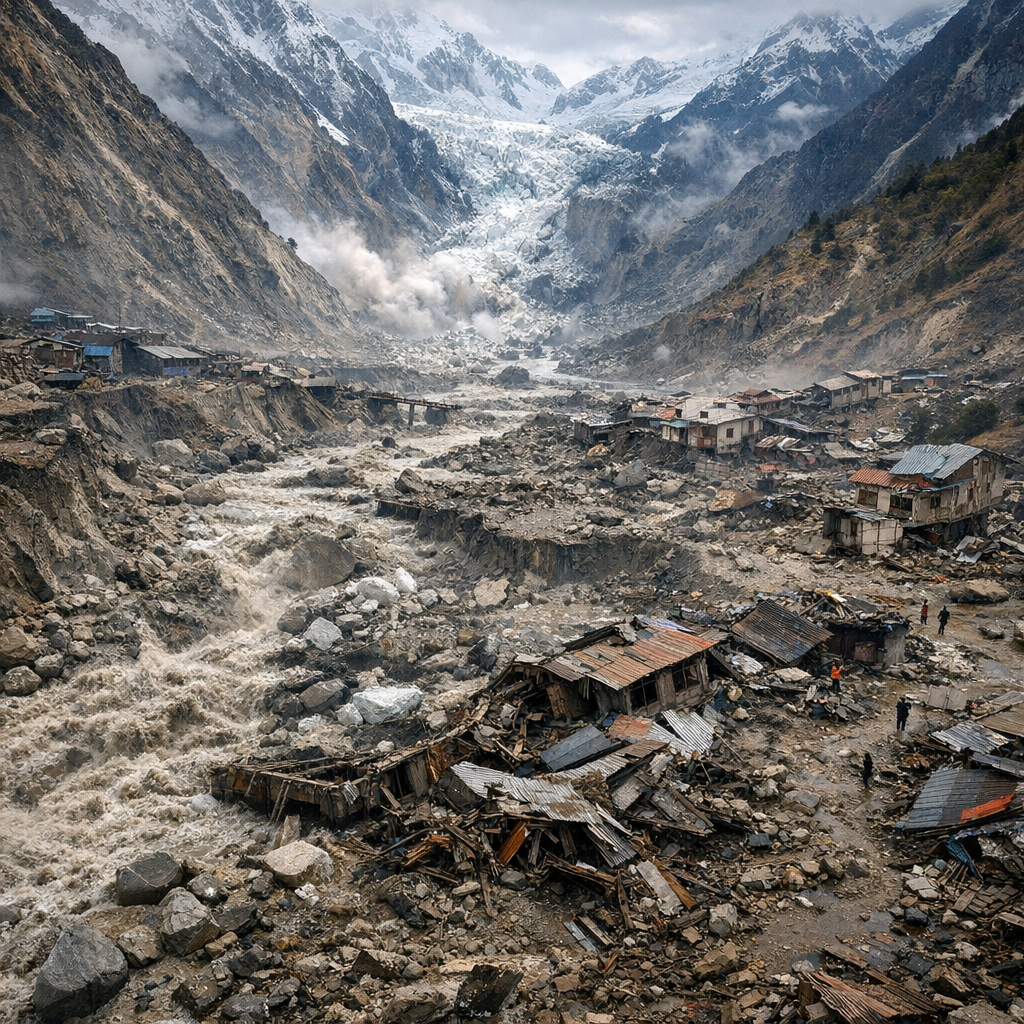
A catastrophic natural event unfolded along the Nepal–Tibet border region when a chunk of glacier collapsed, triggering sudden floods and mudslides that swept through communities in Nepal’s mountainous districts and across into Tibet. The disaster claimed at least 360 lives in Nepal and three in Tibet; nearly 1,500 people remain missing. Among the missing are travelers and pilgrims from dozens of countries.citeturn1news13turn1news46turn1search2
Visible Impacts and Infrastructure Collapse
Floodwaters surged down river corridors like the Trishuli after the collapse, washing away homes, roads, bridges, and uprooting entire settlements. The region’s rugged terrain and damaged infrastructure have made rescue operations difficult; response teams are using helicopters and vast manpower to reach remote areas.citeturn1search2
Global Response and Humanitarian Aid
International response is in full swing. Neighbouring countries like India have sent rescue aircraft loaded with essentials, while the United Nations has released emergency funds and deployed support staff. The U.S. has pledged financial aid, deploying advisors and offering assistance as well. NGOs are calling for transparent information sharing and unhindered humanitarian access, especially across contested or remote regions.citeturn1news17turn1search6turn1search7turn1search2
Climate Change and Glacier Risk
Experts warn that what happened at the Nepal–Tibet border is emblematic of growing risks in the world’s high mountain regions. Warming temperatures threaten glaciers worldwide, increasing the likelihood of collapses, glacial lake outbursts, and downstream flooding. While trigger events vary, climate stress accelerates melting and instability. Amplified precipitation due to climate change compounds the danger.citeturn1news14turn1search2
Lessons and Long-Term Implications
This disaster underscores the need for improved early warning systems in mountainous border areas, better mapping and monitoring of glacier stability, and stronger cooperation between neighbouring nations on disaster management. Global aid efforts are vital, but long-term resilience will depend on investments in infrastructure, community preparedness, and environmental protection. Although tragic, the calamity offers lessons on how the international community can anticipate and mitigate similar events in fragile landscapes.citeturn1search2