

By Emily Johnson
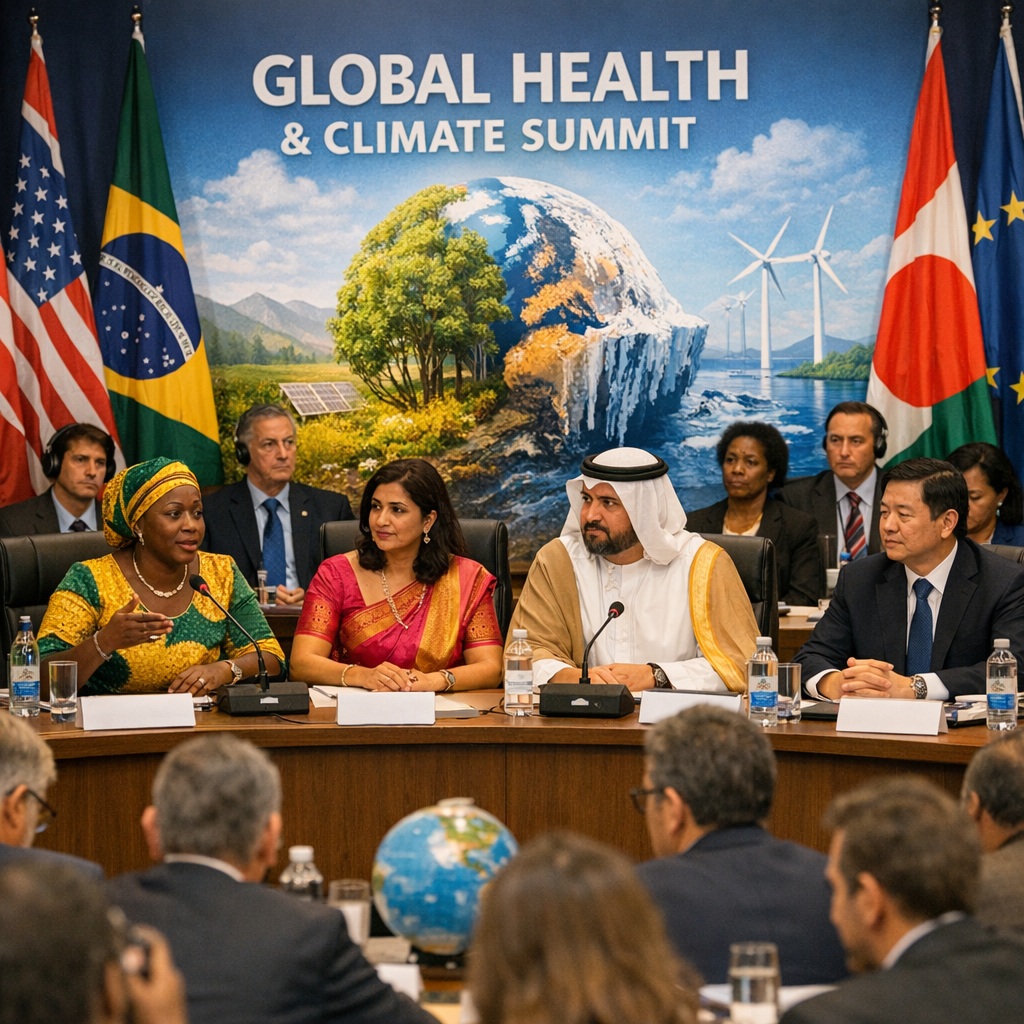
In an era where information flows freely and crises ripple around the globe in real time, two challenges rise above many others: ensuring global health progress remains on track, and strengthening climate cooperation among nations. Both issues are deeply connected, and our shared future will be shaped by how well the international community responds.
Health Gains Are Under Threat
For years, the world has made meaningful advances in public health — fewer new HIV infections, reduced child and maternal mortality, and broader access to clean water, sanitation, and hygiene. But recent reports suggest these gains are edging backward in some places. Inequalities persist, especially among women, children, and communities hit hardest by conflict or political instability. A major problem: gaps in data. Without reliable reporting systems, health trends can’t be monitored in real time, making it harder to respond to outbreaks or prevent emergencies.
Another challenge: funding. Development assistance for health has fallen sharply, particularly for low-income countries that depend on external support. This decline threatens vital services like immunizations, maternal care, and disease prevention. The most vulnerable populations risk losing the progress already made.
Climate Cooperation: Treaties, Tensions, and the Path Forward
The Paris Agreement remains the cornerstone of global efforts to limit warming to well below 2°C compared to pre-industrial levels, with aims for 1.5°C. It binds nearly every country to submit increasing national climate plans every five years, known as nationally determined contributions (NDCs). However, despite these frameworks, emissions are not consistently declining, and not every country is keeping pace with what’s needed to meet the targets.
Key obstacles include differing economic priorities, concerns over fairness, enforcement challenges, and political will. Climate change doesn’t respect borders; its impacts crossover — from wildfires and floods in one place to food security crises in another. Still, global cooperation has been uneven at times, especially where financial support or technological sharing lag behind the rhetoric.
Where Health and Climate Intersect
Climate change makes health risks worse. Heatwaves, air pollution, vector-borne diseases, and food supply disruptions all increase as global temperatures rise. Meanwhile, weakened health systems struggle to respond. Vulnerable communities face compounded threats.
Positive partnerships are emerging: clean air initiatives, water access programs, and climate-resilient healthcare infrastructure are being built in many regions. But these efforts often require coordination, long-term funding, and political consistency. To succeed, they need to be rooted in equity and accountability.
What Needs to Happen Now
- Invest in both healthcare and climate systems with sustained financing, especially in lower-income nations.
- Strengthen data collection — on disease, environmental changes, and health outcomes — to guide policy and resources.
- Hold nations accountable to their climate pledges and health targets, with stronger international cooperation.
- Encourage cross-sector solutions that bridge health, climate, and equity, seeing them as interlinked rather than separate issues.
As someone writing from Nashville, it’s clearer than ever: what happens in distant regions eventually reaches all of us. Glimmers of progress exist, but they depend on enduring commitment, honest accountability, and the recognition that health, climate, and justice must move forward together.