

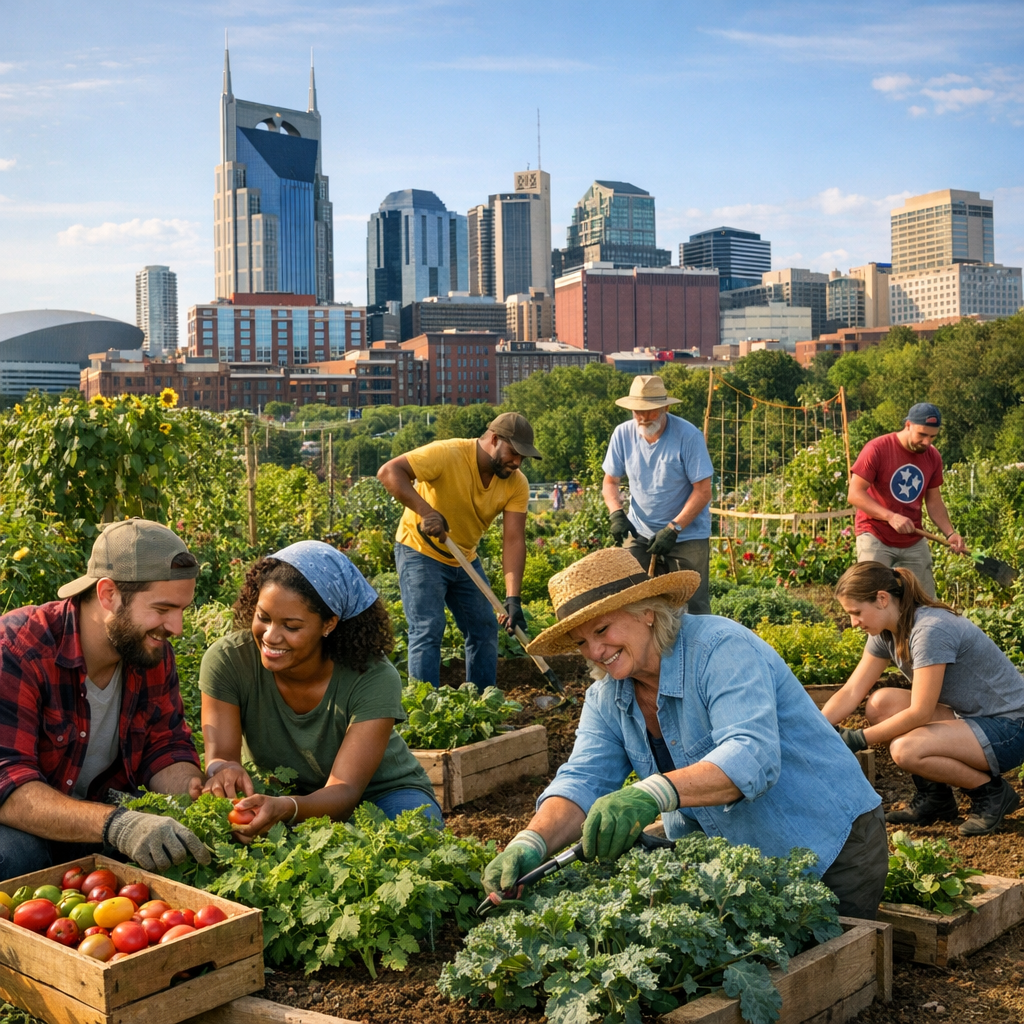
I’ve spent many mornings in Nashville’s Community Agriculture Network gardens—at McGruder, Growing Together, and even in our churchyard—where the soil tells stories. Stories of hungry families, of neighbors exchanging seeds and advice, of the city’s expansion casting long shadows over once-green spaces.
What the Gardens Do
These gardens provide more than fresh produce. They’re places where skills are shared—how to compost, how to prune, how to grow culture alongside cucumbers. Managed by The Nashville Food Project, they span several sites, and support around 150 growers, producing tens of thousands of pounds of edible harvest. Many of those harvests go to low-income neighborhoods or folks without regular grocery access. These plots allow us to reclaim small patches of land to grow both sustenance and solidarity.
Why It Matters
First, food security. For some neighbors, a few tomato plants can mean the difference between meals stretched too thin or a nourishing dinner. In areas labeled food deserts, community gardens offer reliable access to fresh, healthy foods without steep grocery bills.
Second, health—mental and physical. Tending a garden demands strength and patience, but offers peace in return. It’s therapeutic to pull weeds, sow seeds, share stories with friends and strangers alike. For those facing food insecurity or housing instability, this work becomes a source of grounding and purpose.
Third, environmental and educational value. Orchards and school gardens teach us geography of our own backyards—what thrives where, when, and how climate matters. These are classrooms without walls. And green spaces improve air, offer shade, and reconnect us—urban residents—to earth beneath our feet.
Challenges and How We Can Help
There are obstacles. Securing usable land in growing neighborhoods or underserved areas isn’t simple. Veggies don’t grow on parking lots. Tools, training, irrigation—these require time, money, coordination. And sometimes, gardens don’t serve everyone equally; some low-income or unhoused folks don’t feel welcome or aware of programs that could benefit them most.
Still, the solutions are within our reach. Metro’s Agricultural Extension offers help starting school or community gardens, and gardens partner with schools, churches, nonprofits to amplify reach. We can push for more funding, more public land use, and ensure gardening programs intentionally include voices from the margins. We can also build connections between gardens and markets or kitchens, so produce helps feed those who need it most.
What You Can Do Today
- Visit a neighborhood garden—offer time, seeds, or your knowledge.
- Support organizations like The Nashville Food Project, or your local consumer horticulture office.
- Advocate for Metro council to preserve or designate more public land for green growing.
Whenever I walk past a plot where tomatoes hang heavy and basil scents the air, I see more than summer’s harvest—I see Nashville’s promise. A city that doesn’t just grow fast, but grows together.