

By Sophia Anderson
The Choose How You Move Initiative
Nashville voters approved the Choose How You Move plan in November 2024, paving the way for one of the city’s most ambitious transportation and infrastructure efforts. Under the $3.1 billion program, major improvements include safer streets, expanded sidewalks, upgraded signals, and dependable transit options across the county.
Projects in Motion
Some of the current projects include:
- Nolensville Pike All-Access Corridor – Nearly nine miles of enhancements from downtown to South Nashville, featuring transit-only lanes where feasible, pedestrian safety upgrades, bikeway additions, and signal modernizations.
- Signal and Sidewalk Investments – Back-to-back funding has allowed for hundreds of smart signals, over a decade of sidewalks in the works, and transit shelters and service upgrades, especially in high-traffic corridors.
- Intersection, Bridge, and Corridor Fixes – Projects underway include intersection improvements, bridge repairs, and enhancements in Walk-Bike connectivity across neighborhoods.
Aligning Growth with Community Vision
To manage Nashville’s rapid growth and ensure it reflects the values of neighborhoods, the city is working through strategies like:
- Design & Development Strategy (D&DS) – This effort is examining how zoning, design rules, and building procedures affect urban character and aligning them with mobility goals like transit-oriented development.
- Housing & Infrastructure Study – Reviewing where current policies may be barriers to housing supply, infrastructure capacity, and ensuring that as neighborhoods grow, basic services, utilities, and resident quality of life keep pace.
Safety and Street Design Enhancements
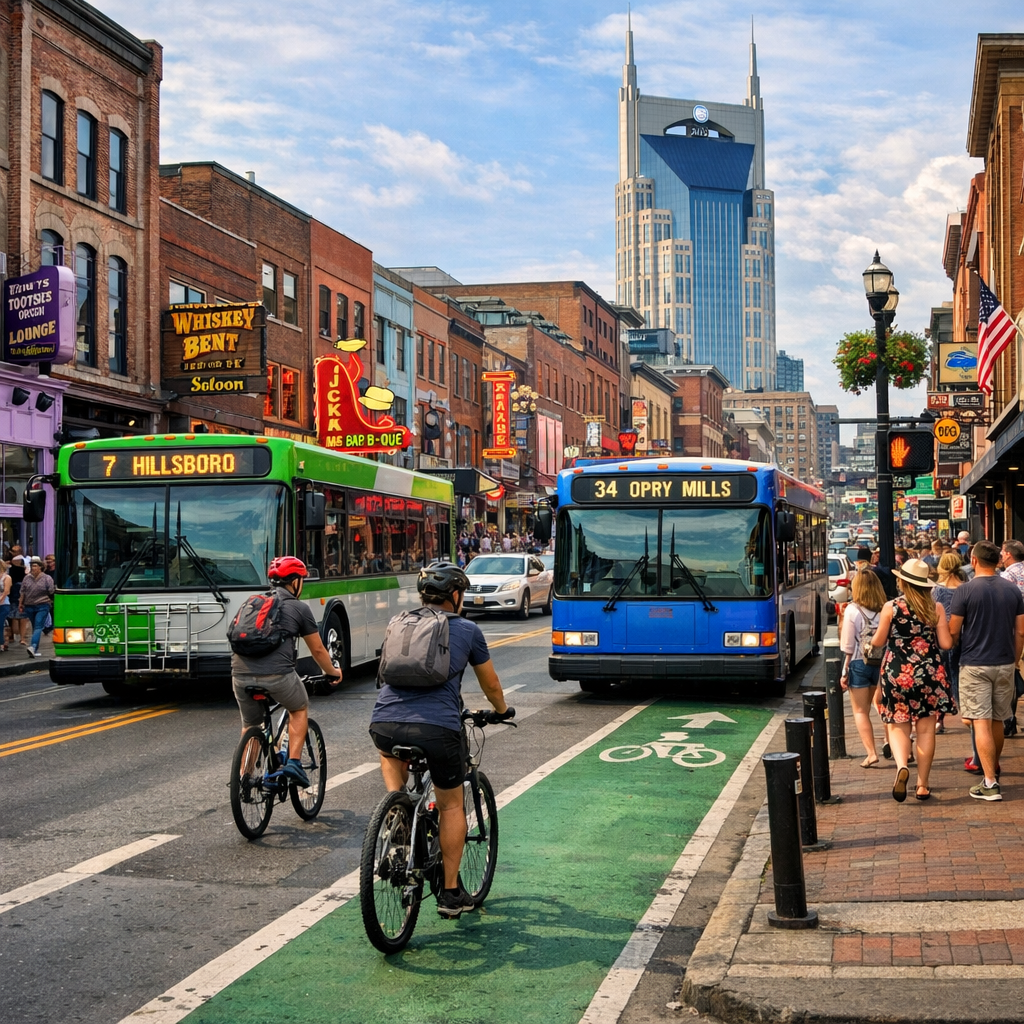
Recent steps to protect vulnerable road users include installing concrete barriers in bike and scooter lanes downtown, using raised crosswalks, and focusing safety investments on high-injury corridors. With more than 60 fatal traffic crashes this year, including many involving pedestrians, these changes are urgent.
What This Means for Neighbors
For Nashvillians, these shifts mean more walkable streets, safer commutes, and clearer expectations for how neighborhoods will evolve. Yet challenges remain: ensuring that investments are equitable, managing disruptions during construction, and balancing preservation with change are all part of the conversation.
Questions Worth Asking
- Are improvements reaching historically underserved neighborhoods?
- How will construction timelines match community needs?
- What safeguards exist so residents aren’t priced out as infrastructure improves?
As Nashville moves forward, the goal is not just bigger sidewalks or faster buses—it’s building a city where access, safety, and affordability are part of everyday life for everyone.