

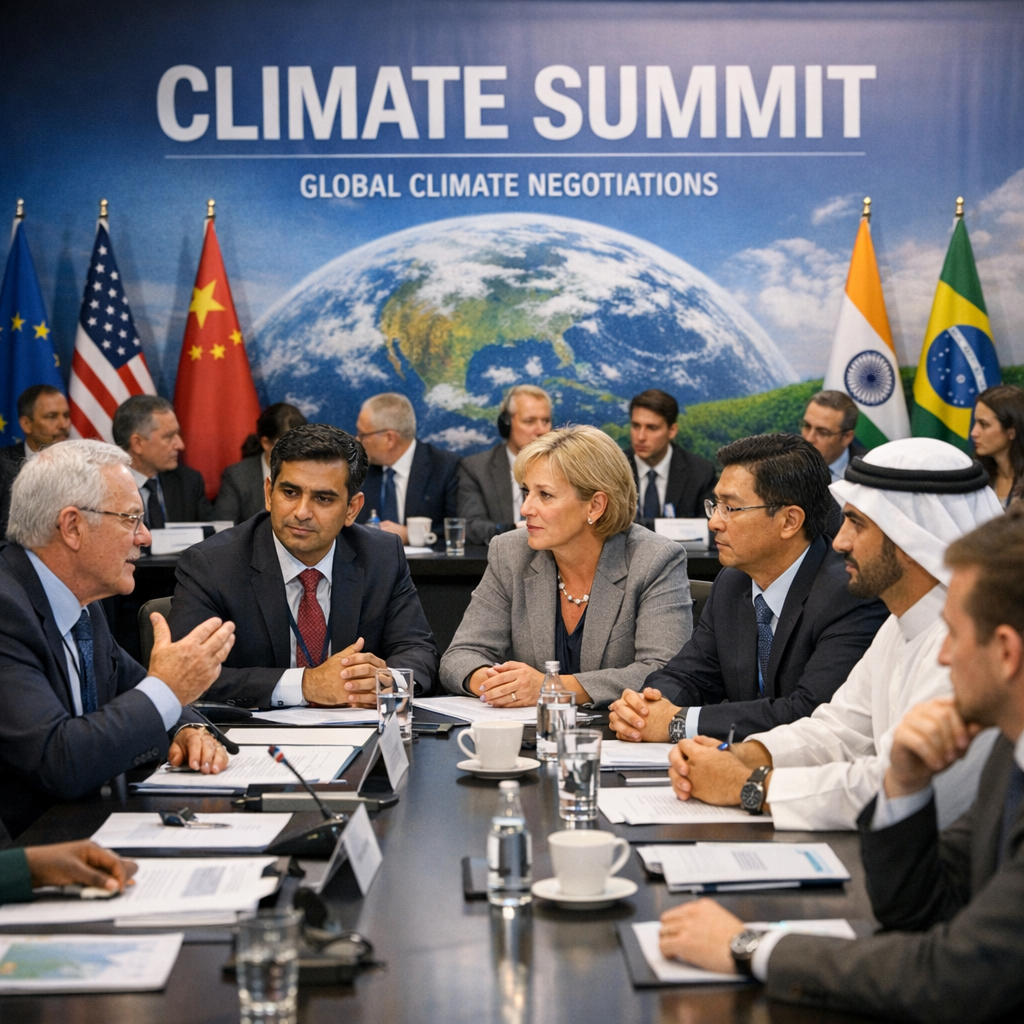
By Emily Johnson — As I’ve been following global developments, I’ve noticed climate diplomacy is entering a pivotal phase. Free of most of the year-bound urgency tags, ongoing negotiations are now less about promises and more about concrete measures. In this article, I’ll break down what’s changing—and how it could affect places near and far, even here in Tennessee.
What global climate diplomacy is now
Following the Paris Agreement and the first Global Stocktake (GST), attention has shifted away from lofty goals toward delivering real outcomes. New work programmes tie together national adaptation plans, clean energy shifts, food security, and waste reduction—moving beyond isolated pledges to shared action. Authorities are demanding metrics, timelines, and accountability.
How institutions are adapting frameworks
One of the major evolutions is in the United Nations Climate Change body expanding its carbon market rules: grid-connected renewable electricity projects can now earn credits under the Paris framework, as long as they meet rigorous criteria. That opens up opportunities for faster investment in solar and wind, especially in regions with unstable grids. Simultaneously, a revamped governance model is deploying thematic coordination groups across energy, food systems, zero waste, and other thematic areas to streamline implementation.
Money and equity still at the heart of debates
The most politically charged aspect remains finance. Developing countries and small island states are pushing for tripled funding for climate adaptation by 2035, arguing failure to clarify who pays, how, or with what types of finance jeopardizes vulnerable communities. Meanwhile, many developed nations say financing obligations should include a broader range of sources—including private investment—not just public spending.
Where conflict and cooperation intersect
These diplomatic changes are occurring amid regional tensions and conflicts. States are becoming both sources of climate vulnerability and actors in negotiations. Peace-building, health, and migration concerns are entangled with climate action. It’s becoming clear that climate diplomacy isn’t separate from international stability—it’s central to it.
Why this matters locally
Even here in Nashville, these shifts are meaningful. Clean energy credits may influence global supply chains for renewable technologies. Adaptation finance could affect U.S. foreign aid programs. And the framework of accountability may trickle down to state and local governments expecting strong climate planning. Global diplomacy is setting expectations for governance, funding, and environmental justice you might see in local debates.
Looking ahead
The next key moments include the continued implementation of the Global Stocktake’s outcomes and the upcoming COP summit. But perhaps more important will be how transparent, just, and effective nations are in translating agreements into results.
Climate diplomacy has moved into its action-phase—and that change might be the most important headline of all.