

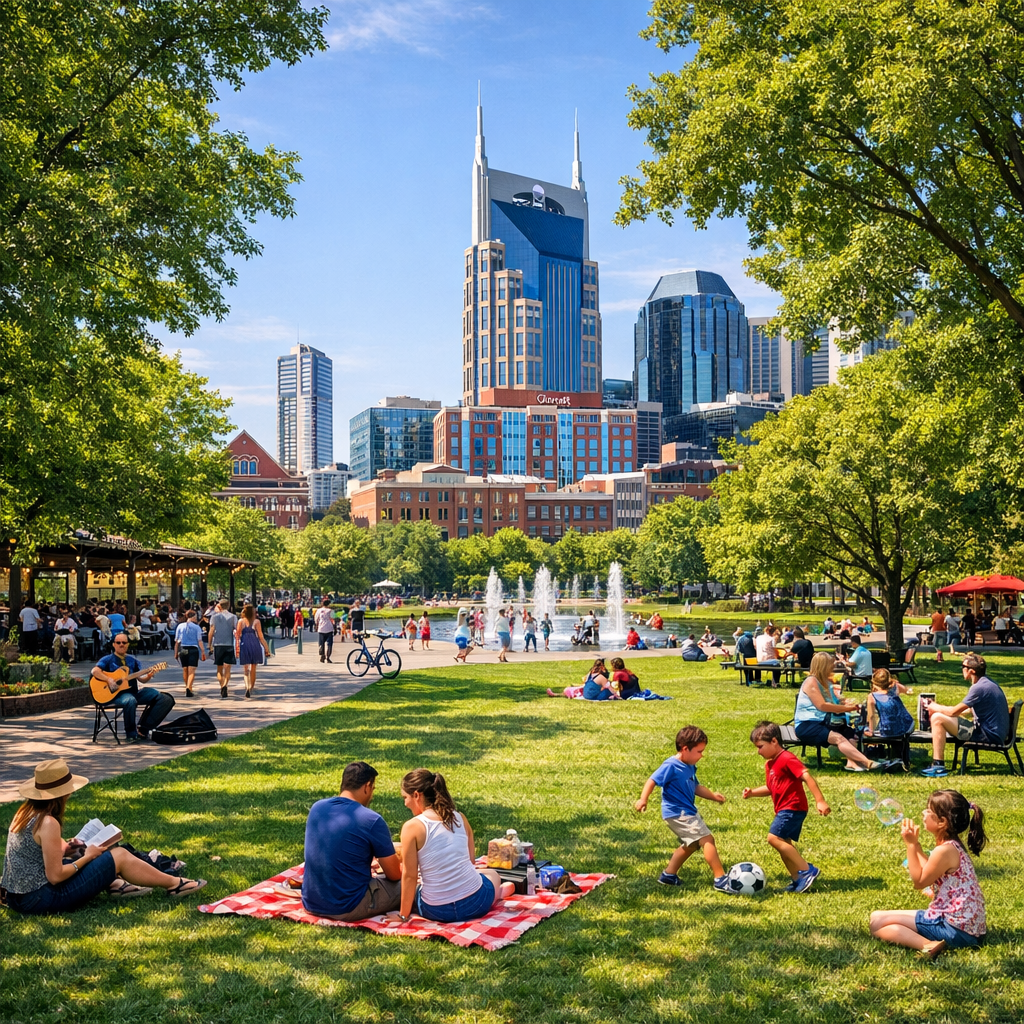
Nashville is actively pursuing a sustainable future through a series of comprehensive initiatives aimed at environmental stewardship and resilience. These efforts encompass urban forestry, green infrastructure, and community engagement, reflecting the city’s dedication to preserving its natural resources and enhancing the quality of life for its residents.
Urban Forestry and Green Spaces
In May 2025, the Nashville Downtown Arboretum was inaugurated, featuring over 3,000 trees strategically planted along sidewalks and public areas. This project, managed by the Nashville Downtown Partnership and the Nashville Department of Transportation, underscores the city’s commitment to expanding its urban tree canopy and promoting green spaces within the urban core.
Complementing this, the Root Nashville campaign aims to plant 500,000 trees by 2050, focusing on increasing tree cover to improve air quality, reduce urban heat, and enhance the city’s aesthetic appeal. This initiative is supported by dedicated funding streams from Metro building permits and construction revenues, ensuring sustained progress toward the ambitious goal.
Green Infrastructure and Sustainable Building
The Nashville Public Library’s Donelson Branch exemplifies sustainable building practices. Opened in June 2024, the 24,014-square-foot facility achieved LEED Gold Certification, incorporating geothermal wells, solar power, and native landscaping. This project serves as a model for environmentally conscious design in urban development.
Metro Nashville Public Schools (MNPS) are also embracing sustainability. The MNPS Energy Program has achieved a 20% annual reduction in energy consumption over the past three years, equivalent to reducing 260,000 metric tons of carbon emissions. Initiatives include implementing energy-efficient designs, installing solar energy systems, and utilizing geothermal HVAC systems across various campuses.
Community Engagement and Environmental Education
Community involvement is pivotal to Nashville’s sustainability efforts. The annual Nashville Earth Day celebration, hosted by the Centennial Park Conservancy, brings together over 75 exhibitors and vendors to promote environmental awareness and action. Proceeds from the event support local environmental projects, with $48,000 awarded to 17 initiatives in 2025, focusing on areas such as pollinator gardens, sustainability education, and water conservation.
Urban Green Lab, a local nonprofit, plays a significant role in educating communities on sustainable living. By training educators and reaching nearly half of Davidson County’s zip codes, the organization fosters a culture of sustainability through education and outreach.
Policy and Planning for Resilience
Metro Nashville has developed a Climate Adaptation and Resilience Plan to address the challenges posed by climate change. This plan focuses on preparing the city to withstand severe weather events, such as heatwaves and flooding, by assessing the health of natural resources and developing concrete action plans, including conservation priorities and policy recommendations.
Additionally, the city’s Zero Waste Nashville initiative aims to divert 90% of waste from landfills by promoting reducing, reusing, recycling, and composting. This comprehensive approach addresses the high waste generation rates in the region and seeks to foster a culture of waste reduction among residents.
Through these multifaceted efforts, Nashville demonstrates a robust commitment to environmental sustainability. By integrating urban forestry, green infrastructure, community engagement, and strategic planning, the city is paving the way for a resilient and sustainable future.