

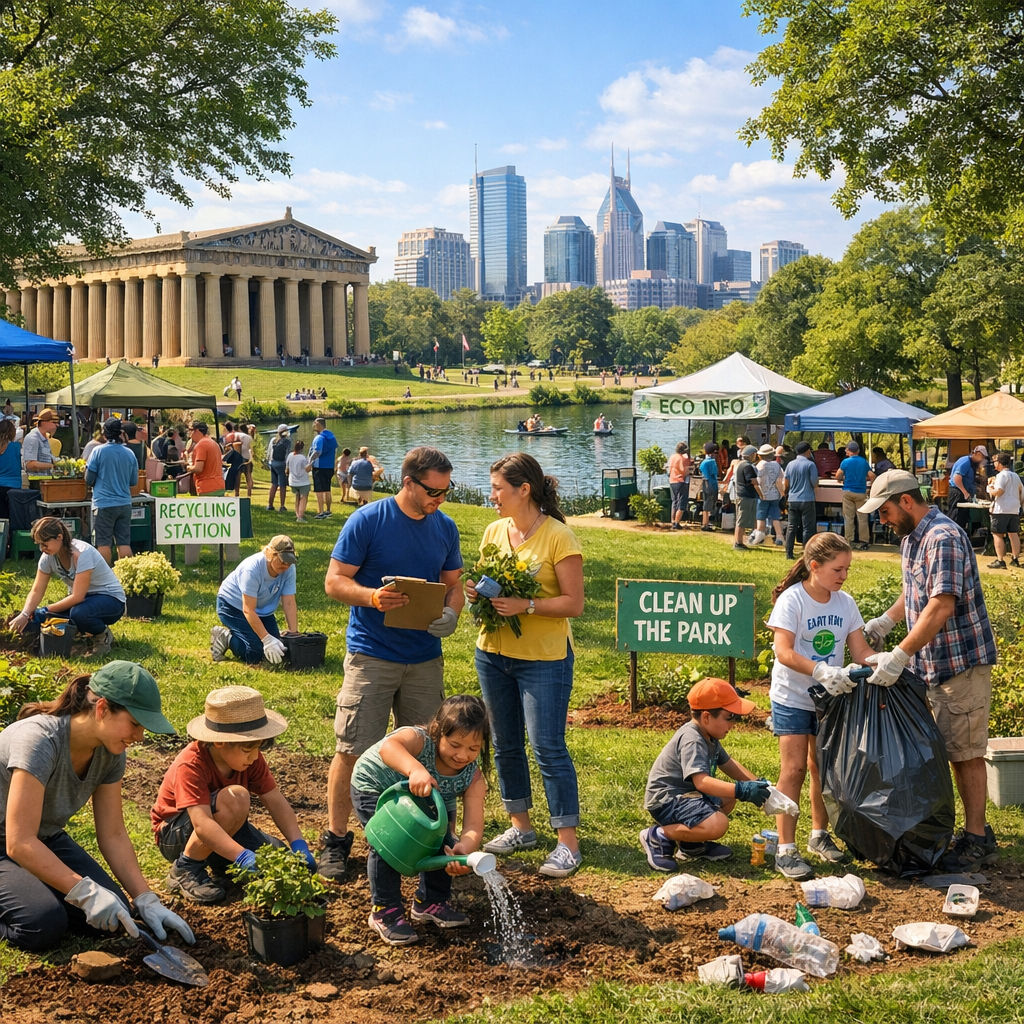
Nashville’s dedication to environmental sustainability is evident through various community-driven initiatives and city-led programs. These efforts aim to preserve the city’s natural resources, promote sustainable practices, and enhance the quality of life for all residents.
City-Led Sustainability Initiatives
The Mayor’s Office has been proactive in implementing strategies to foster sustainable growth. The Sustainability, Resilience, and Environment division focuses on improving residents’ quality of life, particularly in disadvantaged communities, by preserving natural resources and mitigating climate change impacts. Key areas of focus include decarbonizing the electrical grid, enhancing energy efficiency, and promoting sustainable transportation options.
In 2024, Metro Nashville released the Climate Adaptation and Resilience Plan (CARP), outlining strategies to prepare the city for climate-related challenges. The plan emphasizes the importance of adapting infrastructure and community systems to withstand severe weather events and other climate-induced stresses.
Community Engagement and Education
Nonprofit organizations play a crucial role in educating and engaging the community on sustainable practices. Urban Green Lab, for instance, teaches communities how to live sustainably by offering programs that reach educators, organizations, and residents across Davidson County. Their efforts have trained numerous educators and served hundreds of organizations, fostering a culture of sustainability throughout the city.
Additionally, the annual Nashville Earth Day celebration, organized by the Centennial Park Conservancy, brings the community together to celebrate the planet and inspire positive environmental change. The event features live demonstrations, music, children’s activities, and informational booths, highlighting the city’s commitment to environmental stewardship.
Educational Institutions Leading by Example
Metro Nashville Public Schools (MNPS) are also contributing to sustainability efforts. The MNPS Energy Program has achieved a 20% annual reduction in energy consumption over the past three years, equivalent to reducing 260,000 metric tons of carbon emissions. Initiatives include implementing energy-efficient designs, installing solar energy systems, and utilizing geothermal HVAC systems in various schools.
Urban Greening and Conservation
Enhancing the urban tree canopy is another priority for Nashville. The city has invested in expanding its network of recreational trails and greenways, protecting waterways and watersheds, and reducing waste. The Nashville Downtown Arboretum, launched in 2025, features over 3,000 trees distributed along sidewalks and public areas, showcasing the city’s commitment to urban greening.
Furthermore, the Ecological Conservation Strategy (ECS) aims to understand the effects of recent growth on the local landscape and develop recommendations to protect and connect Nashville’s natural spaces. This 18-month planning effort involves assessing the health of natural resources and creating an action plan that includes conservation priorities and policy recommendations.
Corporate Contributions to Sustainability
Local businesses are also contributing to Nashville’s sustainability goals. Coca-Cola Consolidated, for example, promotes recycling through its “Refresh. Recycle. Renew.” initiative. The company partners with local organizations and venues to foster a circular economy by making recycling more accessible to residents and visitors. Efforts include transitioning to more recyclable packaging and implementing water efficiency initiatives in manufacturing facilities.
Through these collective efforts, Nashville continues to demonstrate a strong commitment to environmental sustainability, ensuring a healthier and more resilient future for its residents and the natural environment.