

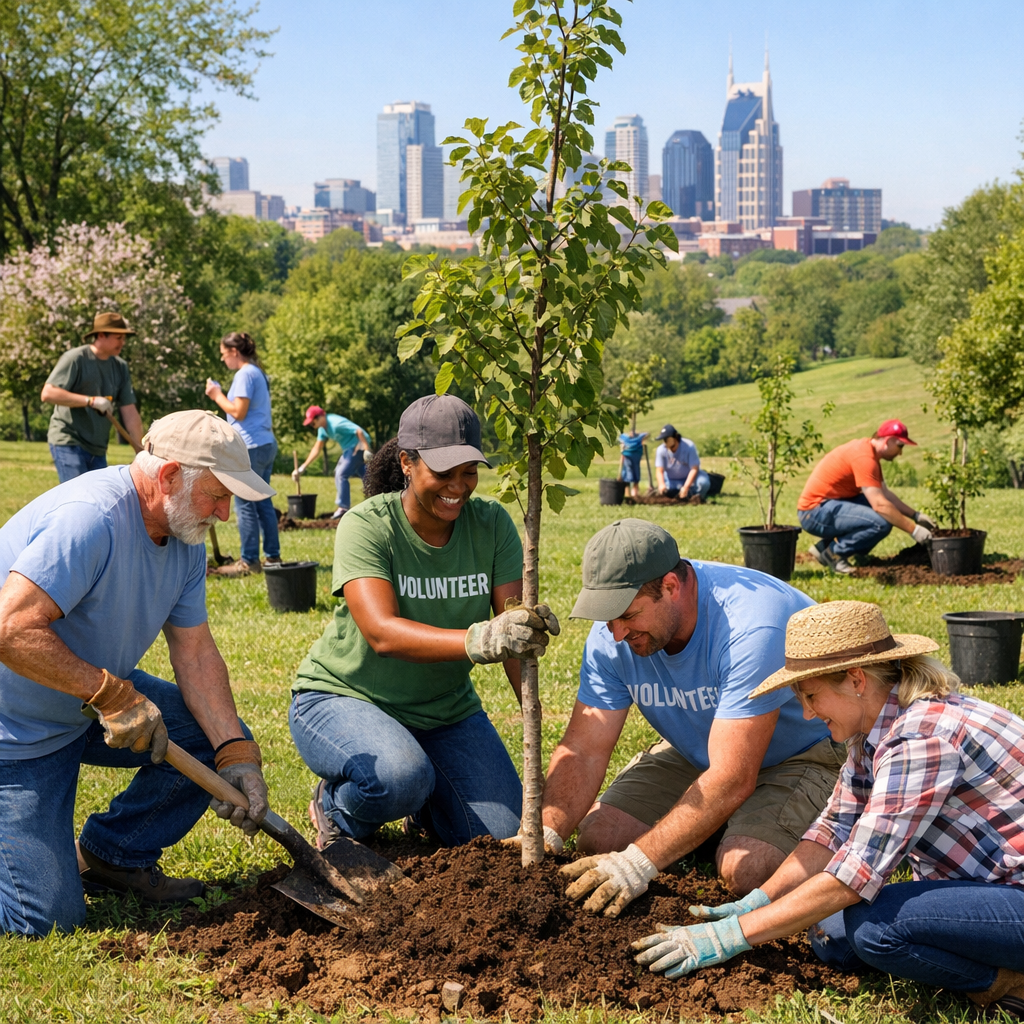
Nashville’s dedication to environmental sustainability is evident through various community-driven initiatives and strategic plans. The city’s approach encompasses preserving natural resources, reducing greenhouse gas emissions, and enhancing residents’ quality of life.
Metro Nashville’s Sustainability Initiatives
The Mayor’s Office has outlined a comprehensive strategy focusing on sustainability, resilience, and environmental stewardship. Key components include:
- Sustainability: Efforts to minimize consumption of finite resources and ensure future generations thrive.
- Resilience: Preparing communities and infrastructure to withstand severe weather events.
- Environment: Preserving and expanding green spaces, tree canopies, and water bodies.
These initiatives are guided by plans such as NashvilleNext, the Climate Action Plan, and the Climate Adaptation and Resilience Plan, which set aggressive goals for climate action and provide metrics for measuring progress.
Community-Led Environmental Projects
Local organizations play a pivotal role in advancing Nashville’s environmental goals. For instance, the Centennial Park Conservancy has donated proceeds from the Nashville Earth Day festival to support environmental projects across the city. Since 2020, the Conservancy has contributed $208,000 to initiatives focusing on tree planting, pollinator gardens, and sustainability education.
Urban Green Lab, a nonprofit organization, educates communities on sustainable living practices. Their programs have reached nearly half of Davidson County’s zip codes, training educators and engaging organizations to promote sustainability.
Educational Institutions Embracing Sustainability
Metro Nashville Public Schools (MNPS) are committed to environmental stewardship through various projects:
- Energy Program: Achieved a 20% annual reduction in energy consumption over three years, equivalent to reducing 260,000 metric tons of carbon emissions.
- Green Infrastructure: Implemented green roofs and geothermal HVAC systems to enhance energy efficiency and provide unique learning environments.
Urban Green Spaces and Tree Canopy Expansion
Recognizing the importance of urban green spaces, Nashville has invested in expanding its tree canopy. The Nashville Downtown Arboretum, launched in May 2025, features over 3,000 trees along sidewalks and public areas, enhancing the city’s urban landscape and promoting environmental health.
Zero Waste Goals
In December 2019, Nashville’s Solid Waste Region Board approved a Solid Waste Master Plan aiming to divert 90% of the city’s waste from landfills. The plan focuses on increasing recycling, reducing food waste, and strengthening public education programs to encourage sustainable waste management practices.
Nashville’s commitment to environmental sustainability is a collaborative effort involving government agencies, nonprofits, educational institutions, and the community. Through strategic planning and active participation, the city continues to make significant strides toward a more sustainable and resilient future.