

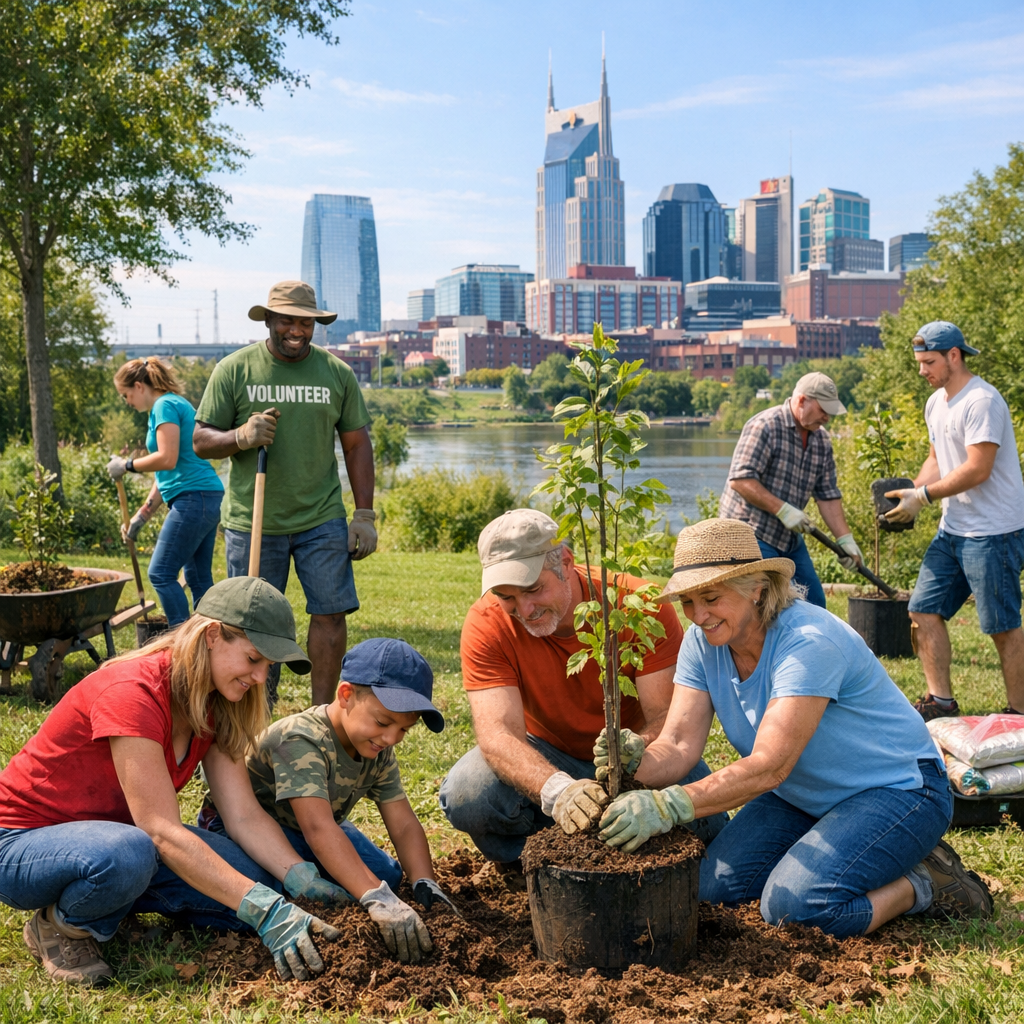
Nashville is making significant strides in environmental sustainability through a series of community-driven initiatives aimed at preserving natural resources and promoting eco-friendly practices.
Tree Canopy Expansion
The city has prioritized increasing its urban tree canopy. Legislation mandates that trees on public property be managed as valuable assets, with regular progress reports and a review panel overseeing large-scale removals. Additionally, a dedicated revenue stream supports tree canopy restoration on private properties, contributing to the Root Nashville campaign’s goal of planting 500,000 trees by 2050.
Zero Waste Initiative
In December 2019, Nashville’s Solid Waste Region Board approved a Solid Waste Master Plan aiming to divert 90% of the city’s waste from landfills. This plan focuses on reducing, reusing, recycling, and composting, with goals to increase recycling and food waste recovery, adopt programs targeting construction and demolition waste, and strengthen public education on waste reduction practices.
Educational Programs
Organizations like Urban Green Lab are instrumental in teaching communities how to live sustainably. They offer programs that have trained numerous educators and reached nearly half of Davidson County’s zip codes, fostering a culture of sustainability across the city.
Community Engagement
Events such as Nashville Earth Day, organized by the Centennial Park Conservancy, play a crucial role in promoting environmental awareness. Since 2020, proceeds from these events have funded various environmental projects, including the planting of over 380 trees in multiple parks and schools, and the introduction of bee hives to support local pollinators.
These collective efforts underscore Nashville’s commitment to environmental stewardship, demonstrating how community involvement and strategic planning can lead to a more sustainable and resilient city.