

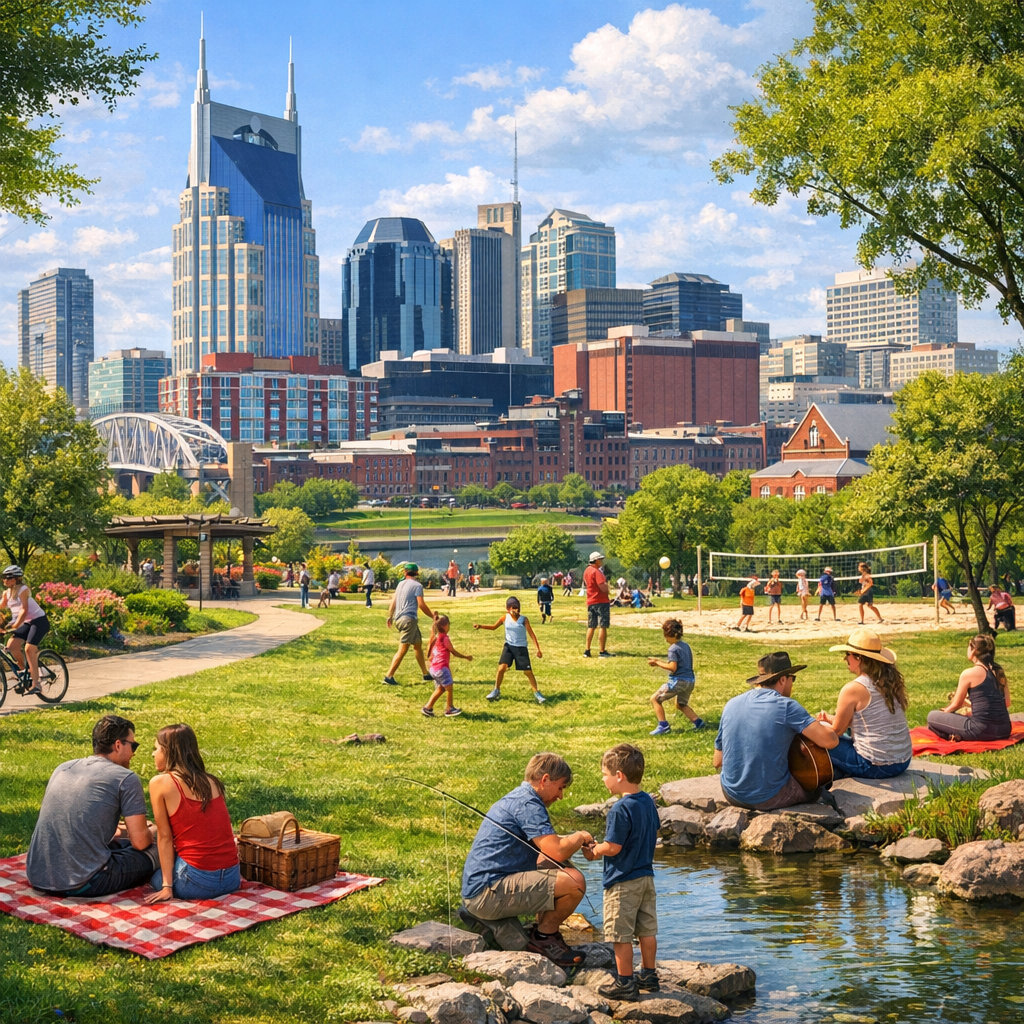
Nashville’s dedication to environmental sustainability is evident through various initiatives and community involvement. The city’s natural environment, encompassing air, water bodies, plants, animals, forests, and green spaces, provides essential services that support daily life. Preserving these assets ensures responsible use of finite resources and maintains the city’s unique character.
Major Initiatives
Investing in Our Tree Canopy
Recognizing the importance of urban forestry, Nashville has implemented legislation to manage trees on public property as valuable assets. This includes regular progress reports and a review panel overseeing large-scale tree removals, ensuring robust replacement standards. Additionally, a dedicated revenue stream supports tree canopy restoration on private properties, contributing to the Root Nashville campaign’s goal of planting 500,000 trees by 2050.
Parks and Greenways
The city’s strategic master plan, adopted in 2017, outlines a ten-year vision to sustainably meet Nashville’s needs for parkland, greenways, community centers, and sports facilities. Goals focus on land acquisition, facility development, program expansion, operational improvements, and future funding strategies. Recent funding has been allocated to update this plan, reflecting the city’s commitment to enhancing recreational spaces.
Community Engagement
Organizations like Urban Green Lab play a pivotal role in educating communities on sustainable living practices. By training educators and reaching various zip codes, they foster a culture of sustainability across Nashville. Their efforts include programs that teach residents how to live sustainably, contributing to the city’s overall environmental goals.
Climate Resilience
As climate change leads to more frequent and severe weather events, Nashville emphasizes climate resilience—the ability to anticipate, adapt to, and recover from climate-driven disruptions. This approach not only addresses environmental concerns but also considers the social and economic impacts on residents, particularly those in disadvantaged communities.
Zero Waste Goals
In December 2019, Nashville’s Solid Waste Region Board approved a Solid Waste Master Plan aiming to divert 90% of the city’s waste from landfills. Strategies include increasing recycling, reducing food waste, adopting recovery programs for construction and demolition debris, and strengthening public education on waste reduction practices.
Nashville’s comprehensive approach to environmental stewardship reflects a commitment to sustainability, resilience, and community well-being. Through collaborative efforts between the city, organizations, and residents, Nashville continues to make strides toward a greener future.